Technical SEO RSS Feeds

This tag covers the technical SEO mechanics behind RSS feeds specifically, for readers who want the underlying detail rather than a general safety reassurance. It explains how canonical tags, feed structure, and site-generated URLs interact with search engine crawling, and where common WordPress issues — like tag archives or paginated category pages generating duplicate internal URLs — can actually create problems unrelated to social automation itself. Articles here also cover how PostRSS's own behavior, checking a feed every 5 minutes and posting only an excerpt and link, is built to avoid introducing new technical SEO issues on top of whatever a site already has. This tag pairs with canonical-tags-rss-feed and automation-technology for related technical detail. It's aimed at more technically-minded readers, as opposed to the broader does-rss-automation-hurt-seo overview tag.
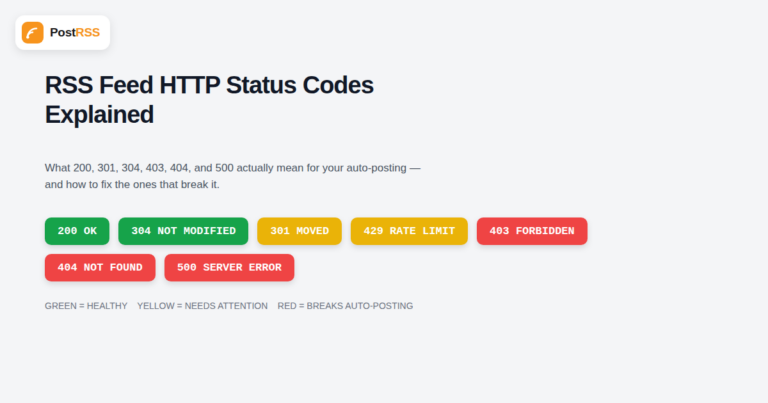
RSS Feed HTTP Status Codes Explained: What 301, 304, 404, and 500 Mean for Auto-Posting
Updated: 2026-09-13

When an RSS feed stops updating on a social account, the actual cause is almost always sitting in an HTTP response header that ...

Czytaj więcej »
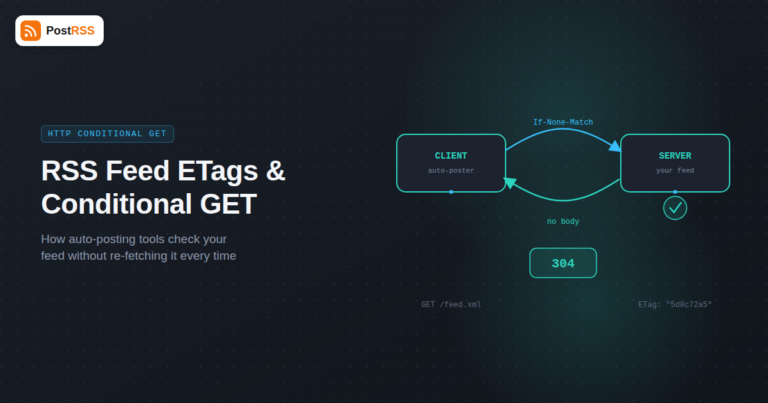
RSS Feed ETags and Conditional GET: How Auto-Posting Tools Avoid Re-Fetching Your Feed
Updated: 2026-09-09

Every automated tool that watches your RSS feed — a social media auto-poster, a feed reader, an aggregator, a monitoring script...

Czytaj więcej »

RSS Feed Bloat and Core Web Vitals: Does a Large Feed Slow Down Your Site?
Updated: 2026-09-06

Short answer: no, and yes. Google's Core Web Vitals are measured on rendered HTML pages — your homepage, your blog posts, your ...

Czytaj więcej »

Does Auto-Posting from RSS Hurt Your SEO? Duplicate Content, Canonical Tags & Best Practices
Zaktualizowano: 2026-08-25

Somewhere between "automate everything" and "protect my Google rankings," a lot of site owners freeze. The ...

Czytaj więcej »

Menu
x
PostRSS - Platforma automatyzacji kanałów RSS i narzędzie do autopostowania
Przegląd prywatności

Ta strona korzysta z plików cookie, aby zapewnić jak najlepsze wrażenia z użytkowania. Informacje o plikach cookie są przechowywane w przeglądarce i pełnią funkcje takie jak rozpoznawanie użytkownika przy powrocie na stronę oraz pomagają naszemu zespołowi zrozumieć, które sekcje witryny są dla Państwa najciekawsze i najbardziej użyteczne.