Automation

This is a general tag for articles on automating social media publishing, ranging from the simple case of mirroring a single blog to one Facebook Page, up to multi-brand, multi-network distribution running across several PostRSS Targets at once. In PostRSS terms, automation means connecting a feed once, choosing which networks to publish to, and letting the 5-minute (or 1-minute, on Enterprise) feed check handle the rest without further manual input. Articles here are a useful starting point before moving to the platform-specific guides elsewhere on the blog, since they cover the shared concepts — feeds, Targets, Tasks, and refresh intervals — that apply across every network PostRSS supports. They also cover the tradeoffs of full automation, such as losing manual control over exact post wording in exchange for consistency and speed. Use this tag as a hub for understanding how the pieces fit together before diving into a single network's setup guide.
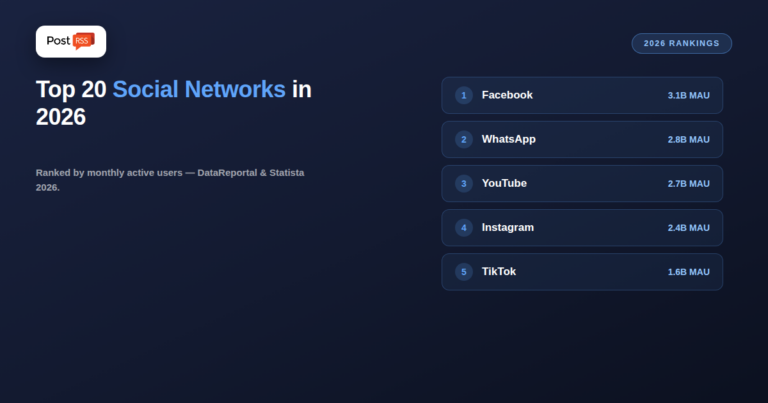
Top 20 Social Networks in 2026, Ranked by Monthly Active Users
Zaktualizowano: 2026-08-30

Ranked by monthly active users (MAU) from public 2026 data (DataReportal's Digital 2026 Global Overview, Statista, and each pla...

Czytaj więcej »
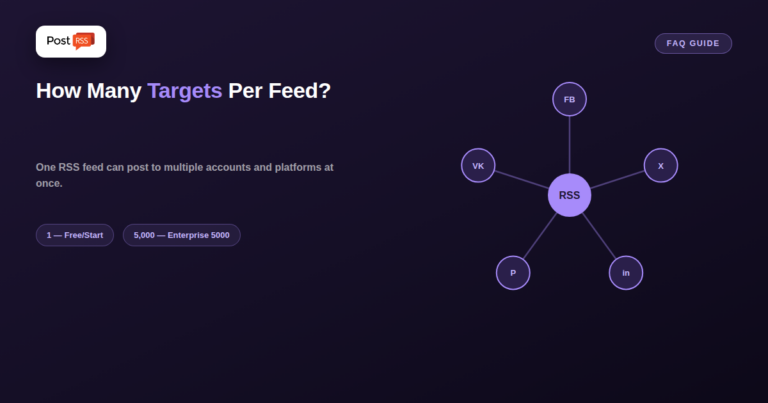
How Many Social Accounts Can You Connect to One RSS Feed?
Zaktualizowano: 2026-08-30

One RSS feed doesn't have to mean one social account. Most RSS automation tools, PostRSS included, let you connect a single fee...

Czytaj więcej »
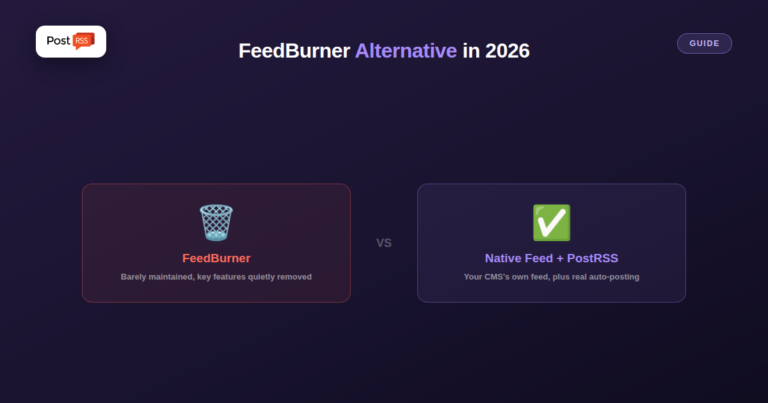
FeedBurner Alternative in 2026: What to Use Now That It’s Basically Dead
Zaktualizowano: 2026-08-30

FeedBurner still runs, technically, but Google stopped meaningfully developing it years ago and quietly removed features (inclu...

Czytaj więcej »
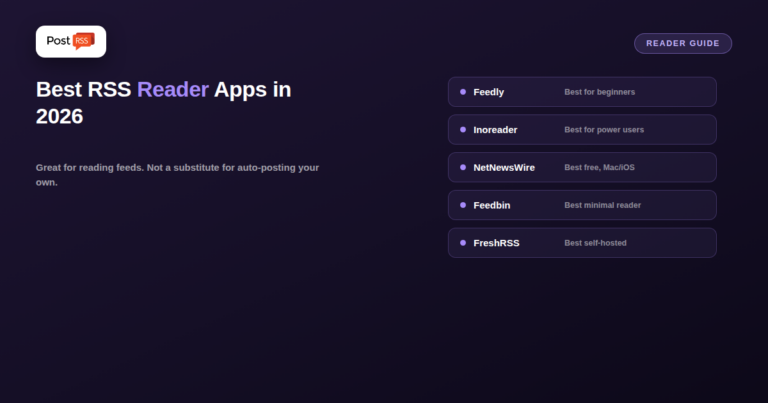
Best RSS Reader Apps in 2026 (and Why They Don’t Replace Auto-Posting)
Zaktualizowano: 2026-08-30

RSS readers and RSS auto-posting tools solve two completely different problems, even though both run on the same feed format. A...

Czytaj więcej »
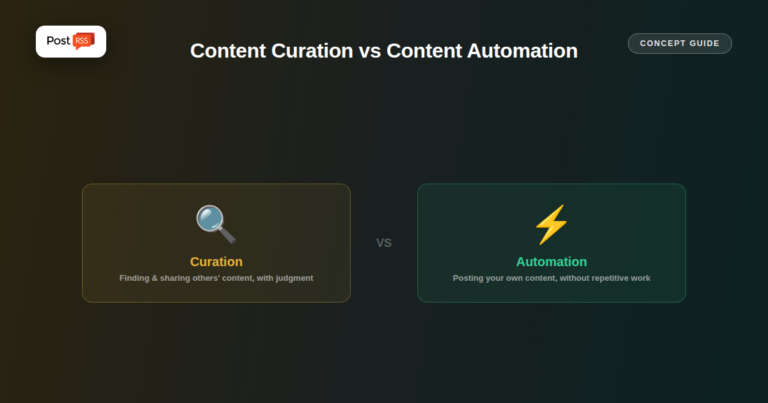
Content Curation vs Content Automation: What’s the Difference?
Zaktualizowano: 2026-08-30

"Content curation" and "content automation" get used almost interchangeably in casual conversation, but they describe genuinely...

Czytaj więcej »
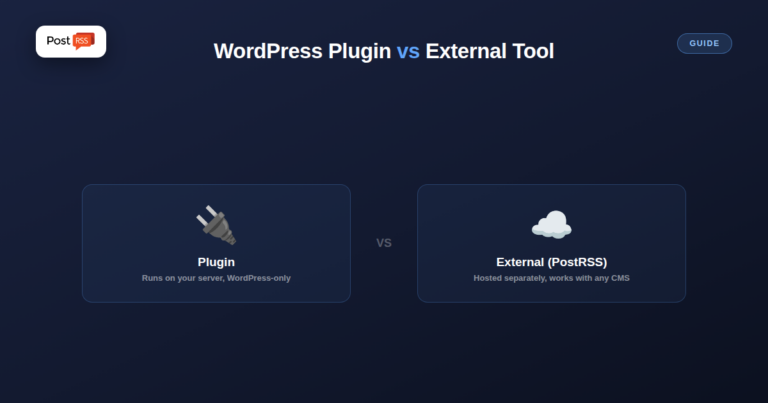
WordPress Plugin vs External RSS Automation Tool: Which Should You Use?
Zaktualizowano: 2026-08-30

If your site runs on WordPress, you have a genuine choice most non-WordPress publishers don't: automate social posting through ...

Czytaj więcej »
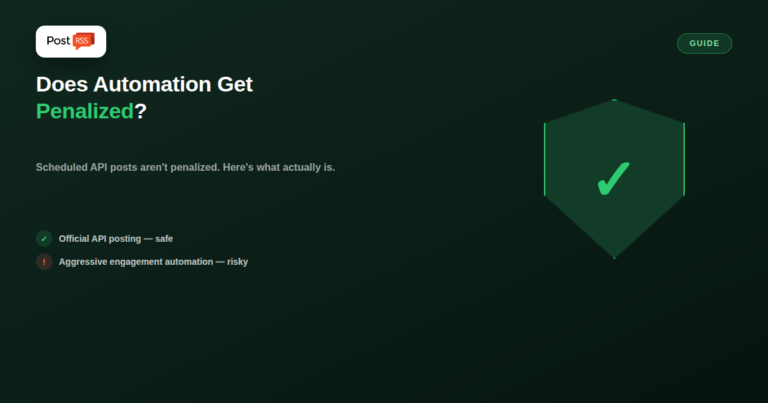
Does Automated Posting Get Penalized by Social Media Algorithms?
Zaktualizowano: 2026-08-30

A common worry before setting up any auto-posting tool is whether the platforms themselves will quietly punish content for bein...

Czytaj więcej »
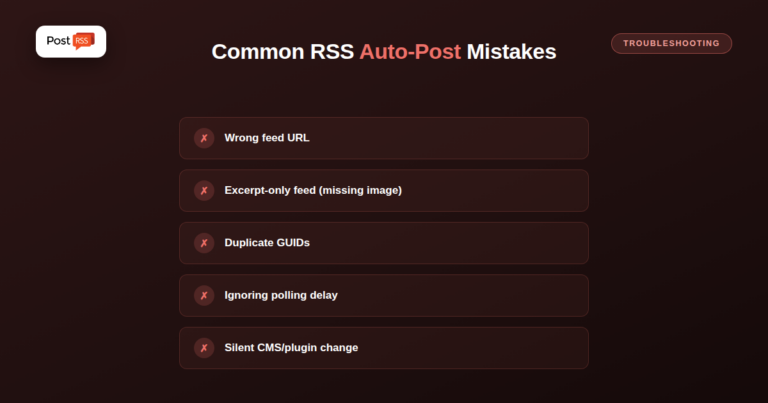
Common RSS Auto-Post Mistakes That Break Your Automation
Zaktualizowano: 2026-08-30

Most RSS auto-posting problems trace back to a small, recurring set of causes — not a broken automation tool, but a mismatch be...

Czytaj więcej »
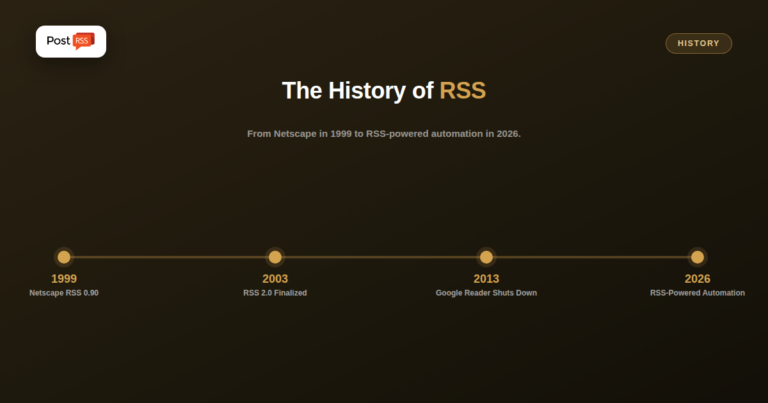
The History of RSS: From 1999 to RSS Auto-Posting in 2026
Zaktualizowano: 2026-08-30

RSS is one of the few web technologies from the late 1990s still doing real, everyday work today — not as a legacy format kept ...

Czytaj więcej »

Does Having an RSS Feed Help SEO? What Google Actually Says
Zaktualizowano: 2026-08-30

An RSS feed is not a Google ranking factor. There's no algorithm boost for having one, and no penalty for skipping it. That sai...

Czytaj więcej »
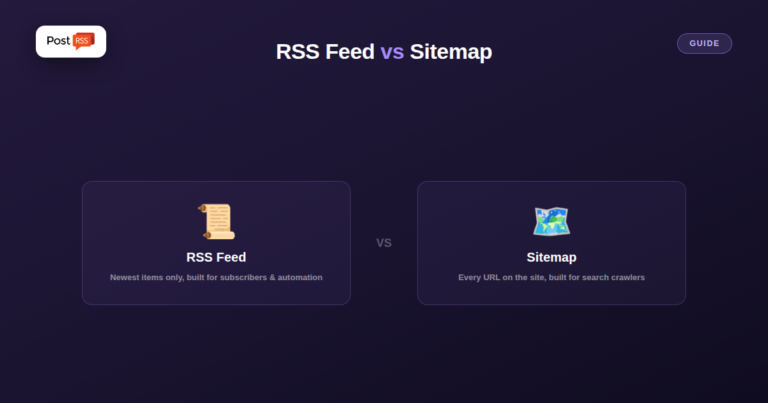
RSS Feed vs Sitemap: What’s the Difference and Do You Need Both?
Zaktualizowano: 2026-08-30

An RSS feed and an XML sitemap are both XML files that list URLs from your site, which is exactly why they get confused. Past t...

Czytaj więcej »

RSS Feed Analytics: Can You Actually Track Who’s Reading Your Feed?
Zaktualizowano: 2026-08-30

No — RSS itself has no built-in tracking. There's no signal in the feed format that tells you who subscribed, who's reading, or...

Czytaj więcej »

Ładowanie kolejnych artykułów…
Menu
x
PostRSS - Platforma automatyzacji kanałów RSS i narzędzie do autopostowania
Przegląd prywatności

Ta strona korzysta z plików cookie, aby zapewnić jak najlepsze wrażenia z użytkowania. Informacje o plikach cookie są przechowywane w przeglądarce i pełnią funkcje takie jak rozpoznawanie użytkownika przy powrocie na stronę oraz pomagają naszemu zespołowi zrozumieć, które sekcje witryny są dla Państwa najciekawsze i najbardziej użyteczne.