RSS Automation

This tag covers automating multi-channel publishing using RSS feeds as the source, the core function PostRSS is built around. It covers setup, connecting a feed URL and choosing destination Targets, formatting rules that differ per network, and how to handle feeds that publish irregularly or in sudden bursts using PostRSS's Advanced Calendar timing controls. Because PostRSS checks feeds every 5 minutes on every standard plan, RSS automation here means near-real-time publishing rather than a delayed daily digest. Articles under this tag are more technical than the general "automation" tag, focusing specifically on the RSS-driven workflow rather than CSV-based alternatives. This tag is a useful hub for readers who already understand what RSS is and want to move directly into automating a feed.
JSON Feed vs RSS: Does the Format Matter for Auto-Posting?
Mis à jour le : 2026-08-30

If you've come across "JSON Feed" while researching RSS and wondered whether you need it, whether it's replacing RSS, or whethe...

En savoir plus »
PostRSS vs FeedHive: RSS Automation vs AI-Powered Scheduling Suite
Mis à jour le : 2026-08-30

FeedHive is one of the few competitors that, like PostRSS, builds RSS automation into its core pitch rather than as an aftertho...

En savoir plus »
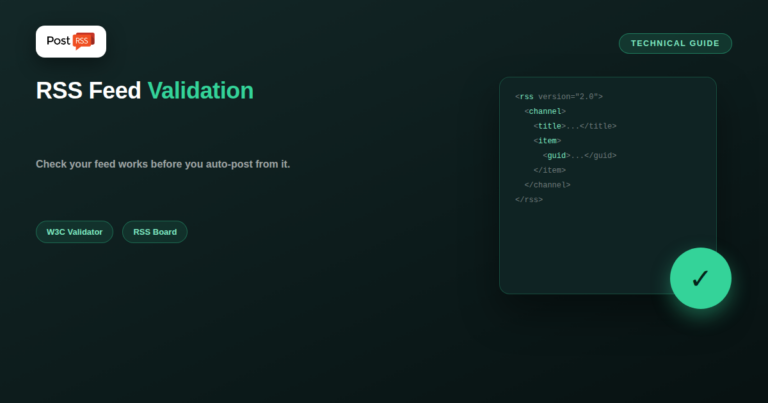
RSS Feed Validation: How to Make Sure Your Feed Works Before You Auto-Post From It
Mis à jour le : 2026-08-30

Before connecting any feed to an automation tool, it's worth confirming the feed itself is actually valid. A malformed RSS feed...

En savoir plus »
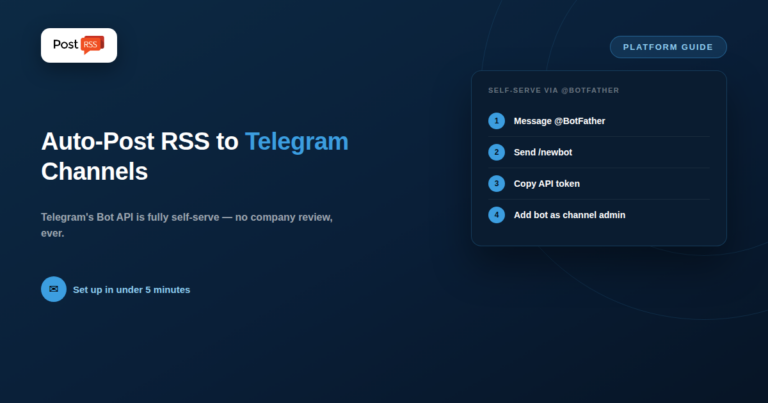
Can You Auto-Post RSS Feeds to Telegram Channels? The Complete Guide
Mis à jour le : 2026-08-30

Telegram closes out this series on the same encouraging note as Bluesky and Mastodon: it's a genuinely open, self-serve platfor...

En savoir plus »

Facebook Personal Profile vs Page: Why You Can Only Auto-Post to One of Them
Mis à jour le : 2026-08-30

A surprisingly common assumption is that automating Facebook posting means automating your personal profile — the account you a...

En savoir plus »
Auto-Posting and Copyright: What You Can (and Can’t) Automatically Republish from an RSS Feed
Mis à jour le : 2026-08-30

RSS automation is built around republishing — taking a title, link, and image from your own feed and pushing it to social platf...

En savoir plus »
RSS Feeds Without Full Content: How to Auto-Post When Your Feed Only Has Excerpts
Mis à jour le : 2026-08-30

Not every RSS feed contains the same amount of content. Some publish the full article text with every item; others deliberately...

En savoir plus »
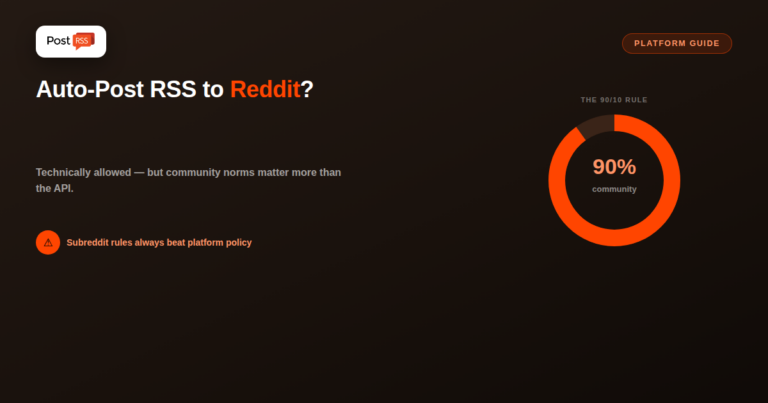
Can You Auto-Post RSS Feeds to Reddit? What the Rules Actually Say
Mis à jour le : 2026-08-30

Reddit is a genuinely different kind of platform to automate against than anything else covered in this series — the technical ...

En savoir plus »
PostRSS vs Planable: Continuous RSS Automation vs Content Approval Workflow
Mis à jour le : 2026-08-30

Planable is primarily a content approval and collaboration tool — its core pitch is letting teams preview and sign off on posts...

En savoir plus »
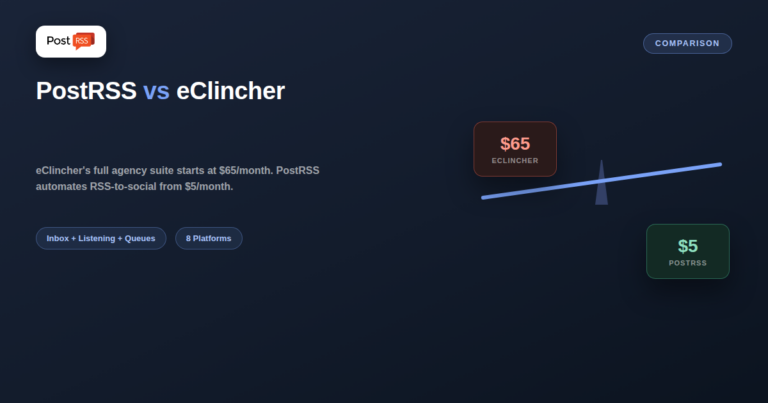
PostRSS vs eClincher: RSS Automation vs Full-Featured Social Suite
Mis à jour le : 2026-08-30

eClincher is a full-featured social media management platform that bundles RSS feed automation into a much larger suite — a uni...

En savoir plus »
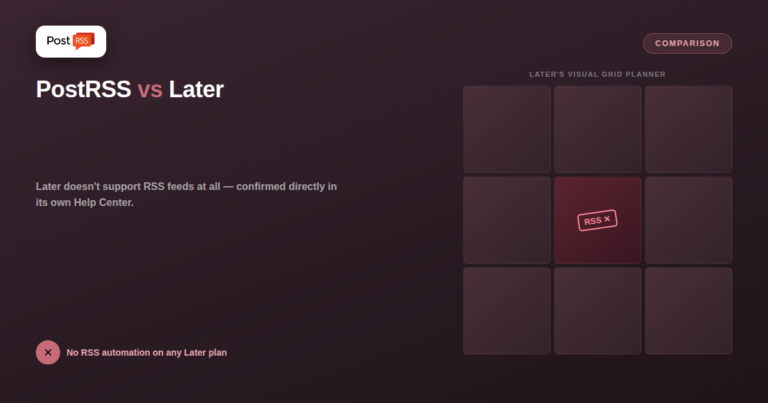
PostRSS vs Later: RSS Automation vs Visual Content Scheduler
Mis à jour le : 2026-08-30

Later is one of the best-known names in social media scheduling, especially for Instagram-focused brands and creators. PostRSS ...

En savoir plus »
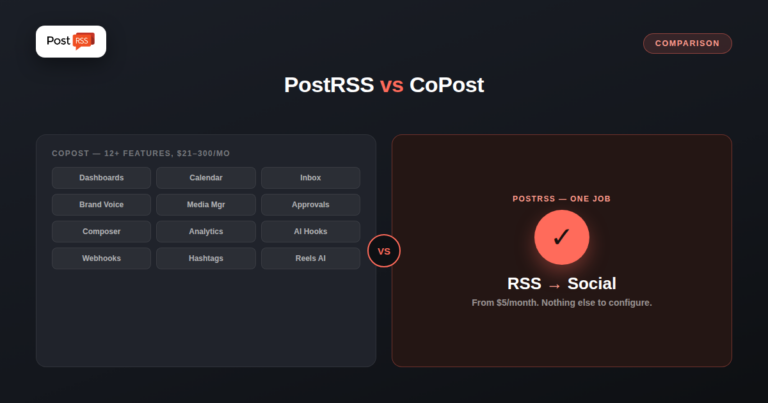
PostRSS vs CoPost: Focused RSS Automation vs AI-Powered Social Suite
Mis à jour le : 2026-08-30

CoPost and PostRSS both promise to take RSS content off your plate and onto your social channels automatically, but they're bui...

En savoir plus »

Chargement de nouveaux articles…
Menu
x
PostRSS - Plateforme d'automatisation de flux RSS et outil d'auto-publication
Aperçu de la confidentialité

Ce site utilise des cookies afin de vous fournir la meilleure expérience utilisateur possible. Les informations relatives aux cookies sont stockées dans votre navigateur et permettent, entre autres, de vous reconnaître lors de votre retour sur notre site et d'aider notre équipe à comprendre quelles sections du site vous trouvez les plus intéressantes et utiles.