RSS Automation

This tag covers automating multi-channel publishing using RSS feeds as the source, the core function PostRSS is built around. It covers setup, connecting a feed URL and choosing destination Targets, formatting rules that differ per network, and how to handle feeds that publish irregularly or in sudden bursts using PostRSS's Advanced Calendar timing controls. Because PostRSS checks feeds every 5 minutes on every standard plan, RSS automation here means near-real-time publishing rather than a delayed daily digest. Articles under this tag are more technical than the general "automation" tag, focusing specifically on the RSS-driven workflow rather than CSV-based alternatives. This tag is a useful hub for readers who already understand what RSS is and want to move directly into automating a feed.
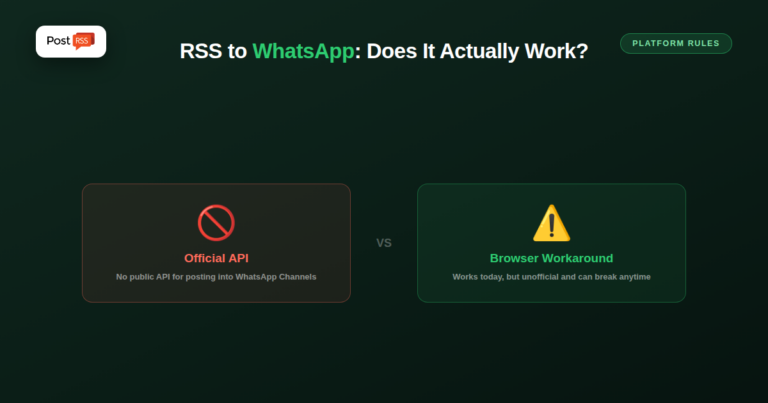
RSS to WhatsApp: Can You Auto-Post Your Feed to a WhatsApp Channel?
Mis à jour le : 2026-08-30

WhatsApp has no public API that lets a third-party automation tool post directly into a WhatsApp Channel the way Facebook, X, o...

En savoir plus »
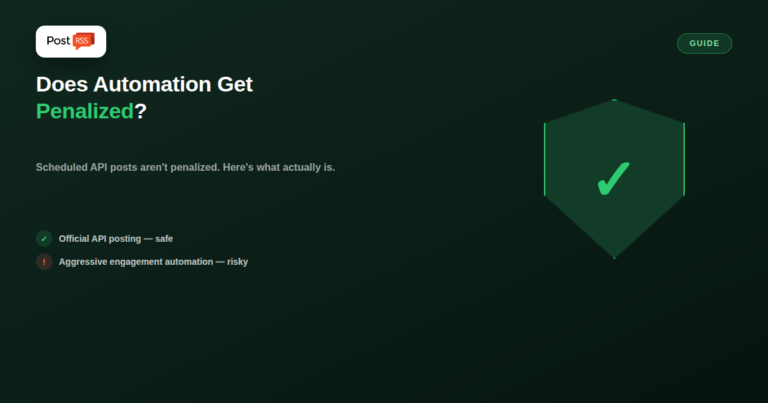
Does Automated Posting Get Penalized by Social Media Algorithms?
Mis à jour le : 2026-08-30

A common worry before setting up any auto-posting tool is whether the platforms themselves will quietly punish content for bein...

En savoir plus »
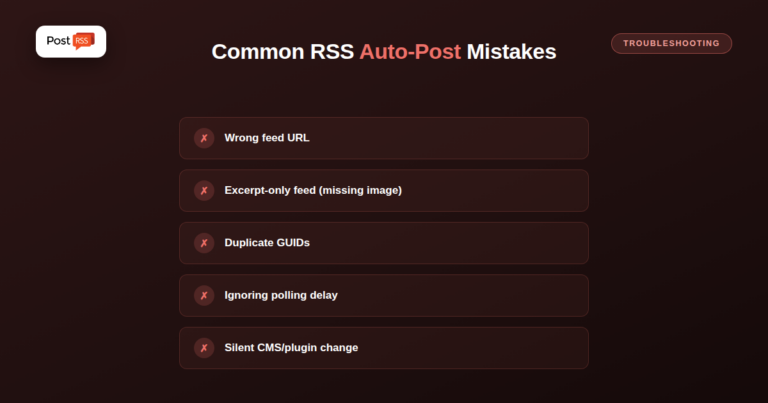
Common RSS Auto-Post Mistakes That Break Your Automation
Mis à jour le : 2026-08-30

Most RSS auto-posting problems trace back to a small, recurring set of causes — not a broken automation tool, but a mismatch be...

En savoir plus »
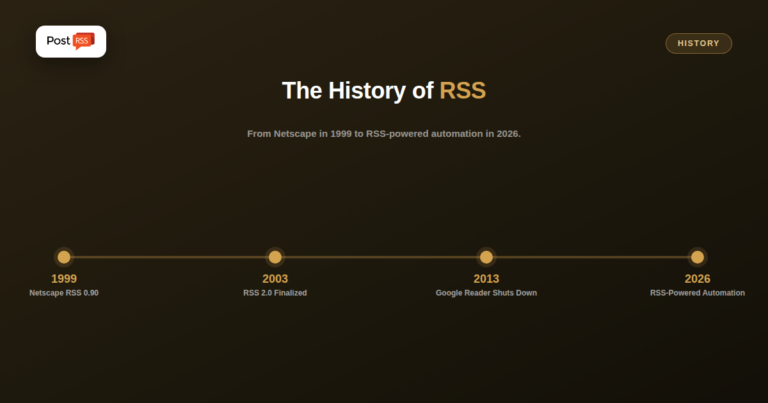
The History of RSS: From 1999 to RSS Auto-Posting in 2026
Mis à jour le : 2026-08-30

RSS is one of the few web technologies from the late 1990s still doing real, everyday work today — not as a legacy format kept ...

En savoir plus »
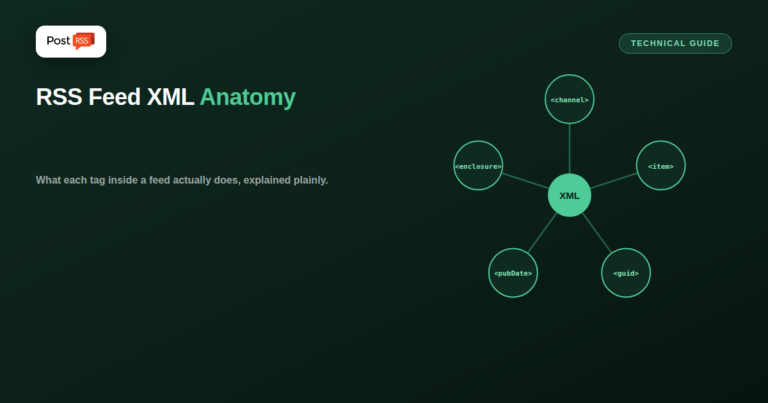
RSS Feed XML Anatomy Explained: What <channel>, <item>, GUID, and pubDate Actually Do
Mis à jour le : 2026-08-30

An RSS feed looks intimidating as raw XML, but it's built from a small handful of tags that each do one specific job. Once you ...

En savoir plus »
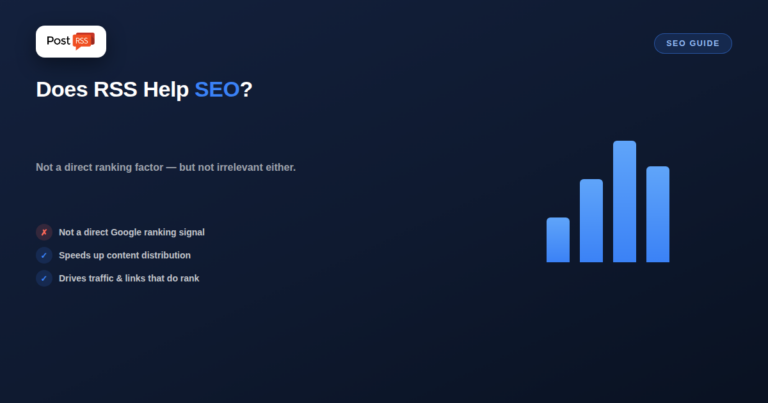
Does Having an RSS Feed Help SEO? What Google Actually Says
Mis à jour le : 2026-08-30

An RSS feed is not a Google ranking factor. There's no algorithm boost for having one, and no penalty for skipping it. That sai...

En savoir plus »
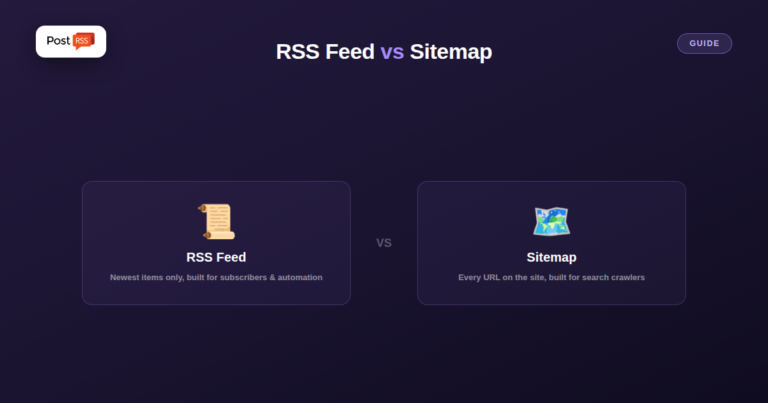
RSS Feed vs Sitemap: What’s the Difference and Do You Need Both?
Mis à jour le : 2026-08-30

An RSS feed and an XML sitemap are both XML files that list URLs from your site, which is exactly why they get confused. Past t...

En savoir plus »
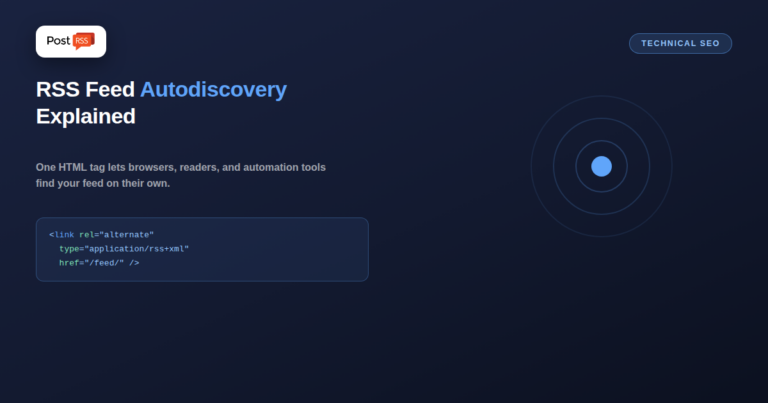
RSS Feed Autodiscovery: How to Make Sure Browsers, Readers, and Tools Can Find Your Feed
Mis à jour le : 2026-08-30

Autodiscovery is the reason you can paste a website's homepage URL into a podcast app or feed reader and have it find the actua...

En savoir plus »
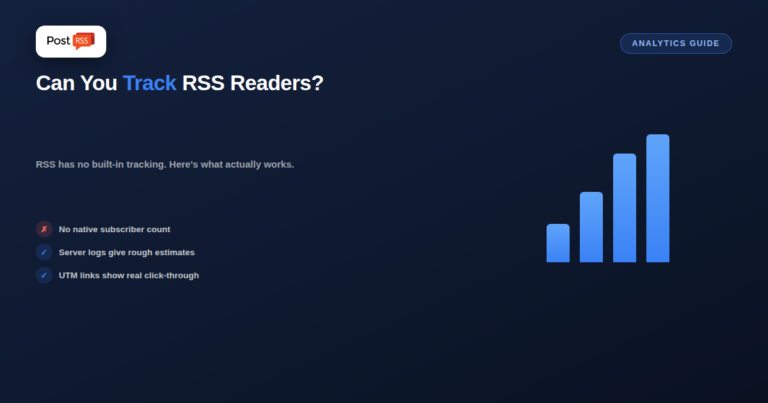
RSS Feed Analytics: Can You Actually Track Who’s Reading Your Feed?
Mis à jour le : 2026-08-30

No — RSS itself has no built-in tracking. There's no signal in the feed format that tells you who subscribed, who's reading, or...

En savoir plus »
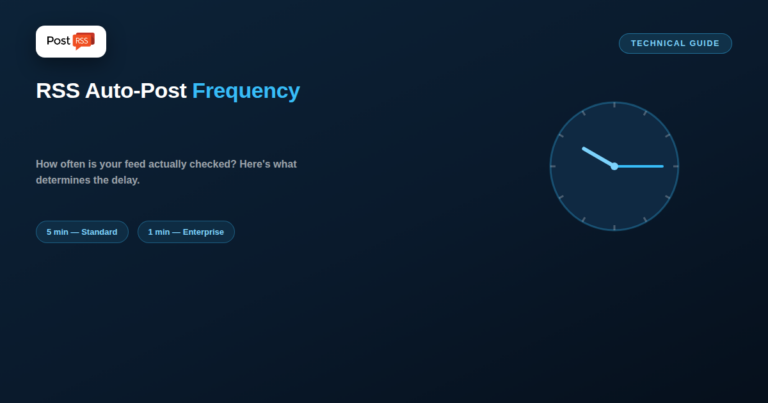
RSS Auto-Post Frequency: How Often Should Your Feed Actually Be Checked?
Mis à jour le : 2026-08-30

How quickly does an automation tool actually notice a new post and publish it to social media? The honest answer depends entire...

En savoir plus »
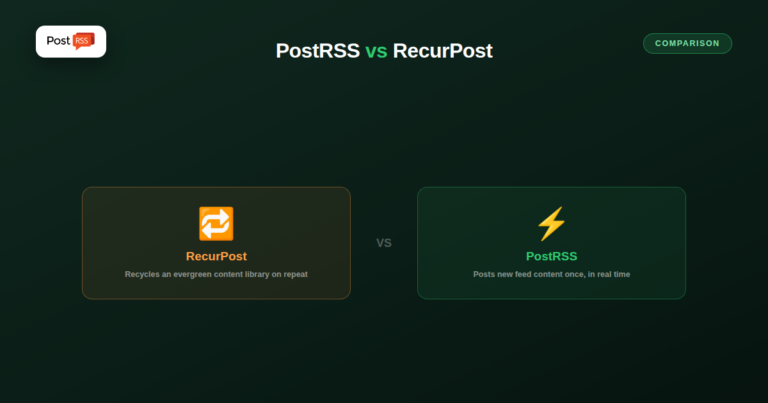
RecurPost vs PostRSS: Evergreen Recycling vs Real-Time RSS Automation
Mis à jour le : 2026-08-30

RecurPost and PostRSS both connect to an RSS feed, but they're built around opposite ideas of what auto-posting is for. RecurPo...

En savoir plus »
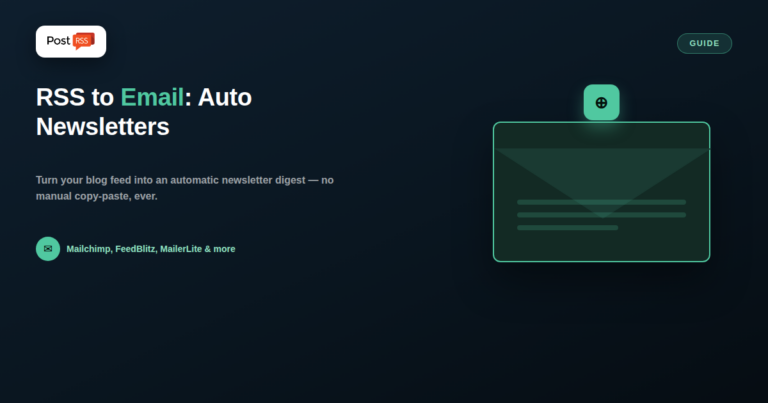
RSS to Email: Turning Your Blog Feed into an Automatic Newsletter Digest
Mis à jour le : 2026-08-30

Your RSS feed doesn't have to stop at social media. The same feed that powers automatic posting to Facebook, X, LinkedIn, Pinte...

En savoir plus »

Chargement de nouveaux articles…
Menu
x
PostRSS - Plateforme d'automatisation de flux RSS et outil d'auto-publication
Aperçu de la confidentialité

Ce site utilise des cookies afin de vous fournir la meilleure expérience utilisateur possible. Les informations relatives aux cookies sont stockées dans votre navigateur et permettent, entre autres, de vous reconnaître lors de votre retour sur notre site et d'aider notre équipe à comprendre quelles sections du site vous trouvez les plus intéressantes et utiles.