Feed Monitoring

This tag covers keeping an RSS feed connection healthy over time, rather than assuming that no visible error means automation is still working correctly. It focuses on the most common failure mode in RSS automation — a feed that silently stops updating after a site migration, plugin change, or hosting issue — and the habit of periodic spot-checks that catches this before it becomes weeks of missed posts. Articles here cover practical diagnostic steps, starting with opening the feed URL directly in a browser, before moving into more specific causes like SSL issues or security plugin conflicts. This tag pairs closely with rss-troubleshooting and reliability for the fuller recovery and prevention picture. It's especially relevant for agencies and anyone managing more than one feed at once.
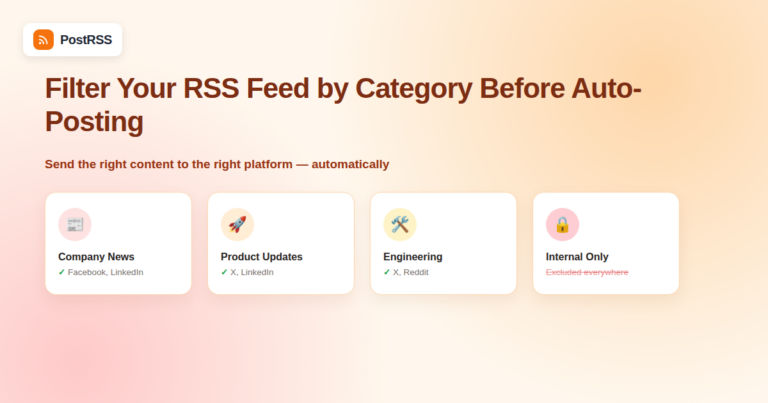
How to Filter Your RSS Feed by Category Before Auto-Posting
Updated: 2026-09-17

Not every item in your RSS feed belongs on every social channel. A company blog that covers product updates, press releases, an...

En savoir plus »
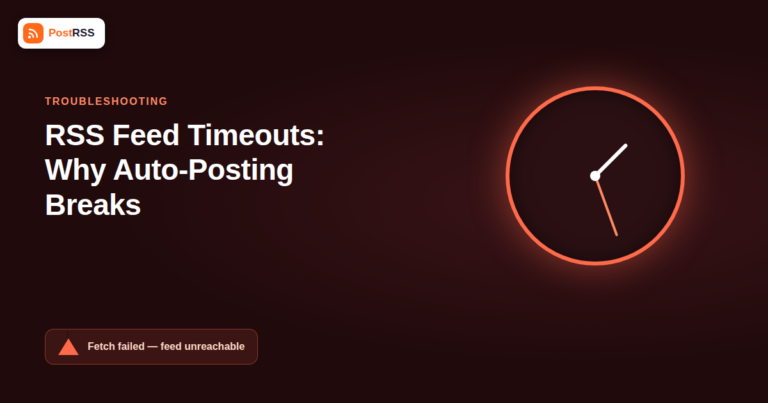
RSS Feed Timeouts: Why a Slow Server Breaks Auto-Posting and How to Fix It
Updated: 2026-09-05

If your auto-posting tool has ever gone quiet for a day or two and then caught up with a burst of posts, the usual suspect peop...

En savoir plus »
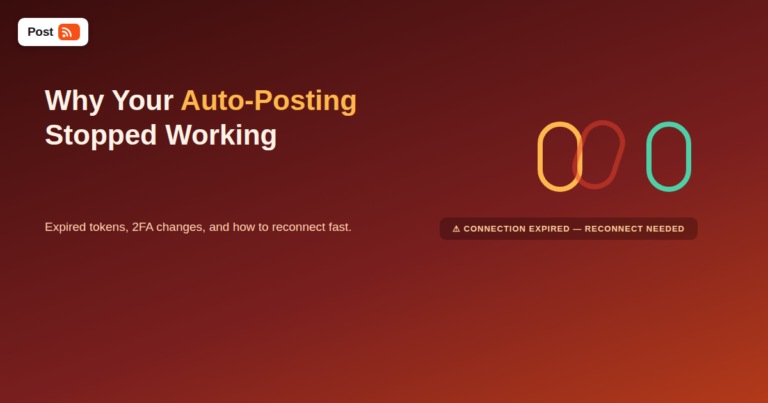
Why Your Auto-Posting Stopped Working: Tokens, 2FA, and Reconnects
Updated: 2026-09-02

An automated posting setup that ran flawlessly for months can suddenly go silent for reasons that have nothing to do with the R...

En savoir plus »
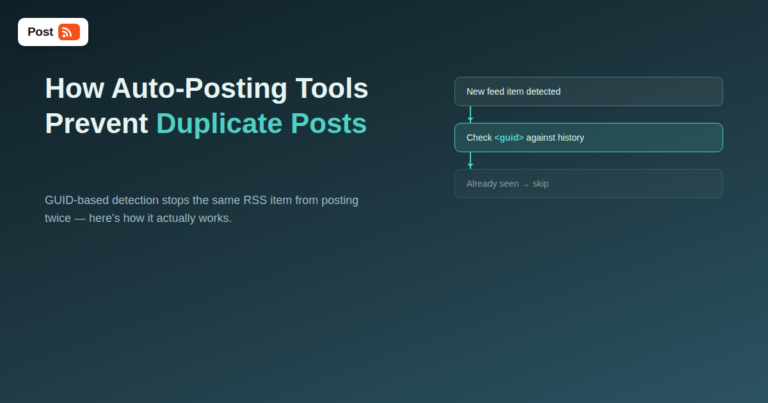
How Auto-Posting Tools Prevent Duplicate Posts From RSS Feeds
Updated: 2026-09-02

Nothing erodes trust in an automated social media setup faster than the same article showing up on a Facebook page three times ...

En savoir plus »
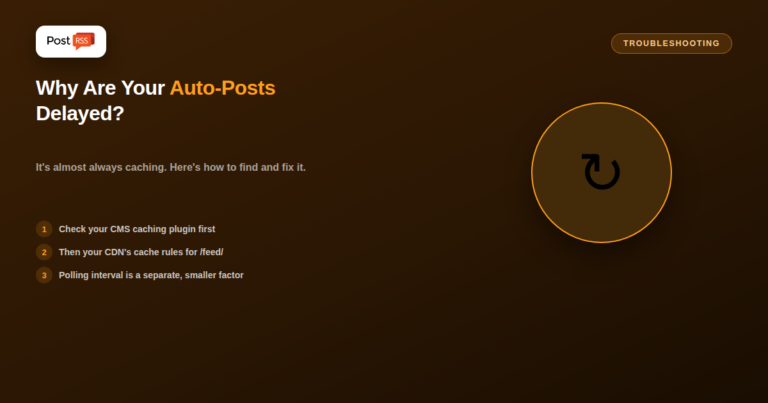
RSS Feed Caching Explained: Why Your Auto-Posts Are Delayed and How to Fix It
Updated: 2026-08-28

If your new post takes minutes (or longer) to show up in your RSS feed, or an auto-posting tool seems slow to pick up fresh con...

En savoir plus »
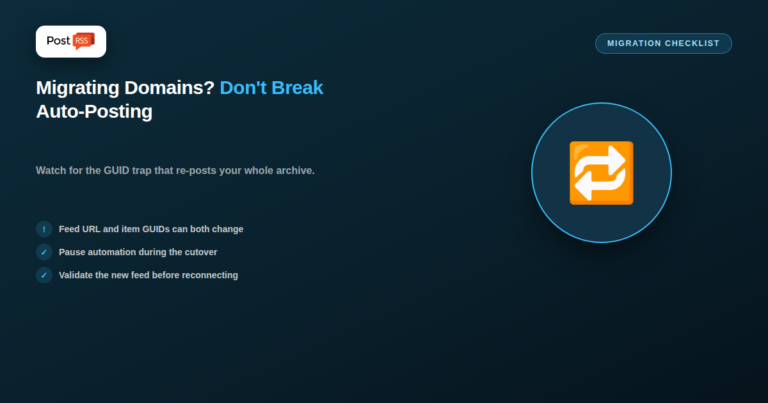
What Happens to Your Auto-Posting Setup When You Migrate or Change Domains
Updated: 2026-08-28

A domain migration or CMS switch is one of the most common ways an otherwise-working RSS auto-posting setup silently breaks — n...

En savoir plus »
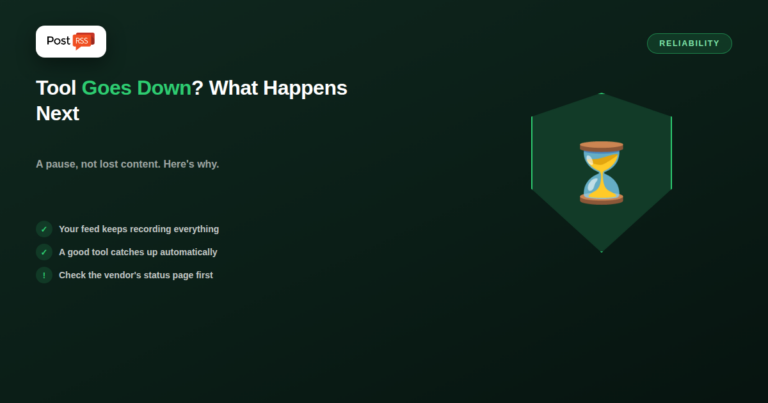
What Happens If Your Auto-Posting Tool Goes Down? RSS Automation Uptime and Reliability Explained
Updated: 2026-08-28

If an auto-posting tool goes down, the practical impact is almost always a pause, not lost content — your RSS feed keeps record...

En savoir plus »
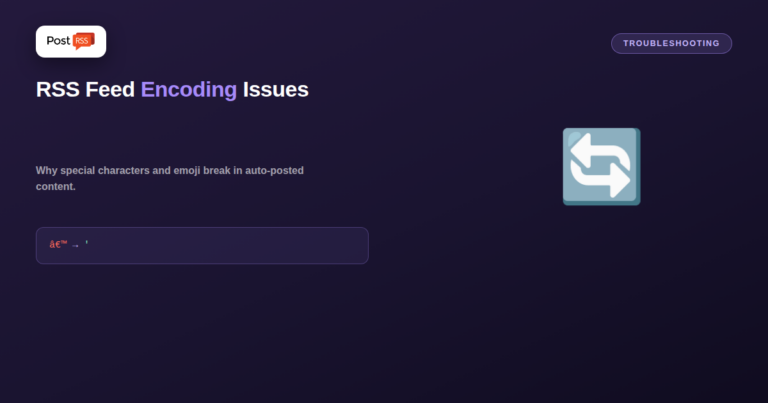
RSS Feed Encoding Issues: Why Special Characters and Emoji Break Auto-Posted Content
Mis à jour le : 2026-08-30

Garbled characters in auto-posted content — curly quotes turning into "’", emoji showing as boxes, accented letters replaced ...

En savoir plus »
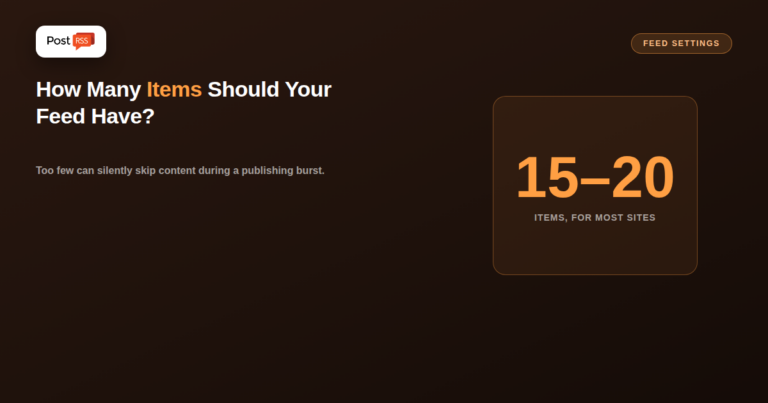
How Many Items Should Be in Your RSS Feed? (And Why It Matters for Auto-Posting)
Mis à jour le : 2026-08-30

Most CMS platforms default to showing the 10 or 15 most recent posts in an RSS feed, and for the vast majority of sites, that d...

En savoir plus »

Is Your RSS Feed Public? What Site Visitors (and Competitors) Can See in It
Mis à jour le : 2026-08-30

Yes — by default, your RSS feed is just as public as your website itself. Anyone who knows or guesses the URL (typically /feed/...

En savoir plus »
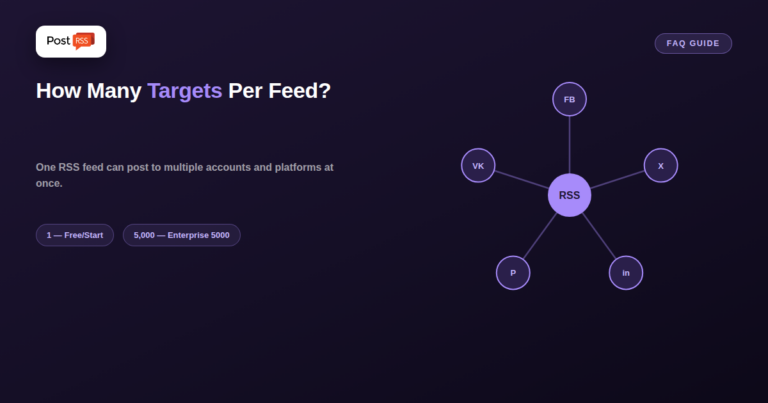
How Many Social Accounts Can You Connect to One RSS Feed?
Mis à jour le : 2026-08-30

One RSS feed doesn't have to mean one social account. Most RSS automation tools, PostRSS included, let you connect a single fee...

En savoir plus »
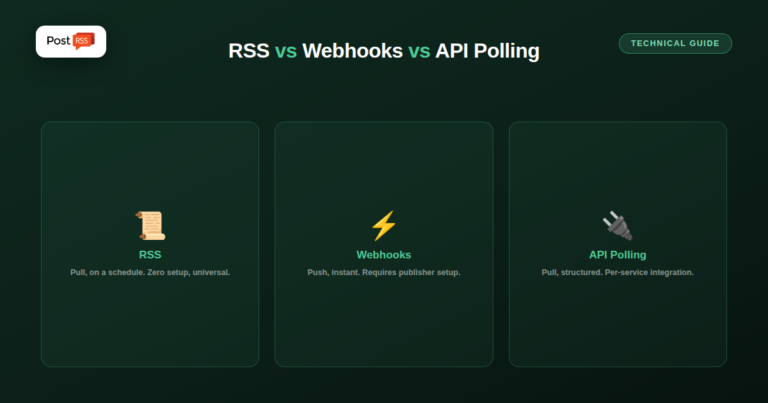
RSS vs Webhooks vs API Polling: How Automation Tools Actually Detect New Content
Mis à jour le : 2026-08-30

RSS, webhooks, and API polling all answer the same underlying question — "how does a tool know something new happened?" — but t...

En savoir plus »

Chargement de nouveaux articles…
Menu
x
PostRSS - Plateforme d'automatisation de flux RSS et outil d'auto-publication
Aperçu de la confidentialité

Ce site utilise des cookies afin de vous fournir la meilleure expérience utilisateur possible. Les informations relatives aux cookies sont stockées dans votre navigateur et permettent, entre autres, de vous reconnaître lors de votre retour sur notre site et d'aider notre équipe à comprendre quelles sections du site vous trouvez les plus intéressantes et utiles.