PostRSS Setup Guide

This tag covers the technical steps of connecting a feed, authorizing a destination platform, and configuring formatting settings inside PostRSS, serving as the general setup reference across all supported networks. It walks through the shared setup pattern that applies regardless of destination — finding your RSS or Atom feed URL, pasting it into the PostRSS dashboard, authorizing your target account through the platform's own login screen, and adjusting formatting preferences before activating. Articles here are written to apply broadly, with platform-specific tags covering the details unique to each individual network beyond this shared foundation. This is one of the most heavily used tags on the blog, since nearly every walkthrough references at least part of this core setup sequence. Start here if you need the general mechanics before checking a platform-specific tag for individual network details.
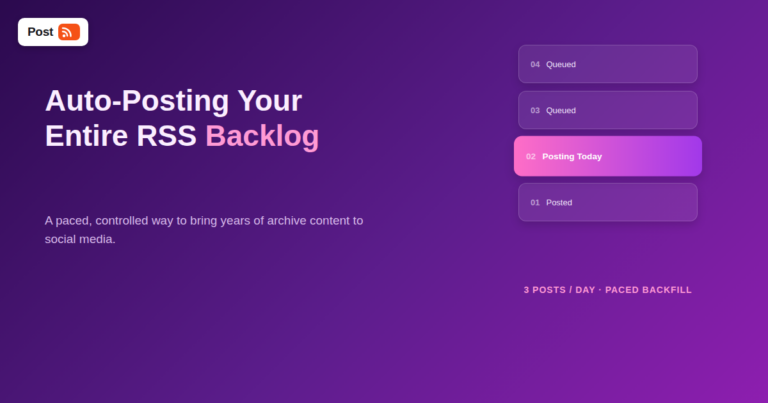
How to Auto-Post Your Entire RSS Backlog When Starting From Scratch
Updated: 2026-09-02

Most guides to RSS auto-posting assume you're setting it up for new content going forward — but a common, rarely-addressed situ...

Leer más »
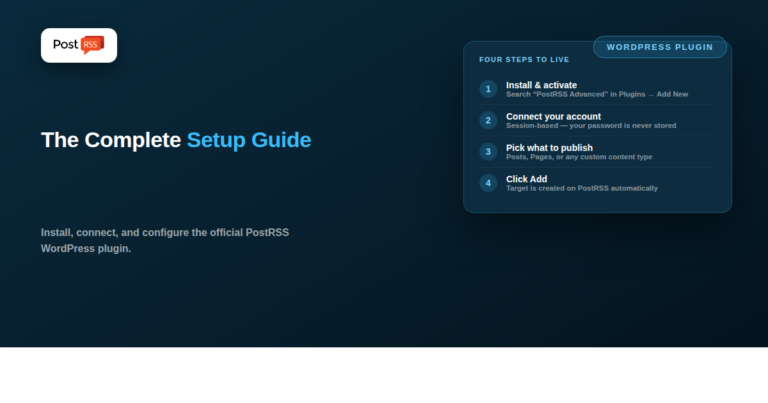
Plugin de PostRSS para WordPress: Guía completa de configuración y uso
Actualizado: 2026-08-29

PostRSS Advanced Dashboard Integration is the official PostRSS plugin for WordPress — it connects your PostRSS account directly...

Leer más »
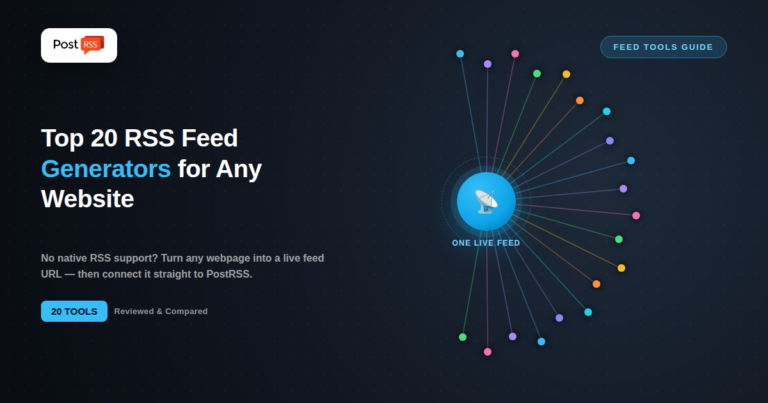
Top 20 RSS Feed Generators to Create an RSS Feed for Any Website (No Plugin Needed)
Actualizado: 2026-08-30

PostRSS works by watching an RSS feed and automatically turning every new item into a post on Facebook, X, LinkedIn, Pinterest,...

Leer más »

How to Save Time Automatically Adding News and Updates to Your Social Pages
Actualizado: 2026-08-30

Updated: 2026-08-20 In the fast-paced digital publishing and content marketing world, sharing breaking news, fresh arti...

Leer más »
Increase Your Traffic and Engage Your Audience with the PostRSS Automation Tool
Actualizado: 2026-08-30

Updated: 2026-08-20 Building a high-quality blog or e-commerce platform is only the first step toward online success. T...

Leer más »
How to Share Your RSS Feeds on Social Networks Automatically to Multiply Your Traffic
Actualizado: 2026-08-30

Updated: 2026-08-20 In the modern digital landscape, content distribution is a decisive factor in the success of any we...

Leer más »
How the PostRSS Social Network Tool Connects You with Social Media People
Actualizado: 2026-08-30

Updated: 2026-08-20 At its core, digital marketing is about building relationships and staying visible. To grow your br...

Leer más »

Don’t Just Share Facts, Share Emotions: How to Connect with Your Social Audience
Actualizado: 2026-08-30

Updated: 2026-08-20 When scrolling through social media, people rarely stop for cold, dry statistics or generic product...

Leer más »
Post Automatically RSS Feeds to Social Networks with the PostRSS Tool
Actualizado: 2026-08-20

Updated: 2026-08-20 Manually sharing every new website update across multiple social profiles is an ineffective use of ...

Leer más »

How to Automate Your VKontakte Content Distribution for Global Audience Reach
Actualizado: 2026-08-30

Updated: 2026-08-20 Expanding your brand's digital footprint into international markets requires understanding regi...

Leer más »

How Premium Social Media Automation Subscriptions Maximize Your Marketing ROI
Actualizado: 2026-08-30

Updated: 2026-08-20 In the modern, fast-paced business environment, consistency is the driving force behind any success...

Leer más »
Auto Post WordPress and Blog RSS Feed to Facebook, X, LinkedIn, and VKontakte
Actualizado: 2026-08-30

Updated: 2026-08-20 If you run a WordPress website or a professional blog, consistently promoting your new content on s...

Leer más »

Cargando más artículos…
Menú
x
PostRSS - Plataforma de automatización de feeds RSS y herramienta de auto-publicación
Resumen de privacidad

Este sitio web utiliza cookies para que podamos brindarle la mejor experiencia de usuario posible. La información de las cookies se almacena en su navegador y realiza funciones como reconocerlo cuando regresa a nuestro sitio web y ayudar a nuestro equipo a comprender qué secciones del sitio web le resultan más interesantes y útiles.