66টি সোশ্যাল নেটওয়ার্কে RSS: Facebook, Instagram, X, LinkedIn, Telegram এবং আরও অনেক কিছু ব্লগ অ্যাফিলিয়েট যোগাযোগ
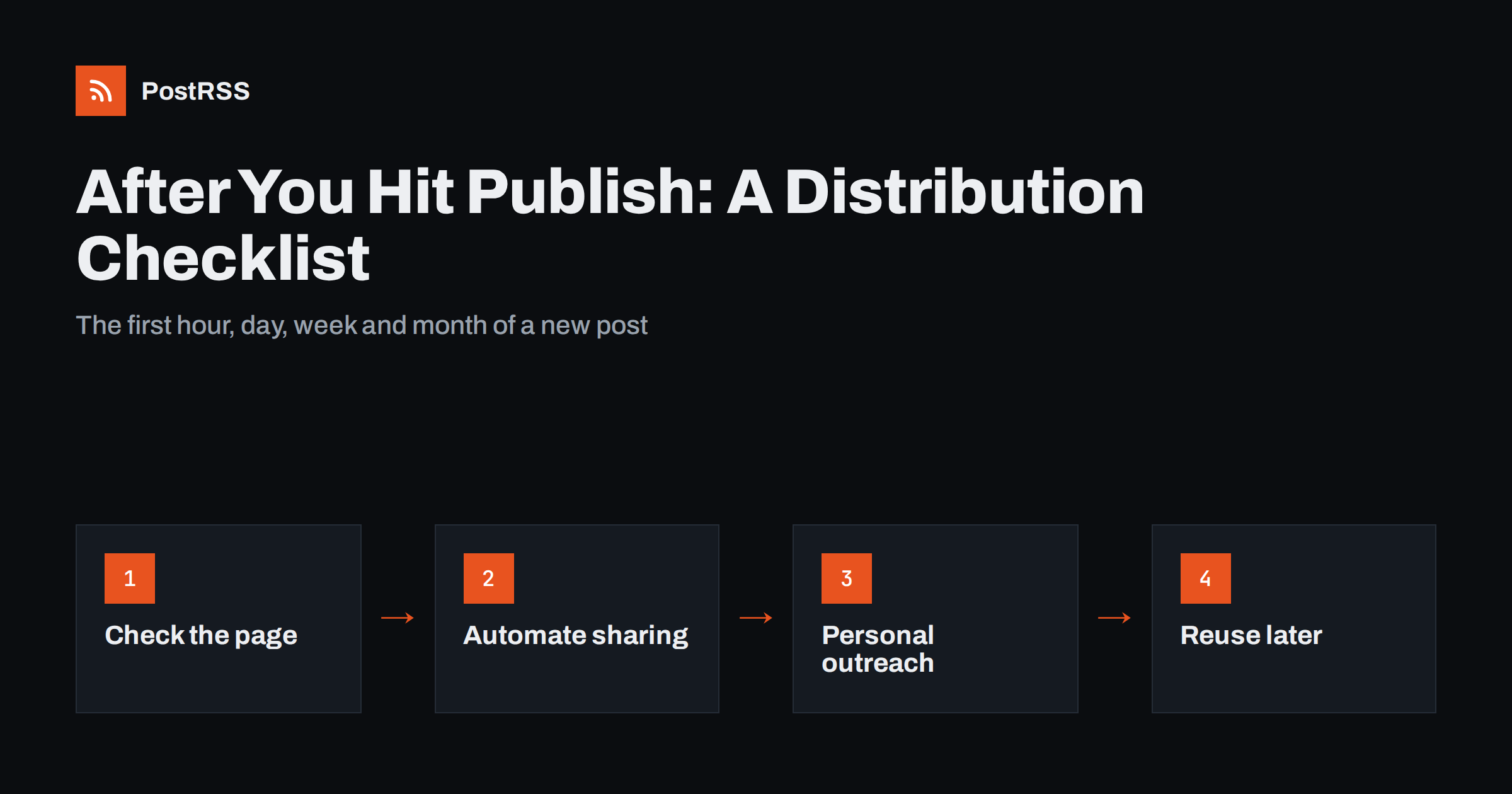
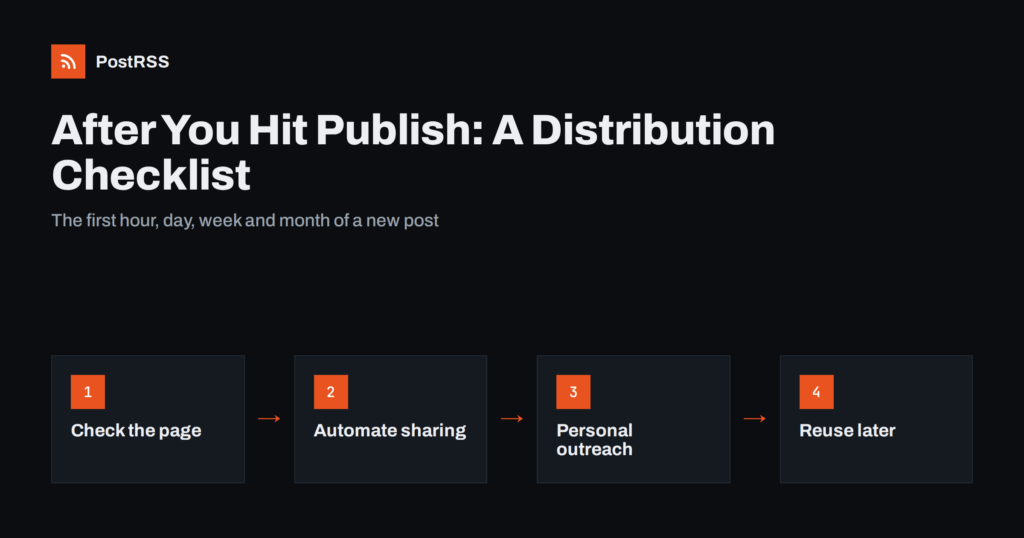
Short answer: After publishing, check that the page works and previews correctly, let automation share it to your social channels and team chats, then spend your own time on personal outreach: replying to comments, telling the people who will genuinely care, and linking the new post from older related content. Over the following weeks, reshare it in new formats and update it when it needs updating. Publishing is the start of distribution, not the end.
Writing a good article takes hours. Then it is published, shared once, and forgotten. For many small businesses and bloggers, that single share is the whole distribution plan, and the article reaches only the fraction of followers who happened to see it in the first few hours.
The problem is rarely a lack of channels. It is that distribution is a series of small, boring tasks spread over days and weeks, and small, boring tasks are easy to skip. A checklist solves that. It turns “promote the post” into specific actions with a time attached, and it makes obvious which of them a tool can do for you.
The checklist below is split into four time windows: the first hour, the first day, the first week and the first month. Items marked (automate) are ones you can hand to software once and forget; everything else benefits from a human touch.
Before distribution begins, make sure what you are distributing actually works. A broken link or a missing image in the first share gets multiplied across every channel.
og:image, title and description. If the preview is wrong, every automated post will be wrong too. See our guide to Open Graph tags and wrong preview images.These tasks are identical every time you publish, which makes them perfect for automation. Set them up once and they happen within minutes of every new post:
Automation here is not about saving a few minutes once. It is about consistency: the post goes out every time, to every channel, even when you publish at the end of a long day and forget.
Automation reaches your followers. Personal outreach reaches the specific people who will care most, and this is where your own time has the highest return.
New posts are islands until other pages link to them. This step helps readers and search engines alike:
Most of your followers did not see the first share. Resharing is not spam when it is spaced out and presented differently:
| When | Task | Automate? |
|---|---|---|
| First hour | Check page on mobile, links, preview image, title, excerpt | No |
| First hour | Confirm the item appears in the RSS feed | No |
| First hour | Post to social networks and messaging channels | Yes |
| First hour | Notify team chat; add UTM tags | Yes |
| First day | Reply to comments; tell people you mentioned | No |
| First day | Share in communities with context | No |
| First week | Link from older posts and hub pages | No |
| First week | Include in newsletter digest | Often |
| First month | Reshare with a new angle; derived posts | Partly |
| First month | Evergreen republishing | Yes |
The same four time windows work for almost anything you publish, but the details shift with the format:
Whatever the format, the pattern is the same: verify, automate the routine announcement, add personal outreach where it counts, and bring the content back later with a fresh angle.
PostRSS covers the “first hour” automation in this checklist. It checks your RSS or Atom feed every 5 minutes (every minute on Enterprise plans) and publishes each new item, with its image and link, to the networks you connect, 66 in total, including Facebook Pages, X, LinkedIn, Telegram, Mastodon, Bluesky, Pinterest and team chats such as Google Chat and Mattermost, plus webhooks for Slack, Microsoft Teams, Zapier and n8n. It can add UTM parameters to every link, restrict posting to chosen hours on paid plans, and republish evergreen articles on a schedule you choose. See the features page for details and the pricing page for plans.
Publishing is the beginning of an article’s life. Check the page, automate the routine shares so they happen every time, spend your own time on personal outreach and internal links, and reshare the post with fresh angles over the following weeks. A simple checklist turns distribution from an afterthought into a habit.
Share it as soon as you have checked that the page, links and preview image work. Automated sharing from your RSS feed typically happens within minutes, while personal outreach can follow over the first day.
Posting to your own social accounts, messaging channels and team chats, adding UTM tags, newsletter digests and evergreen republishing can all be automated. Posting in communities and personal outreach should stay manual.
Not if the reshares are spaced out and add a new angle. Most followers miss any single post, so a second share weeks later with a different hook reaches people who did not see the first one.
Social networks build link previews from the page’s Open Graph tags. If the og:image tag is missing or points to a default logo, previews will show that image. Set a featured image and check the tag before sharing.
Add UTM parameters to every shared link and compare visits, time on page and conversions by source in your analytics tool. Review this monthly rather than after each post, because single posts vary a lot.
What changed in the networks, what broke, and how to fix it before it costs you reach.
PostRSS-এর পেছনের টিম Internet Solutions-এর তৈরি। প্রতিটি পণ্য নিজের মতো করে আপনার সময় বাঁচায়।
 English
 Lietuviškai
 Deutsch
 Français
 Русский
 Español
 Polski
 Italiano
 Українська
 Čeština
 Português
 日本語
日本語 Latviešu valoda
 Eesti
Eesti Magyar
 Bahasa Indonesia
 Türkçe
 हिन्दी
 Ελληνικά
 العربية
 ไทย
ไทย Tiếng Việt
 Română
 Bahasa Melayu
 বাংলা
বাংলা