RSS do 66 sieci społecznościowych: Facebook, Instagram, X, LinkedIn, Telegram i innych Blog Program partnerski Kontakt
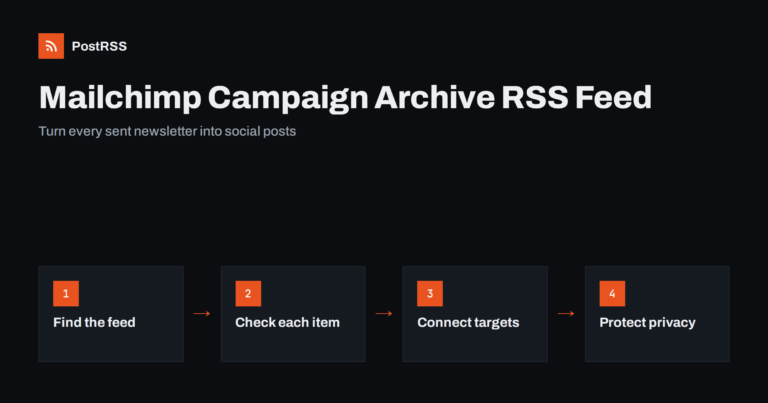
Short answer: Mailchimp publishes your sent campaigns in a public campaign archive, and that archive has an RSS feed. Each new ...
Czytaj więcej »
Short answer: A content distribution matrix is a simple table with your content types as rows and your channels as columns, whe...
Czytaj więcej »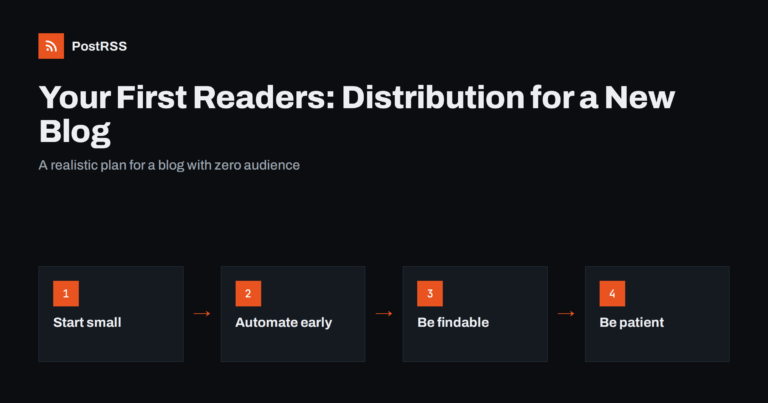
Short answer: A new blog's first readers usually come from people you already know, communities where you genuinely take part, ...
Czytaj więcej »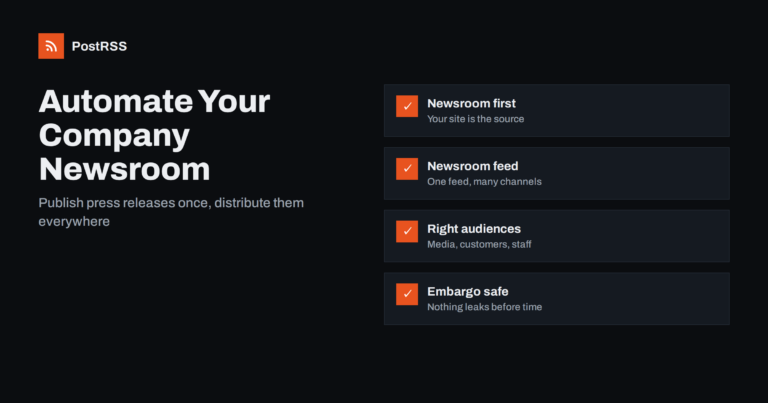
Short answer: Publish every press release and company announcement on a newsroom section of your own website, make sure that se...
Czytaj więcej »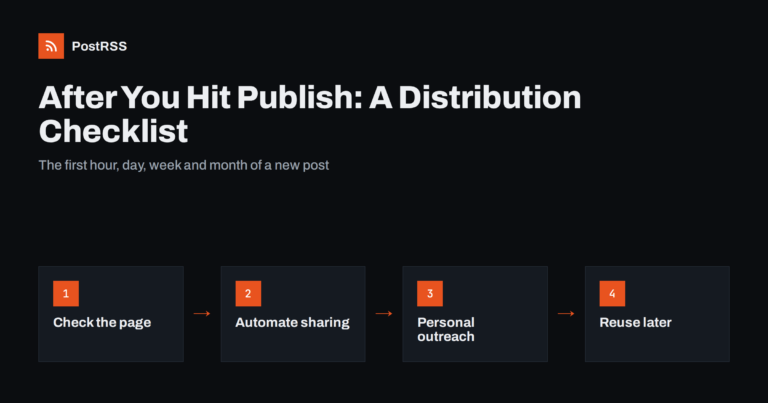
Short answer: After publishing, check that the page works and previews correctly, let automation share it to your social channe...
Czytaj więcej »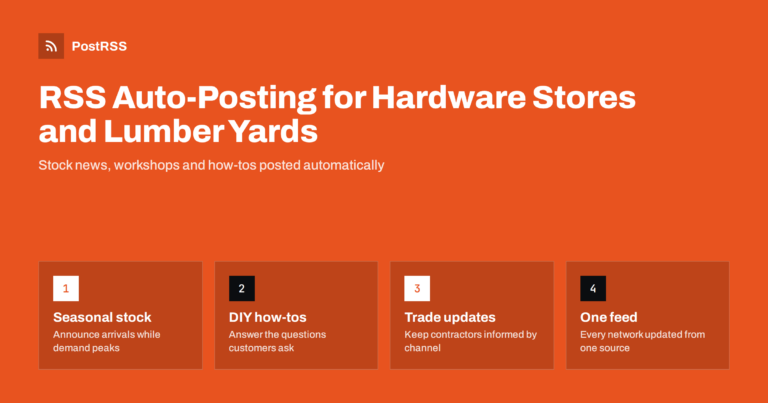
Short answer: A hardware store or lumber yard can publish short updates on its website (new stock, seasonal arrivals, workshops...
Czytaj więcej »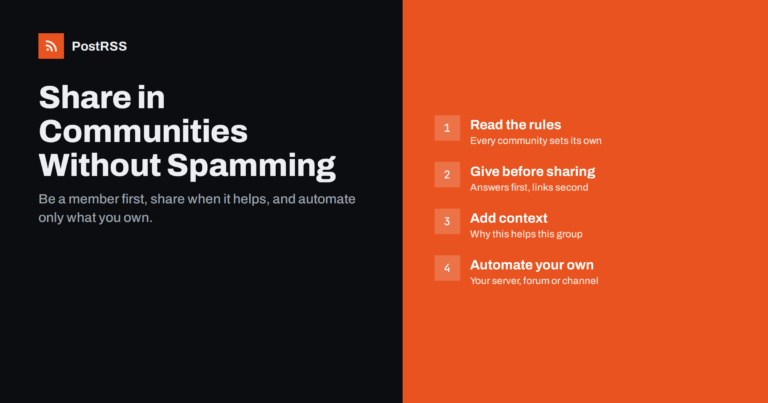
Short answer: Online communities such as forums, subreddits, Discord and Slack servers, Lemmy communities and professional grou...
Czytaj więcej »
Short answer: A brand with dealers, resellers, franchisees, distributors or partner agencies can publish a dedicated RSS feed o...
Czytaj więcej »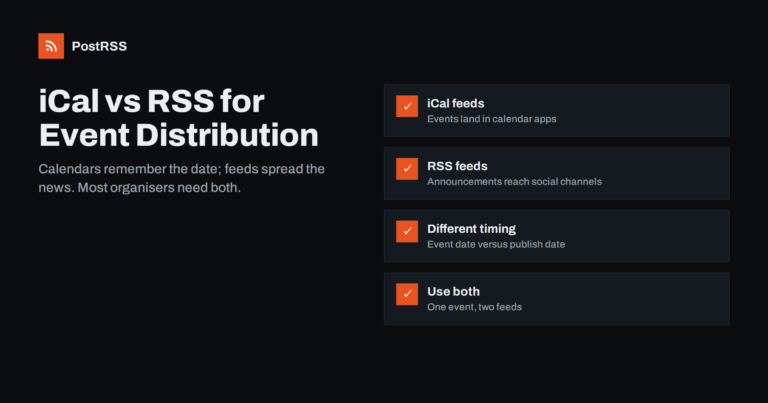
Short answer: An iCal feed (an iCalendar .ics file that people subscribe to) puts your events directly into calendar apps such ...
Czytaj więcej »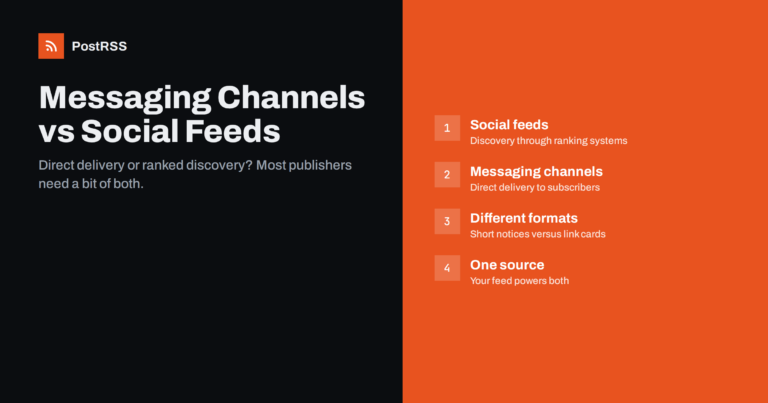
Short answer: Social feeds such as Facebook, LinkedIn and X are good for discovery: a ranking system decides who sees each post...
Czytaj więcej »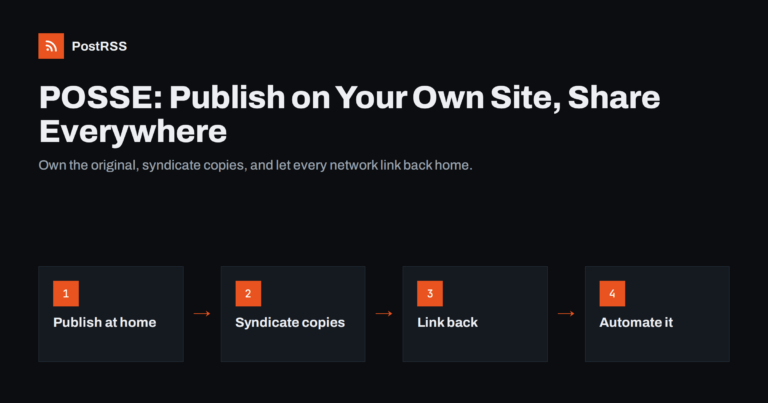
Short answer: POSSE stands for "Publish on your Own Site, Syndicate Elsewhere". You publish every piece of content first on a w...
Czytaj więcej »
Short answer: If your webcomic lives on your own website, each new page or episode can appear in the site's RSS feed, and an au...
Czytaj więcej »Tworzy je Internet Solutions, zespół stojący za PostRSS. Każdy produkt oszczędza czas na swój sposób.
 English
 Lietuviškai
 Deutsch
 Français
 Русский
 Español
 Polski
 Italiano
 Українська
 Čeština
 Português
 日本語
日本語 Latviešu valoda
 Eesti
Eesti Magyar
 Bahasa Indonesia
 Türkçe
 हिन्दी
 Ελληνικά
 العربية
 ไทย
ไทย Tiếng Việt
 Română
 Bahasa Melayu
 বাংলা
বাংলা