RSS 66 közösségi hálózatra: Facebook, Instagram, X, LinkedIn, Telegram és további platformok Blog Partnerprogram Kapcsolat
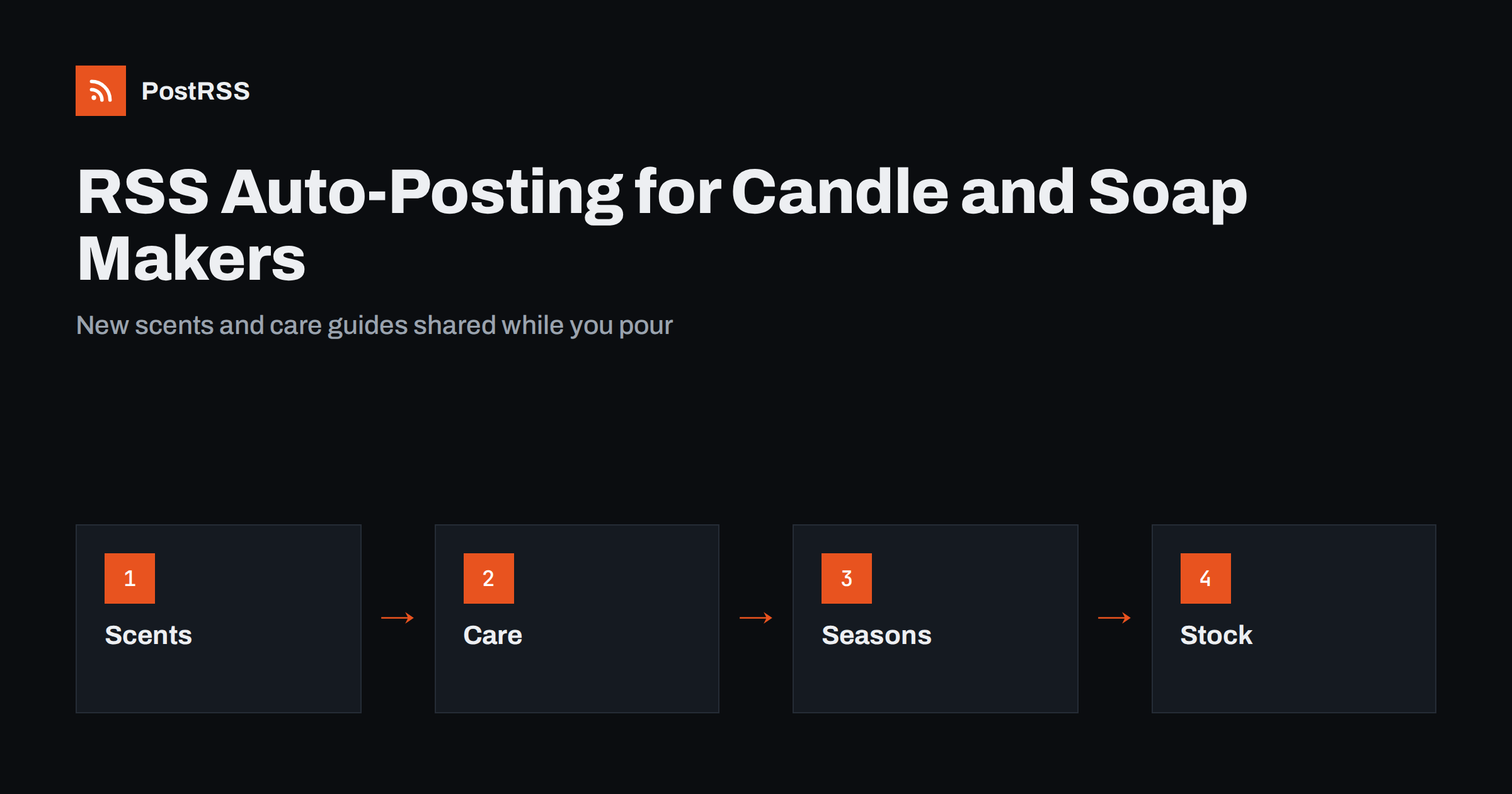
Short answer: RSS auto-posting lets candle makers and soap makers share new scents, limited batches, seasonal collections, care guides and maker stories on social media automatically. Publish each item as a page on your website or shop, let an auto-poster read the RSS feed, and it appears on your Facebook Page, Pinterest boards, Telegram channel and other channels with its link and image. Customers see what is new while you are pouring, curing and packing, while stock levels, custom orders and customer questions stay in human hands, and every page states ingredients and safety information accurately.
A small candle or soap maker is a producer, a designer, a packer and a shopkeeper at once. The day is spent at the workbench: melting wax, blending fragrance, cutting bars, curing batches and wrapping parcels. Yet handmade products are bought with the eyes and with trust. A customer wants to see the colours, read what is inside, understand how long a candle burns and know why a soap is gentle on skin. A website or an online shop can hold all of this in short pages, and automation can carry those pages to the networks where gift buyers and loyal fans look for something new. This guide explains how to set it up and where accuracy, safety and limited stock need a human decision.
A handmade brand has a steady stream of things people want to know:
Each of these can be a short page on your own website. When the page is published, the feed announces it. You write it once, in a place that you own, and the automation spreads it to the networks where customers spend time. Pages on your site also appear in search results when someone looks for a handmade gift or a particular scent, which social posts alone do not achieve.
Most maker websites run on platforms that publish feeds without extra work:
/feed/ and a feed for every category, such as /category/new-scents/feed/. If you are unsure of the address, see how to find your WordPress feed link.Use categories to separate the audiences: new products, care guides, stories and events. Each category has its own feed, and each feed can go to the channel where it works best; new scents to the Facebook Page, guides and gift ideas to Pinterest, market dates to Telegram. Routing by category is explained in category filtering for auto-posting.
| Content | Automate? | Notes |
|---|---|---|
| New products and seasonal collections | Yes | One page per product or collection, with photographs and a link to the shop |
| Care guides and ingredient pages | Yes | Evergreen pages that keep bringing visitors |
| Maker stories and market dates | Yes | Keep dates on the page, so one change updates everything |
| Gift guides and bundles | Yes | Refresh before each gift season |
| Stock levels and last items | By hand | Limited batches sell out quickly; post availability yourself when it is true |
| Custom orders, skin reactions and complaints | By hand | A person answers, quickly and carefully |
A simple rule: if it is general information on a finished page of your website, automate it. If it concerns today’s stock, one order or a customer’s skin, handle it personally.
A good product page answers the questions a customer would ask at a market stall. What does it smell like, and is the scent light or strong? How long does a candle burn, and what size is the vessel? What are the ingredients, and what is the wax made of? Is the soap suitable for sensitive skin, and what skin type is it designed for? How is it packaged, and is it suitable as a gift? Give each product its own page with those answers, a photograph taken in daylight and a clear link to buy. Describe the experience in plain words, and avoid vague promises such as miracle results.
Practical guides are where a small brand can build lasting visibility. A short page on how to burn a candle safely, why trimming the wick matters and how to extinguish it explains good habits and shows that you care about customers. A guide to storing soap on a draining dish, or to the difference between hot process and cold process, answers questions that people search for. Safety information deserves particular care: state burning guidance and warnings clearly, mention allergens such as nuts or fragrance components where relevant and keep these pages up to date.
Keep file sizes reasonable so pages load quickly on a phone; see image optimization for RSS auto-posting. If a network shows the wrong picture, check the Open Graph tags of the page as described in why auto-posted links show the wrong image.
Candles and soaps are popular gifts, and many makers earn most of their income in the weeks before major holidays. Plan pages for gift guides, bundles and seasonal collections well ahead, and share them as the season approaches. A page for repeat buyers, describing how to reorder a favourite scent or join a subscription box, turns a happy customer into a regular one. Put dates and conditions on the page, not in each post, and update or retire seasonal pages when the season ends.
Most makers do best with Pinterest and a Facebook Page. Add others only if you can keep them active.
/feed/ vagy /blogs/news.atom, and check that it lists recent items.A small maker does not need a heavy publishing plan. One new product page, one care guide and one story each month already keeps a feed alive, and the pages remain useful for years. Plan the gift seasons a few weeks ahead, photograph new batches on the day they are finished and let the feed share them when customers are ready to buy. Between batches, an evergreen guide continues to bring visitors while you are back at the workbench.
PostRSS has been automating RSS posting since 2014. It checks your website feeds as often as every minute and publishes each new product, guide and maker story, with its real image and link, to the channels you connect, from Facebook Pages and Pinterest boards to Telegram, X and many more among its 66 supported networks. You can choose how each post is built, filter items by keywords, add UTM parameters and post only within chosen hours or at exact times in your time zone. See the PostRSS features page for everything it does and the pricing page for plan limits. More ideas for small businesses are under the Small Business tag.
A candle or soap maker spends the day at the workbench, and handmade products are bought with the eyes and with trust. RSS auto-posting shares each new scent, collection, care guide and maker story automatically on your Facebook Page, Pinterest boards and other channels, on time and with the right image. Give every product its own page, state ingredients and safety information accurately, keep dates and prices on the shop page, make only claims you can support, route content by category and handle stock, custom orders and customer questions personally.
Yes. If your website or shop has a blog or news section, its RSS feed can be connected to an auto-poster that shares each new page on your Facebook Page, Pinterest boards and other channels. Stock and customer questions should still be handled personally.
New scents and collections, care and safety guides, ingredient pages, maker stories, gift guides and market dates. Each item should have its own page on your website so the feed can share it.
You can announce a batch on its page, but post live availability by hand. Limited items sell out quickly, and a scheduled post can promise something that is no longer there.
List ingredients and warnings as your local rules require, and describe how a product feels without medical claims. Use words such as natural only when they are accurate.
Pinterest suits gift ideas and home inspiration that people save for months, a Facebook Page reaches loyal customers and market visitors, and Telegram helps with early notes about new batches.
What changed in the networks, what broke, and how to fix it before it costs you reach.
Az Internet Solutions, a PostRSS mögött álló csapat fejlesztései. Mindegyik a maga módján spórol időt.
 English
 Lietuviškai
 Deutsch
 Français
 Русский
 Español
 Polski
 Italiano
 Українська
 Čeština
 Português
 日本語
 Latviešu valoda
 Eesti
 Magyar
 Bahasa Indonesia
 Türkçe
 हिन्दी
 Ελληνικά
 العربية
 ไทย
 Tiếng Việt
 Română
 Bahasa Melayu
 বাংলা