Technical SEO

This tag covers the technical website factors that affect how well automated social distribution performs, including SSL/HTTPS configuration, Open Graph meta tags, and feed structure — topics that sit at the intersection of site infrastructure and social media automation. It explains how PostRSS reads a site's existing metadata (Open Graph tags, featured images, titles) to build social post previews, meaning technical SEO fundamentals directly affect how professional automated posts look once published. Articles here cover practical checks readers can run on their own site, such as verifying Open Graph tags are present and SSL certificates are valid, before troubleshooting why automated posts look broken or incomplete. This tag bridges general technical SEO practice with PostRSS-specific automation concerns. Pair it with ssl-certificates and domain-verification for related technical setup topics.
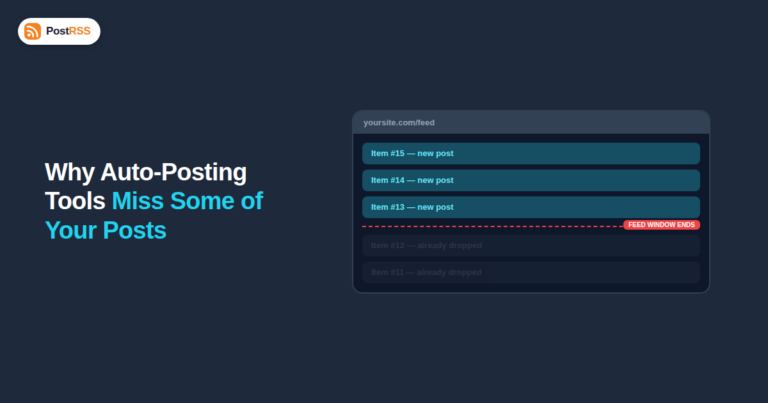
RSS Feed Pagination: Why Auto-Posting Tools Miss Some of Your Posts
Mis à jour le : 2026-08-30

Here's a scenario that trips up more publishers than you'd expect: you publish five articles in one busy afternoon, expecting a...

En savoir plus »

RSS Feed Security: Can Someone Spoof or Hijack Your Feed?
Updated: 2026-08-28

RSS feeds are public by design, which raises a reasonable question: can someone spoof your feed, impersonate it, or hijack the ...

En savoir plus »
RSS Feed Caching Explained: Why Your Auto-Posts Are Delayed and How to Fix It
Updated: 2026-08-28

If your new post takes minutes (or longer) to show up in your RSS feed, or an auto-posting tool seems slow to pick up fresh con...

En savoir plus »
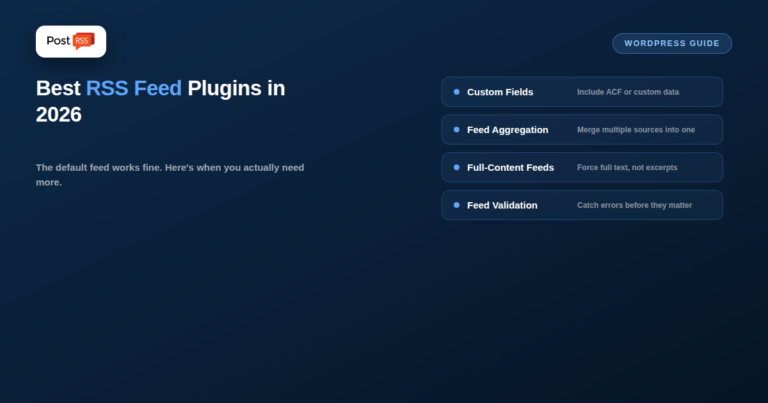
Best WordPress RSS Feed Plugins in 2026 (Beyond the Default Feed)
Mis à jour le : 2026-08-30

WordPress generates a working RSS feed automatically, with zero plugins required — but the default feed is intentionally basic,...

En savoir plus »
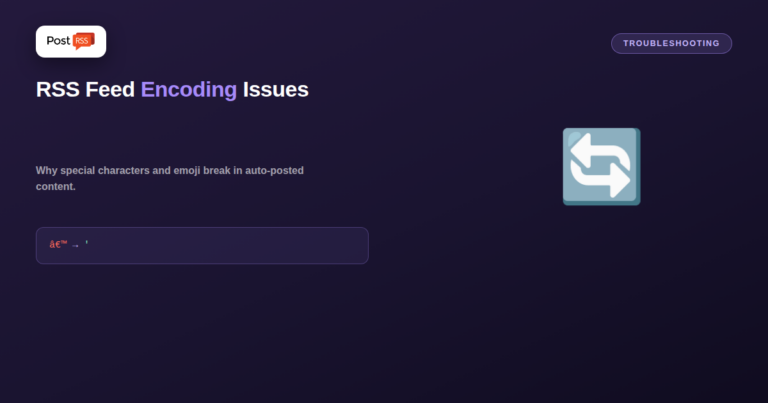
RSS Feed Encoding Issues: Why Special Characters and Emoji Break Auto-Posted Content
Mis à jour le : 2026-08-30

Garbled characters in auto-posted content — curly quotes turning into "’", emoji showing as boxes, accented letters replaced ...

En savoir plus »
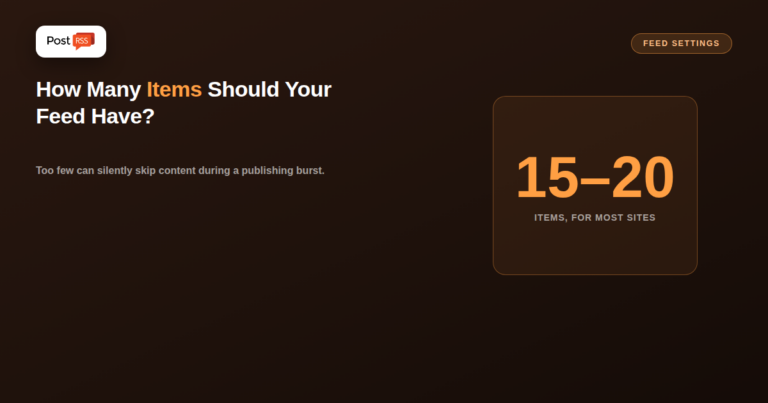
How Many Items Should Be in Your RSS Feed? (And Why It Matters for Auto-Posting)
Mis à jour le : 2026-08-30

Most CMS platforms default to showing the 10 or 15 most recent posts in an RSS feed, and for the vast majority of sites, that d...

En savoir plus »

Is Your RSS Feed Public? What Site Visitors (and Competitors) Can See in It
Mis à jour le : 2026-08-30

Yes — by default, your RSS feed is just as public as your website itself. Anyone who knows or guesses the URL (typically /feed/...

En savoir plus »
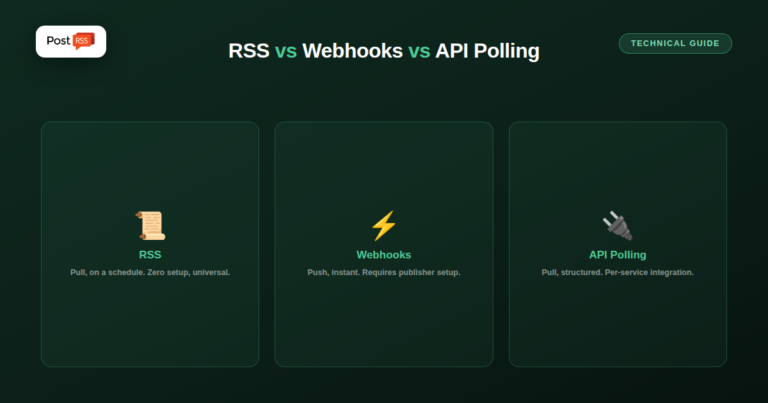
RSS vs Webhooks vs API Polling: How Automation Tools Actually Detect New Content
Mis à jour le : 2026-08-30

RSS, webhooks, and API polling all answer the same underlying question — "how does a tool know something new happened?" — but t...

En savoir plus »
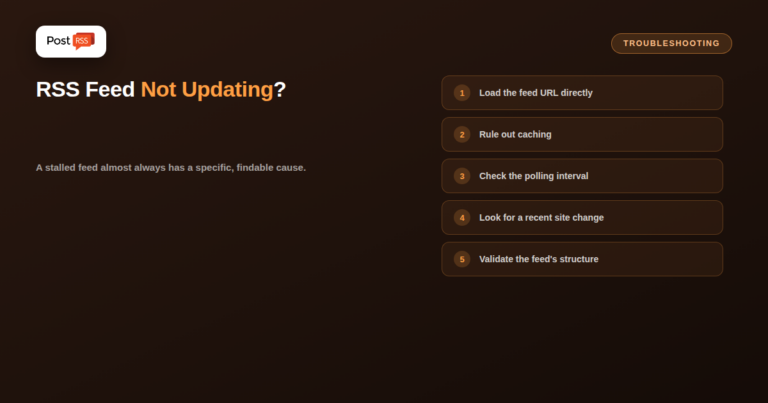
RSS Feed Not Updating? How to Diagnose and Fix It
Mis à jour le : 2026-08-30

A feed that stops updating almost always has a specific, findable cause rather than being randomly broken. Working through a sh...

En savoir plus »
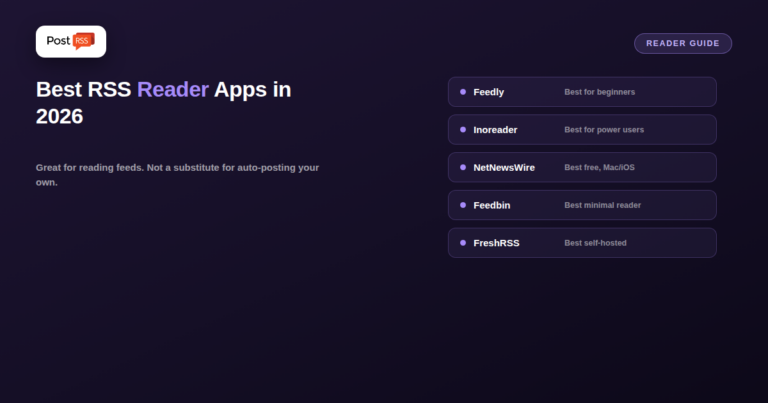
Best RSS Reader Apps in 2026 (and Why They Don’t Replace Auto-Posting)
Mis à jour le : 2026-08-30

RSS readers and RSS auto-posting tools solve two completely different problems, even though both run on the same feed format. A...

En savoir plus »
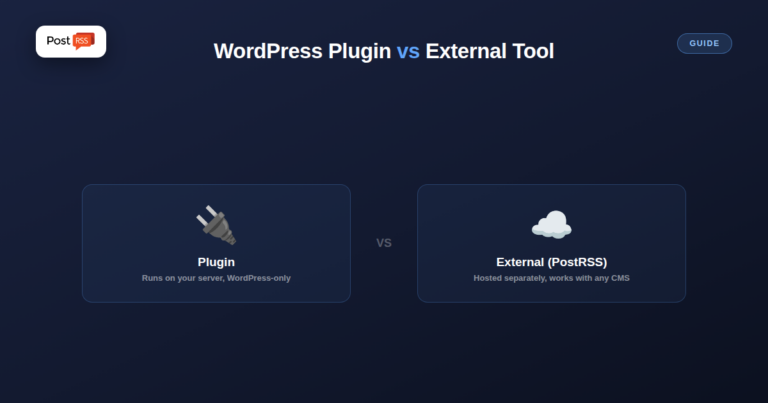
WordPress Plugin vs External RSS Automation Tool: Which Should You Use?
Mis à jour le : 2026-08-30

If your site runs on WordPress, you have a genuine choice most non-WordPress publishers don't: automate social posting through ...

En savoir plus »
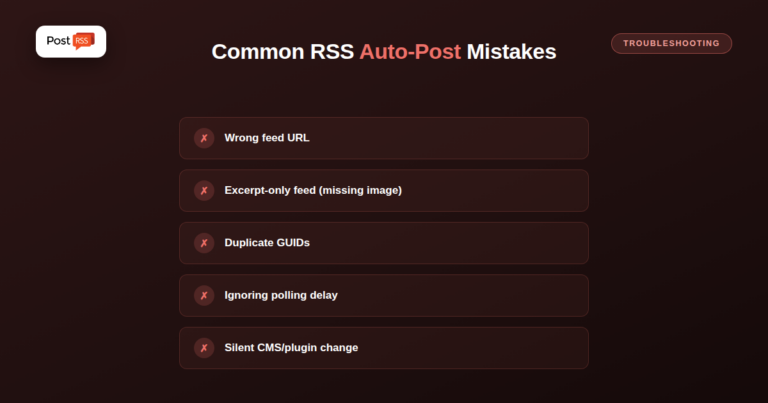
Common RSS Auto-Post Mistakes That Break Your Automation
Mis à jour le : 2026-08-30

Most RSS auto-posting problems trace back to a small, recurring set of causes — not a broken automation tool, but a mismatch be...

En savoir plus »

Chargement de nouveaux articles…
Menu
x
PostRSS - Plateforme d'automatisation de flux RSS et outil d'auto-publication
Aperçu de la confidentialité

Ce site utilise des cookies afin de vous fournir la meilleure expérience utilisateur possible. Les informations relatives aux cookies sont stockées dans votre navigateur et permettent, entre autres, de vous reconnaître lors de votre retour sur notre site et d'aider notre équipe à comprendre quelles sections du site vous trouvez les plus intéressantes et utiles.