Content Strategy

This tag holds higher-level articles on structuring a content strategy so that every new article, page, or product update automatically becomes a set of social posts, rather than requiring a separate manual step after publishing. It ties directly into how PostRSS is meant to be used: connect a feed once, choose your Targets across Facebook, X, LinkedIn, Pinterest, or VKontakte depending on your plan, and let the 5-minute refresh cycle handle ongoing distribution. Because automation removes the marginal cost of sharing each new piece of content, strategy articles here often focus on publishing cadence and audience fit rather than execution mechanics. This tag complements content-marketing-strategy with a slightly broader, less automation-specific lens, covering how automated distribution fits into decisions about content type, frequency, and platform mix. Readers here are typically deciding what to publish and where, rather than how to configure a specific PostRSS feature. Once a strategy is set, the platform-specific tags elsewhere on the blog cover the corresponding setup steps.
Does Automated Posting Get Penalized by Social Media Algorithms?
Actualizado: 2026-08-30

A common worry before setting up any auto-posting tool is whether the platforms themselves will quietly punish content for bein...

Leer más »
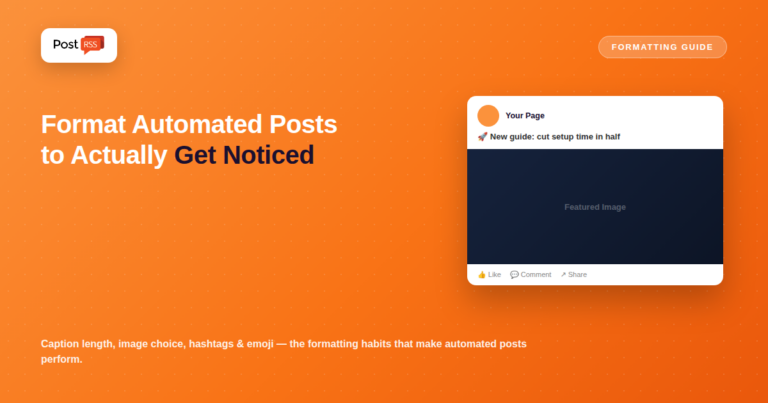
Facebook Post Formatting Best Practices for Automated Content in 2026
Updated: 2026-08-24

Updated: August 24, 2026 Once RSS automation is reliably posting to your Facebook Page, formatting becomes the next lev...

Leer más »
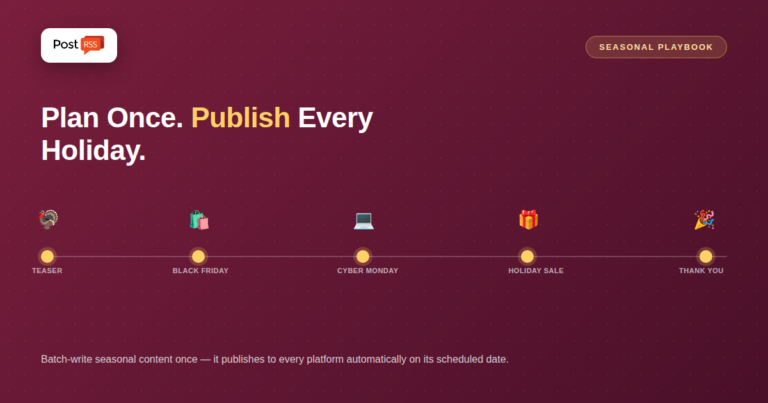
Seasonal & Holiday Campaign Planning with RSS Automation
Updated: 2026-08-24

Updated: August 24, 2026 Seasonal and holiday campaigns are where most social media calendars either shine or quietly fall a...

Leer más »
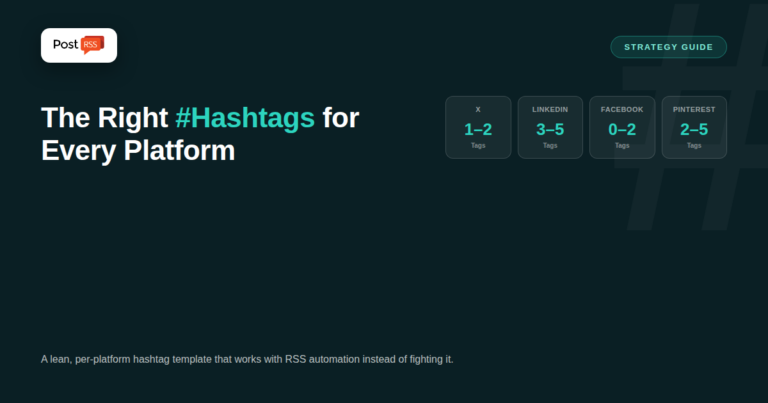
The Complete Hashtag Strategy Guide for Automated RSS Posts
Updated: 2026-08-24

Updated: August 24, 2026 Automating your RSS-to-social pipeline solves the "did I remember to post this everywhere...

Leer más »
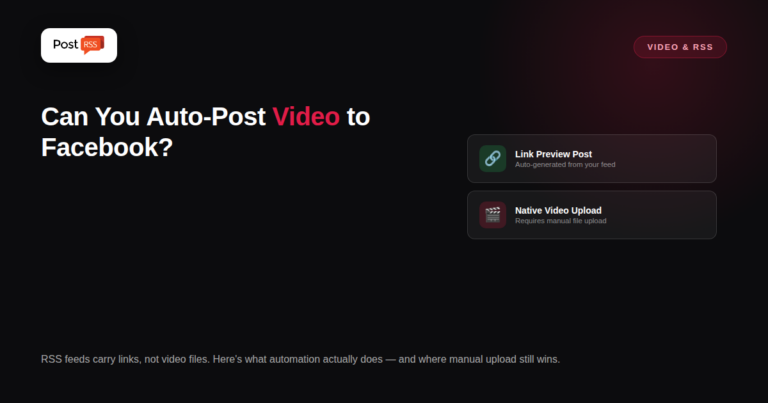
Can You Auto-Post Video to Facebook from an RSS Feed? What’s Possible in 2026
Updated: 2026-08-24

Updated: August 24, 2026 Facebook's 2026 algorithm continues rewarding native video and Reels more generously than ...

Leer más »
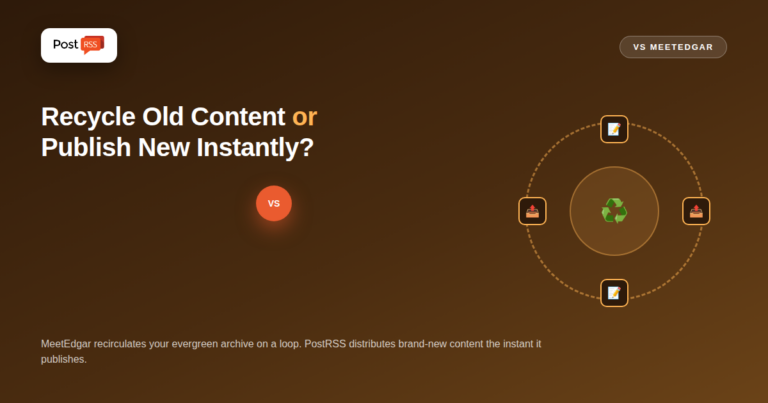
PostRSS vs MeetEdgar: Instant Distribution vs Evergreen Recycling
Updated: 2026-08-24

Updated: August 24, 2026 MeetEdgar built its name on one specific idea: your best social content shouldn't disappea...

Leer más »
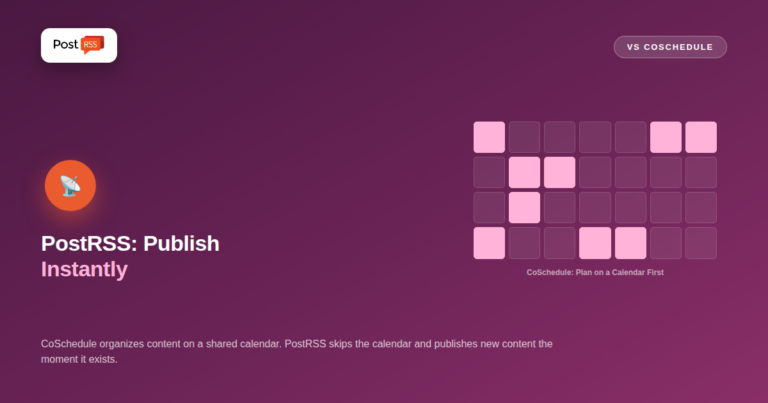
PostRSS vs CoSchedule: Automatic Distribution vs Planned Calendar
Updated: 2026-08-24

Updated: August 24, 2026 CoSchedule built its reputation around the marketing calendar — a single visual home for...

Leer más »
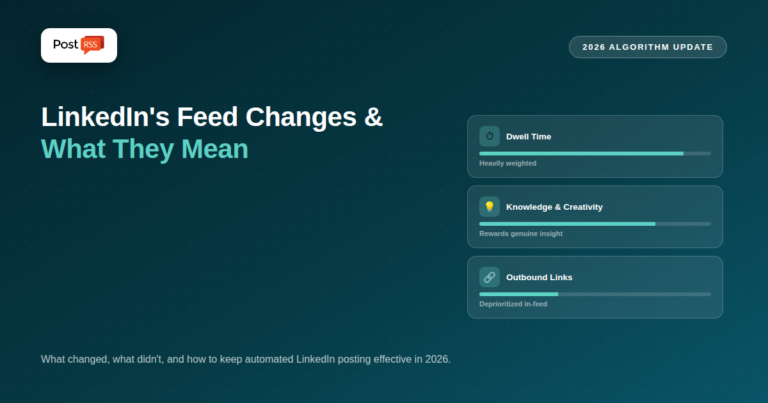
LinkedIn’s 2026 Algorithm Changes: What They Mean for Automated Posting
Updated: 2026-08-24

Updated: August 24, 2026 LinkedIn's ranking system has continued to diverge from the other major networks through 2...

Leer más »
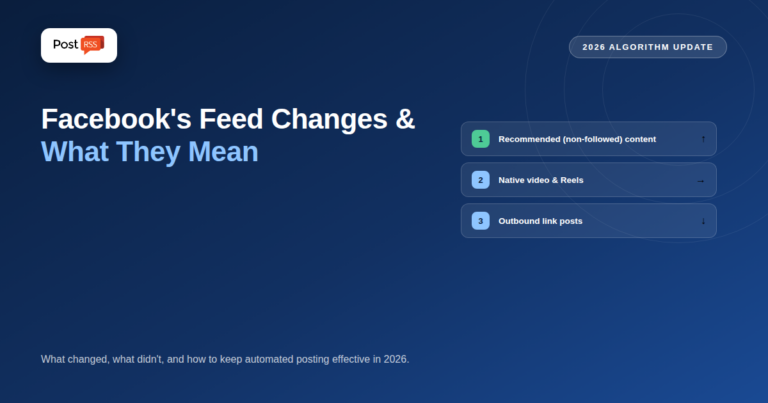
Facebook’s 2026 Feed Algorithm Changes: What They Mean for Automated Posting
Actualizado: 26-08-2026

Updated: August 24, 2026 Facebook's feed ranking has shifted meaningfully through 2026, continuing a multi-year move toward ...

Leer más »
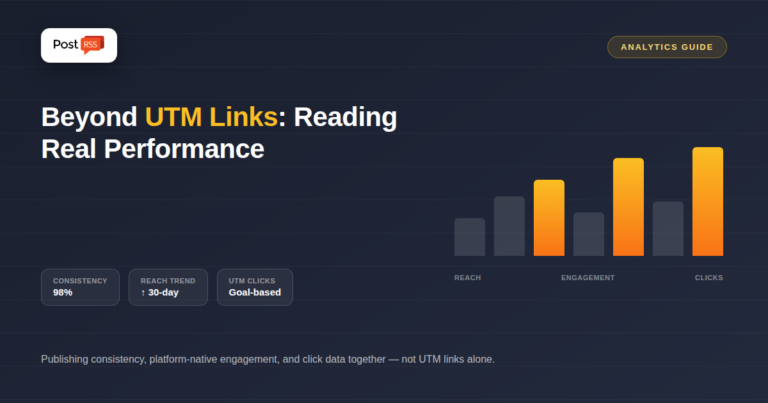
Beyond UTM Links: How to Actually Read Your Social Media Performance After Automating
Updated: 2026-08-24

Updated: August 24, 2026 Once RSS automation is handling distribution, a natural question follows almost immediately: is it ...

Leer más »
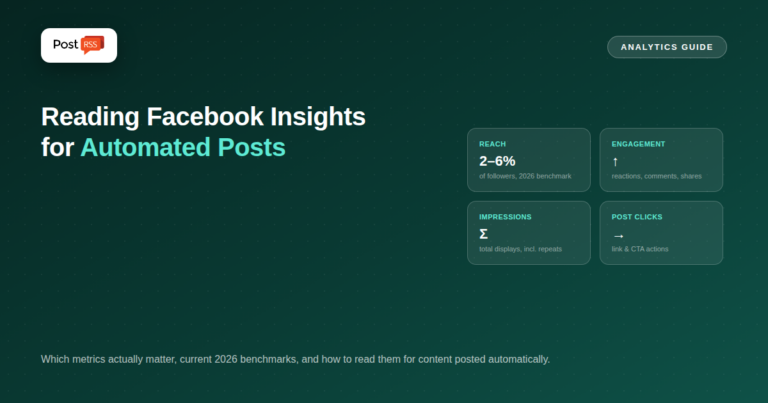
Reading Facebook Page Insights for Automated Posts: A Practical Guide
Updated: 2026-08-24

Updated: August 24, 2026 Once RSS automation is reliably posting to your Facebook Page, the natural next question is wh...

Leer más »
How to Make Auto-Posted Social Media Captions Sound Human, Not Robotic
Updated: 2026-08-23

Updated: August 23, 2026 "Won't my automated posts just look like a robot is running my social media?" It...

Leer más »

Cargando más artículos…
Menú
x
PostRSS - Plataforma de automatización de feeds RSS y herramienta de auto-publicación
Resumen de privacidad

Este sitio web utiliza cookies para que podamos brindarle la mejor experiencia de usuario posible. La información de las cookies se almacena en su navegador y realiza funciones como reconocerlo cuando regresa a nuestro sitio web y ayudar a nuestro equipo a comprender qué secciones del sitio web le resultan más interesantes y útiles.