
Content Strategy

This tag holds higher-level articles on structuring a content strategy so that every new article, page, or product update automatically becomes a set of social posts, rather than requiring a separate manual step after publishing. It ties directly into how PostRSS is meant to be used: connect a feed once, choose your Targets across Facebook, X, LinkedIn, Pinterest, or VKontakte depending on your plan, and let the 5-minute refresh cycle handle ongoing distribution. Because automation removes the marginal cost of sharing each new piece of content, strategy articles here often focus on publishing cadence and audience fit rather than execution mechanics. This tag complements content-marketing-strategy with a slightly broader, less automation-specific lens, covering how automated distribution fits into decisions about content type, frequency, and platform mix. Readers here are typically deciding what to publish and where, rather than how to configure a specific PostRSS feature. Once a strategy is set, the platform-specific tags elsewhere on the blog cover the corresponding setup steps.
How to Build a Content Curation Strategy with RSS Feeds in 2026
Updated: 2026-09-15

Table of Contents Introduction What Is Content Curation? Why RSS Feeds Are Still Powerful in 2026 Step-by-Step: B...

Leer más »

RSS Auto-Posting for Yoga Studios and Wellness Centers
Updated: 2026-09-06

A yoga studio publishes more updates in a typical month than almost any other small business on the block. The schedule changes...

Leer más »

RSS Auto-Posting for Interior Designers and Home Decor Studios
Updated: 2026-09-04

An interior design studio finishes a client reveal on a Tuesday afternoon — the after photos are edited, the project page goes ...

Leer más »
RSS Auto-Posting for Bakeries and Pastry Shops
Updated: 2026-09-04

A bakery's social feed lives or dies on timing. The croissants come out of the oven at 7am, the sourdough sells out by 9, the c...

Leer más »

GA4 Guide: How to Track Traffic from Your RSS Auto-Posted Links
Updated: 2026-09-03

Auto-posting a blog feed to five different social platforms solves the distribution problem, but it creates a new one: once tra...

Leer más »

RSS Auto-Posting for Coffee Shops and Cafes
Updated: 2026-09-03

A coffee shop's social media should feel alive — today's pastry case, a new seasonal drink, live music on Friday, a hiring sign...

Leer más »

RSS Auto-Posting for Coworking Spaces and Shared Offices
Updated: 2026-09-03

A coworking space runs on constant small updates — a new member joining, an event happening in the common room next week, a day...

Leer más »
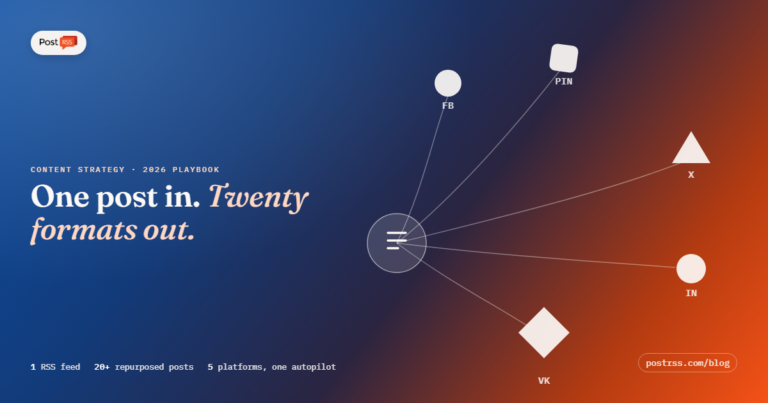
Content Repurposing in 2026: How to Turn One Blog Post Into 20+ Social Media Posts on Autopilot
Actualizado: 2026-08-30

Most teams don't have a content shortage — they have a distribution shortage. Here's the atomization framework that turns a sin...

Leer más »

How Healthcare Clinics and Medical Practices Automate Compliant Content Distribution
Actualizado: 2026-08-30

Healthcare clinics and medical practices have a legitimate use case for RSS auto-posting — sharing new blog content, service up...

Leer más »
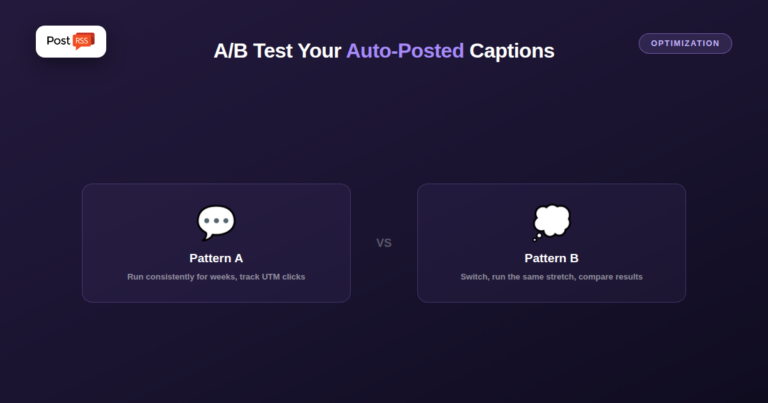
How to A/B Test Your Auto-Posted Social Media Captions
Updated: 2026-08-28

A/B testing auto-posted captions works differently than testing a landing page or an email subject line, because your RSS feed ...

Leer más »

RSS Auto-Posting for Multi-Author Blogs: What Changes With Multiple Writers
Actualizado: 2026-08-30

RSS auto-posting doesn't care how many people write for your blog — a feed is a feed regardless of author count, and any auto-p...

Leer más »
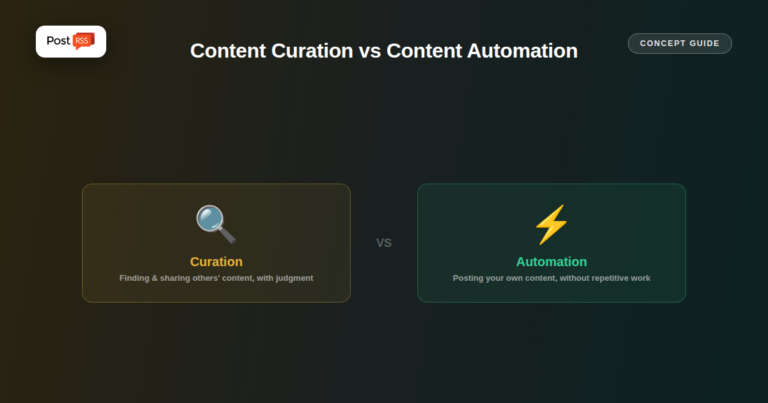
Content Curation vs Content Automation: What’s the Difference?
Actualizado: 2026-08-30

"Content curation" and "content automation" get used almost interchangeably in casual conversation, but they describe genuinely...

Leer más »

Cargando más artículos…
Menú
x
PostRSS - Plataforma de automatización de feeds RSS y herramienta de auto-publicación
Resumen de privacidad

Este sitio web utiliza cookies para que podamos brindarle la mejor experiencia de usuario posible. La información de las cookies se almacena en su navegador y realiza funciones como reconocerlo cuando regresa a nuestro sitio web y ayudar a nuestro equipo a comprender qué secciones del sitio web le resultan más interesantes y útiles.