
Automation

This is a general tag for articles on automating social media publishing, ranging from the simple case of mirroring a single blog to one Facebook Page, up to multi-brand, multi-network distribution running across several PostRSS Targets at once. In PostRSS terms, automation means connecting a feed once, choosing which networks to publish to, and letting the 5-minute (or 1-minute, on Enterprise) feed check handle the rest without further manual input. Articles here are a useful starting point before moving to the platform-specific guides elsewhere on the blog, since they cover the shared concepts — feeds, Targets, Tasks, and refresh intervals — that apply across every network PostRSS supports. They also cover the tradeoffs of full automation, such as losing manual control over exact post wording in exchange for consistency and speed. Use this tag as a hub for understanding how the pieces fit together before diving into a single network's setup guide.
RSS Auto-Post Frequency: How Often Should Your Feed Actually Be Checked?
Actualizado: 2026-08-30

How quickly does an automation tool actually notice a new post and publish it to social media? The honest answer depends entire...

Leer más »

RSS to Email: Turning Your Blog Feed into an Automatic Newsletter Digest
Actualizado: 2026-08-30

Your RSS feed doesn't have to stop at social media. The same feed that powers automatic posting to Facebook, X, LinkedIn, Pinte...

Leer más »
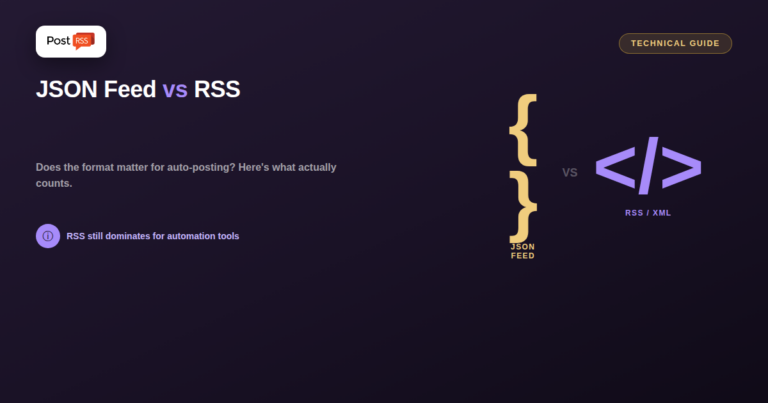
JSON Feed vs RSS: Does the Format Matter for Auto-Posting?
Actualizado: 2026-08-30

If you've come across "JSON Feed" while researching RSS and wondered whether you need it, whether it's replacing RSS, or whethe...

Leer más »
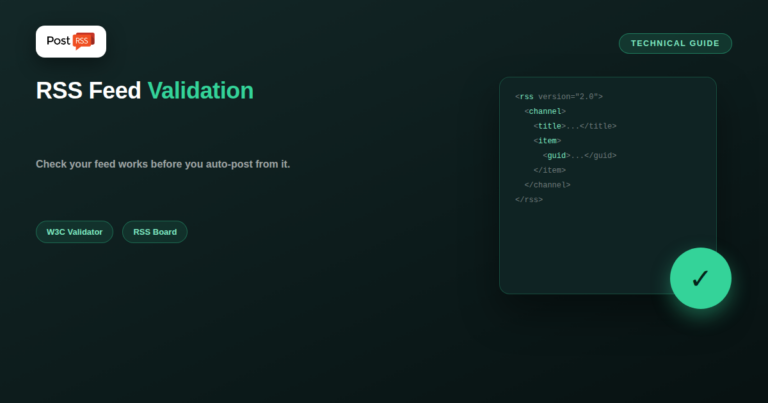
RSS Feed Validation: How to Make Sure Your Feed Works Before You Auto-Post From It
Actualizado: 2026-08-30

Before connecting any feed to an automation tool, it's worth confirming the feed itself is actually valid. A malformed RSS feed...

Leer más »

Facebook Personal Profile vs Page: Why You Can Only Auto-Post to One of Them
Actualizado: 2026-08-30

A surprisingly common assumption is that automating Facebook posting means automating your personal profile — the account you a...

Leer más »

Auto-Posting and Copyright: What You Can (and Can’t) Automatically Republish from an RSS Feed
Actualizado: 2026-08-30

RSS automation is built around republishing — taking a title, link, and image from your own feed and pushing it to social platf...

Leer más »

RSS Feeds Without Full Content: How to Auto-Post When Your Feed Only Has Excerpts
Actualizado: 2026-08-30

Not every RSS feed contains the same amount of content. Some publish the full article text with every item; others deliberately...

Leer más »
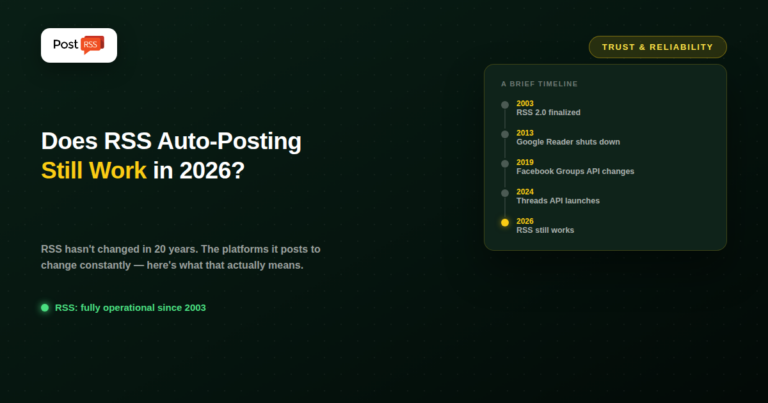
Does RSS Auto-Posting Still Work in 2026? (After Platform API Changes)
Actualizado: 2026-08-30

Every few years, someone declares RSS dead — and every few years, that turns out to be wrong. Google Reader's 2013 shutdown is ...

Leer más »
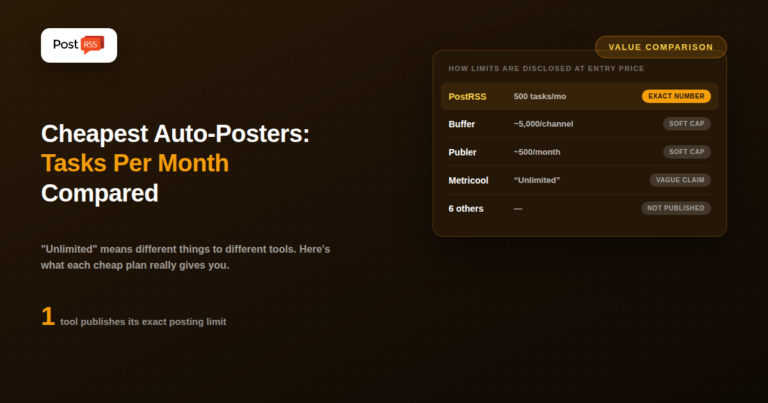
Cheapest Auto-Posters: Posting Tasks Per Month Compared
Actualizado: 26-08-2026

Every pricing page in the social media automation space uses the word "unlimited" somewhere. Unlimited posts. Unlimited schedul...

Leer más »
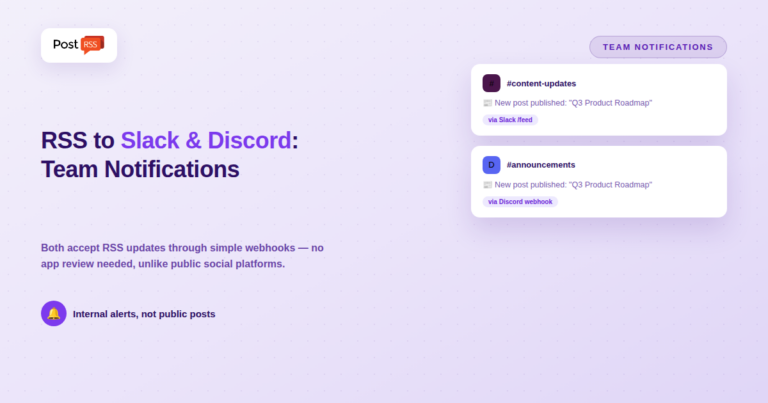
RSS Feed to Slack & Discord: Automating Team Notifications
Actualizado: 2026-08-30

Not every RSS automation use case is about reaching a public audience. Plenty of teams want the opposite: a private, internal n...

Leer más »
Top 5 Best Social Media Auto-Poster Tools in 2026: The Ultimate Review
Actualizado: 2026-08-30

Published on August 18, 2026 | Category: Social Media Marketing & Automation In the fast-paced world of...

Leer más »

Auto-Post to Facebook: How to Automate Your Page and Group Content via RSS Feeds
Actualizado: 2026-08-30

In the digital marketing world, Facebook remains an absolute powerhouse for driving targeted traffic and building an engaged co...

Leer más »

Cargando más artículos…
Menú
x
PostRSS - Plataforma de automatización de feeds RSS y herramienta de auto-publicación
Resumen de privacidad

Este sitio web utiliza cookies para que podamos brindarle la mejor experiencia de usuario posible. La información de las cookies se almacena en su navegador y realiza funciones como reconocerlo cuando regresa a nuestro sitio web y ayudar a nuestro equipo a comprender qué secciones del sitio web le resultan más interesantes y útiles.