RSS Automation

This tag covers automating multi-channel publishing using RSS feeds as the source, the core function PostRSS is built around. It covers setup, connecting a feed URL and choosing destination Targets, formatting rules that differ per network, and how to handle feeds that publish irregularly or in sudden bursts using PostRSS's Advanced Calendar timing controls. Because PostRSS checks feeds every 5 minutes on every standard plan, RSS automation here means near-real-time publishing rather than a delayed daily digest. Articles under this tag are more technical than the general "automation" tag, focusing specifically on the RSS-driven workflow rather than CSV-based alternatives. This tag is a useful hub for readers who already understand what RSS is and want to move directly into automating a feed.
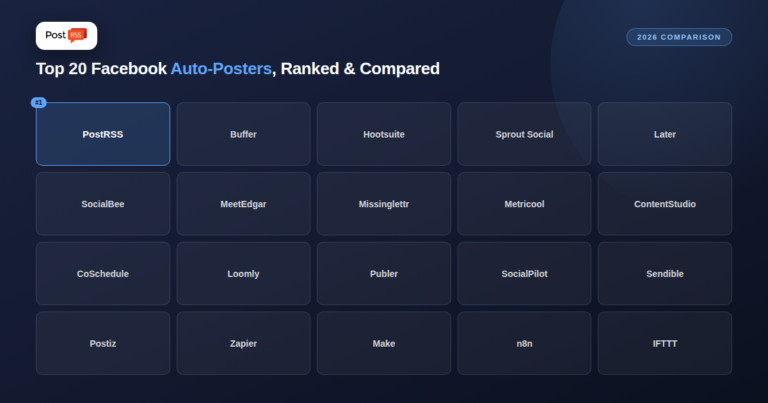
Top 20 Facebook Auto-Posters in 2026 (Reviewed and Compared to PostRSS)
Updated: 2026-08-28

"Auto-poster" gets used loosely to describe two genuinely different categories of tool: dedicated social media schedulers that ...

Mehr lesen »
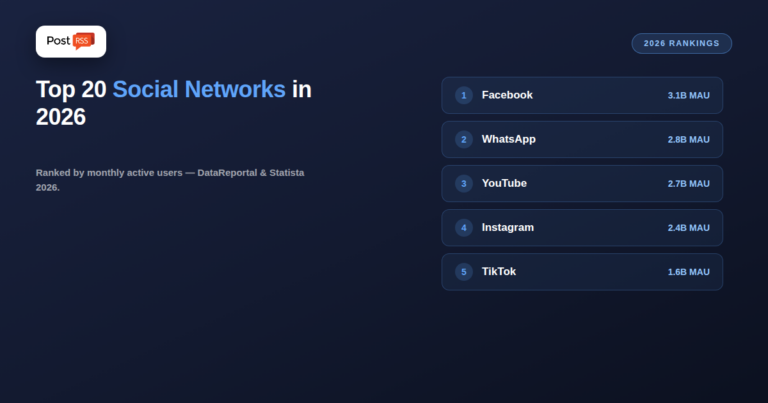
Top 20 Social Networks in 2026, Ranked by Monthly Active Users
Aktualisiert: 2026-08-30

Ranked by monthly active users (MAU) from public 2026 data (DataReportal's Digital 2026 Global Overview, Statista, and each pla...

Mehr lesen »
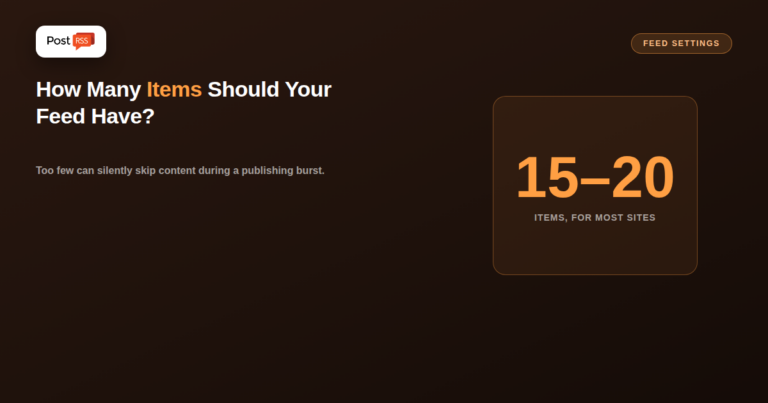
How Many Items Should Be in Your RSS Feed? (And Why It Matters for Auto-Posting)
Aktualisiert: 2026-08-30

Most CMS platforms default to showing the 10 or 15 most recent posts in an RSS feed, and for the vast majority of sites, that d...

Mehr lesen »
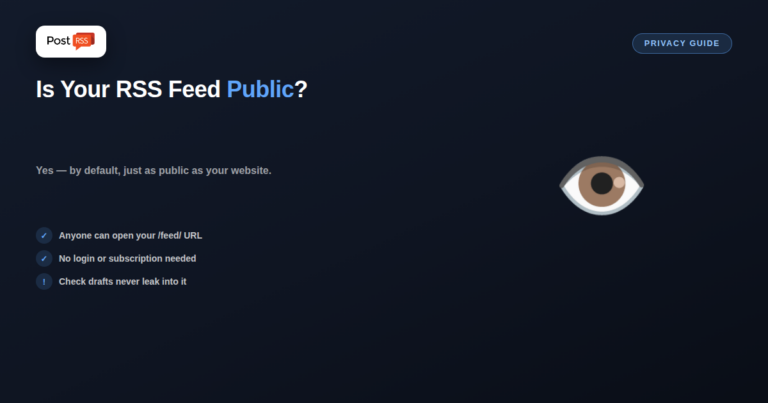
Is Your RSS Feed Public? What Site Visitors (and Competitors) Can See in It
Aktualisiert: 2026-08-30

Yes — by default, your RSS feed is just as public as your website itself. Anyone who knows or guesses the URL (typically /feed/...

Mehr lesen »
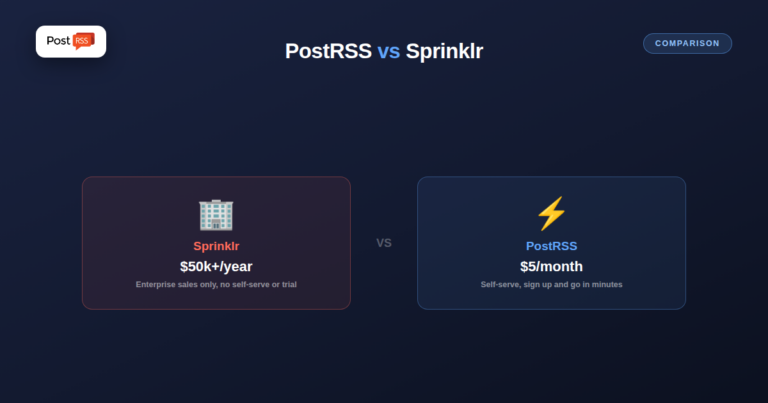
PostRSS vs Sprinklr: Focused RSS Automation vs Enterprise Social Suite
Aktualisiert: 2026-08-30

Sprinklr and PostRSS aren't really competing for the same buyer anymore. Sprinklr discontinued its self-serve program on April ...

Mehr lesen »
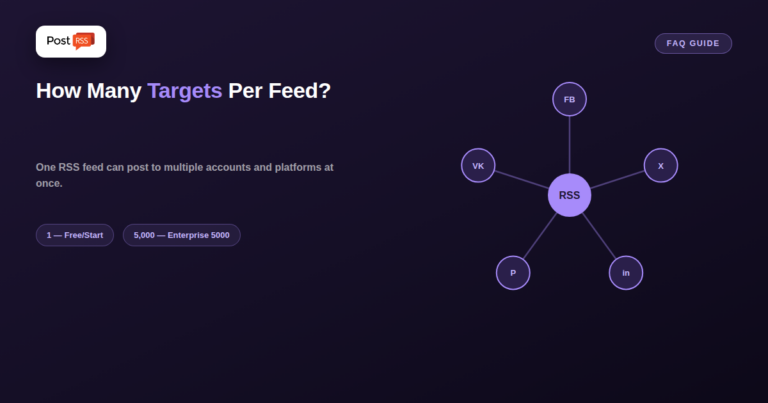
How Many Social Accounts Can You Connect to One RSS Feed?
Aktualisiert: 2026-08-30

One RSS feed doesn't have to mean one social account. Most RSS automation tools, PostRSS included, let you connect a single fee...

Mehr lesen »
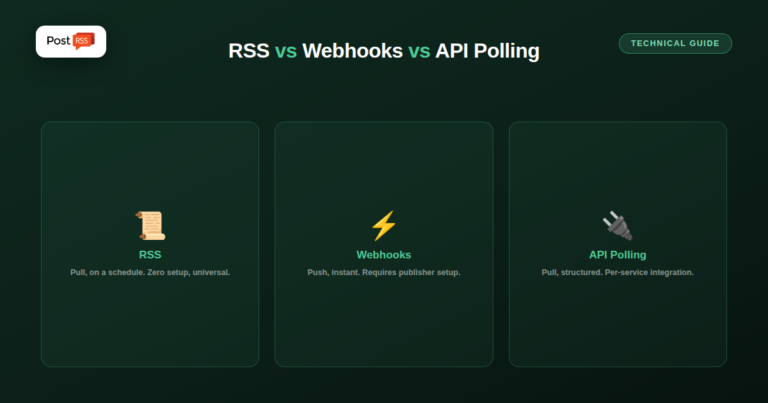
RSS vs Webhooks vs API Polling: How Automation Tools Actually Detect New Content
Aktualisiert: 2026-08-30

RSS, webhooks, and API polling all answer the same underlying question — "how does a tool know something new happened?" — but t...

Mehr lesen »
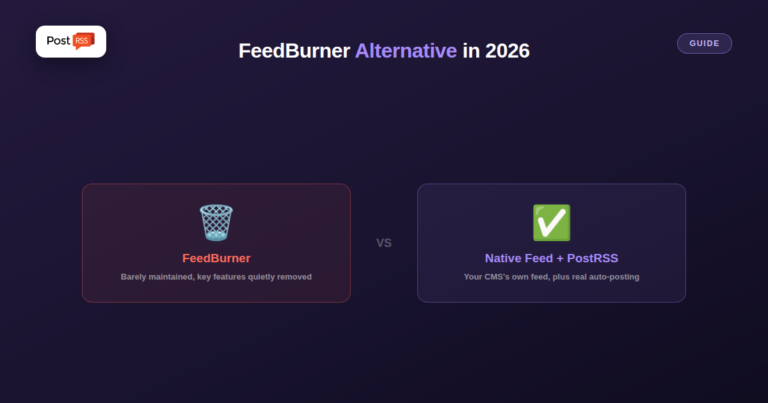
FeedBurner Alternative in 2026: What to Use Now That It’s Basically Dead
Aktualisiert: 2026-08-30

FeedBurner still runs, technically, but Google stopped meaningfully developing it years ago and quietly removed features (inclu...

Mehr lesen »
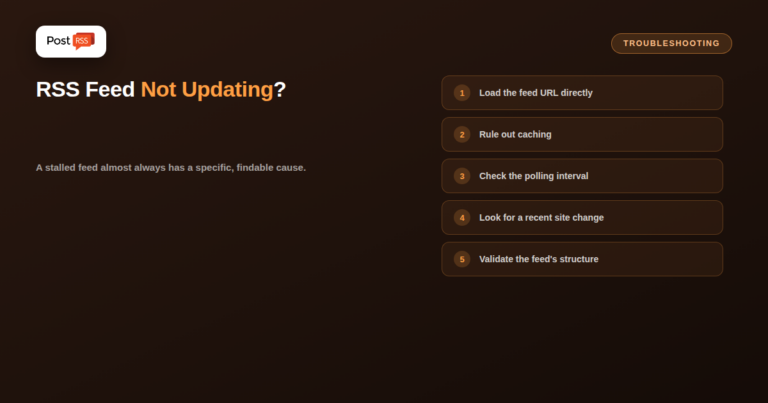
RSS Feed Not Updating? How to Diagnose and Fix It
Aktualisiert: 2026-08-30

A feed that stops updating almost always has a specific, findable cause rather than being randomly broken. Working through a sh...

Mehr lesen »
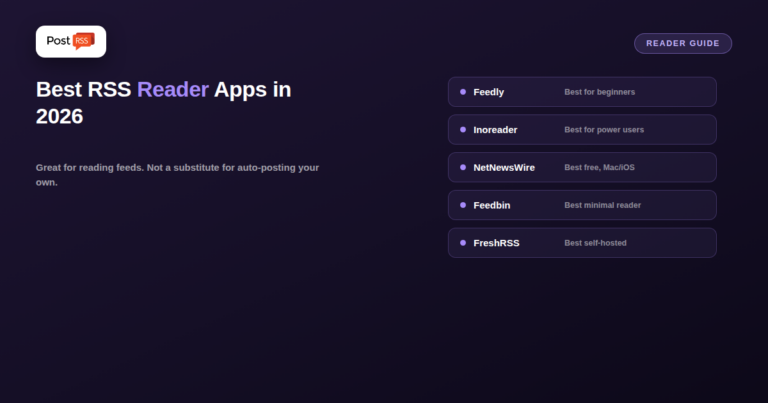
Best RSS Reader Apps in 2026 (and Why They Don’t Replace Auto-Posting)
Aktualisiert: 2026-08-30

RSS readers and RSS auto-posting tools solve two completely different problems, even though both run on the same feed format. A...

Mehr lesen »
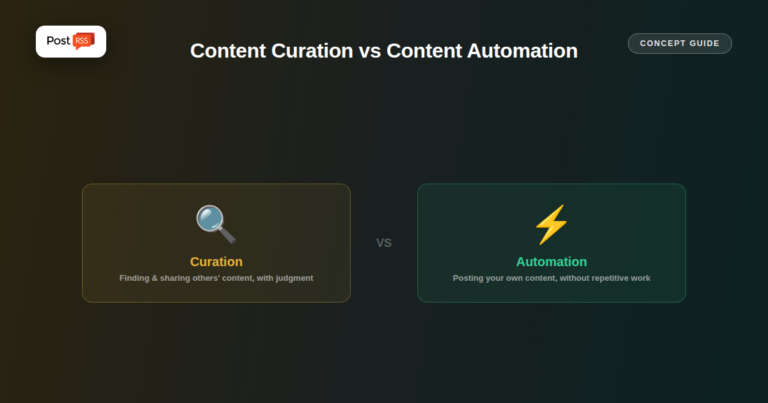
Content Curation vs Content Automation: What’s the Difference?
Aktualisiert: 2026-08-30

"Content curation" and "content automation" get used almost interchangeably in casual conversation, but they describe genuinely...

Mehr lesen »
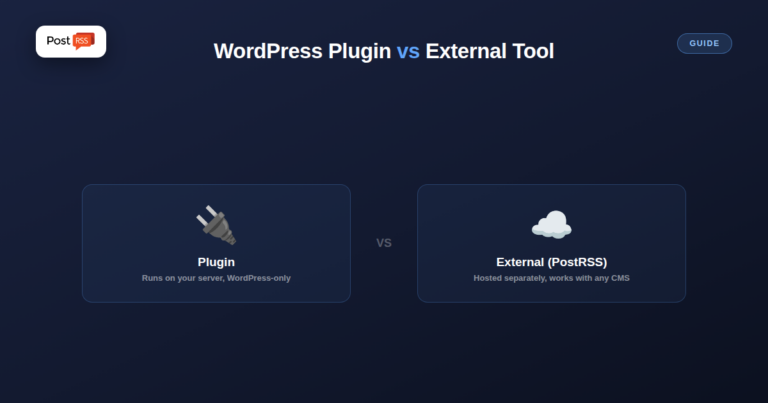
WordPress Plugin vs External RSS Automation Tool: Which Should You Use?
Aktualisiert: 2026-08-30

If your site runs on WordPress, you have a genuine choice most non-WordPress publishers don't: automate social posting through ...

Mehr lesen »

Weitere Artikel werden geladen…
Menü
x
PostRSS - RSS-Feed-Automatisierungsplattform & Auto-Posting-Tool
Datenschutz-Übersicht

Diese Website verwendet Cookies, um Ihnen die bestmögliche Benutzererfahrung zu bieten. Cookie-Informationen werden in Ihrem Browser gespeichert und erfüllen Funktionen wie das Wiedererkennen bei Ihrer Rückkehr auf unsere Website sowie die Unterstützung unseres Teams dabei, zu verstehen, welche Bereiche der Website Sie am interessantesten und nützlichsten finden.