RSS Automation

This tag covers automating multi-channel publishing using RSS feeds as the source, the core function PostRSS is built around. It covers setup, connecting a feed URL and choosing destination Targets, formatting rules that differ per network, and how to handle feeds that publish irregularly or in sudden bursts using PostRSS's Advanced Calendar timing controls. Because PostRSS checks feeds every 5 minutes on every standard plan, RSS automation here means near-real-time publishing rather than a delayed daily digest. Articles under this tag are more technical than the general "automation" tag, focusing specifically on the RSS-driven workflow rather than CSV-based alternatives. This tag is a useful hub for readers who already understand what RSS is and want to move directly into automating a feed.
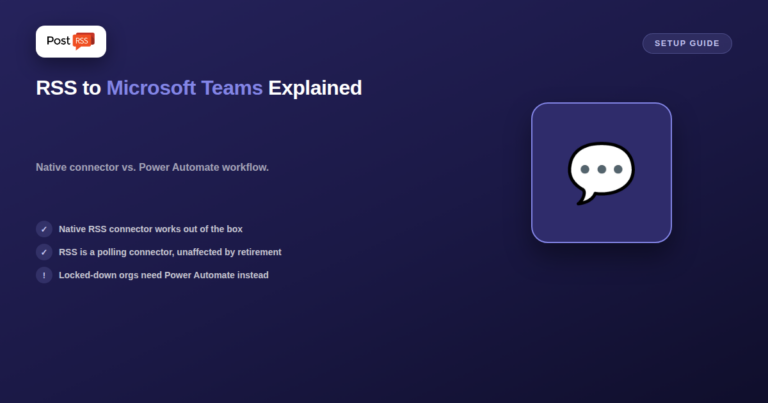
RSS Auto-Posting to Microsoft Teams: Setup Guide and Limitations
Aktualisiert: 2026-08-30

Microsoft Teams can absolutely receive RSS feed updates as posts in a channel, but the mechanism behind it changed meaningfully...

Mehr lesen »
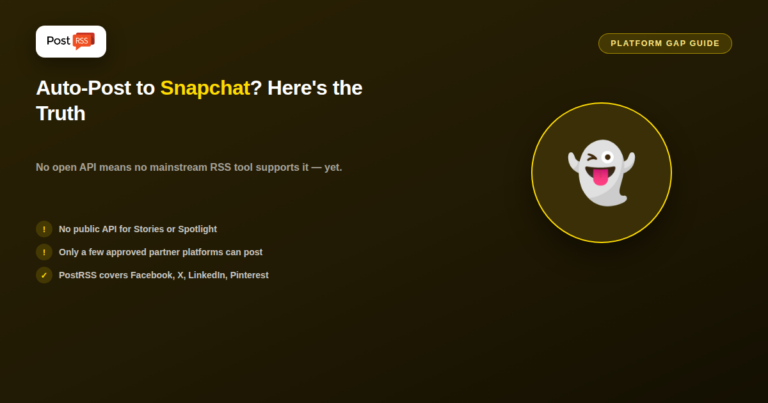
Auto-Posting to Snapchat from RSS: What’s Actually Possible in 2026
Aktualisiert: 2026-08-30

Snapchat has no documented public API for core organic publishing — there's no official endpoint for posting a Snap, Story, or ...

Mehr lesen »
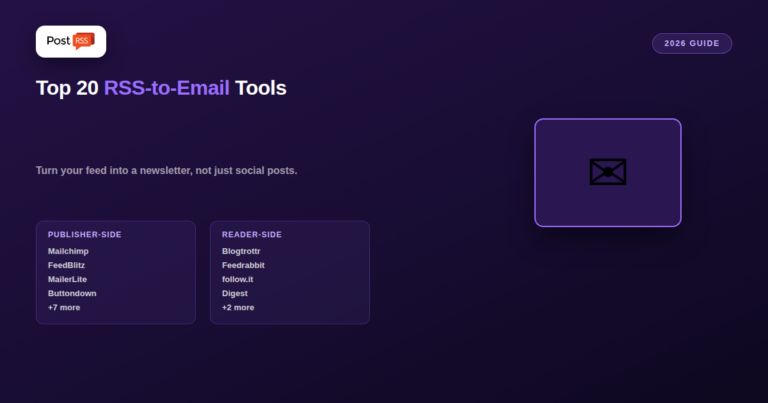
Top 20 RSS-to-Email & Newsletter Digest Tools in 2026
Aktualisiert: 2026-08-30

PostRSS turns your RSS feed into social posts, not emails — so this list is a little different from the others. There's no vend...

Mehr lesen »
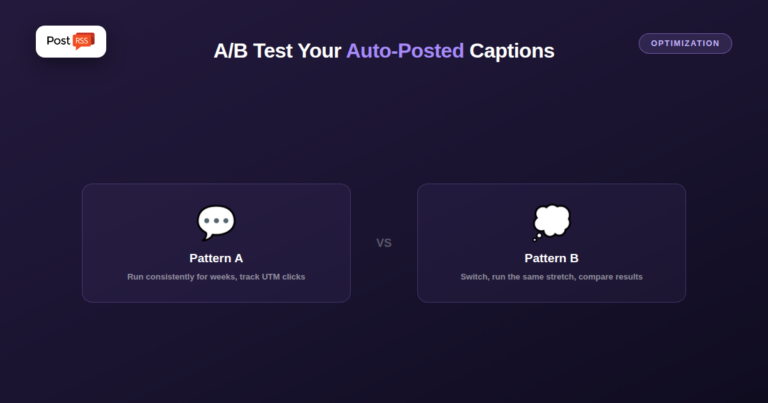
How to A/B Test Your Auto-Posted Social Media Captions
Updated: 2026-08-28

A/B testing auto-posted captions works differently than testing a landing page or an email subject line, because your RSS feed ...

Mehr lesen »
What Happens If Your Auto-Posting Tool Goes Down? RSS Automation Uptime and Reliability Explained
Updated: 2026-08-28

If an auto-posting tool goes down, the practical impact is almost always a pause, not lost content — your RSS feed keeps record...

Mehr lesen »
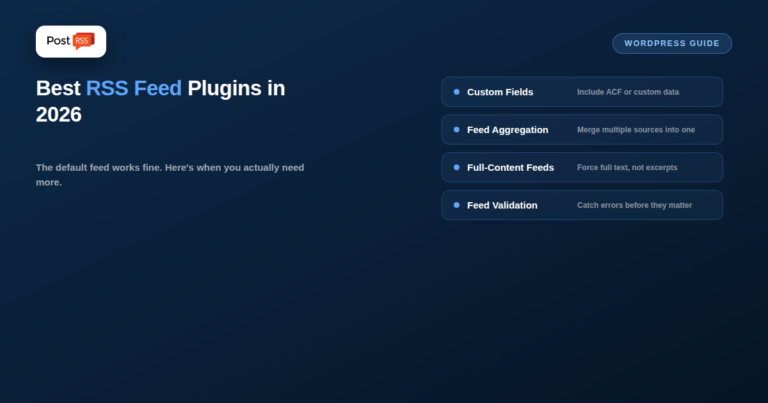
Best WordPress RSS Feed Plugins in 2026 (Beyond the Default Feed)
Aktualisiert: 2026-08-30

WordPress generates a working RSS feed automatically, with zero plugins required — but the default feed is intentionally basic,...

Mehr lesen »
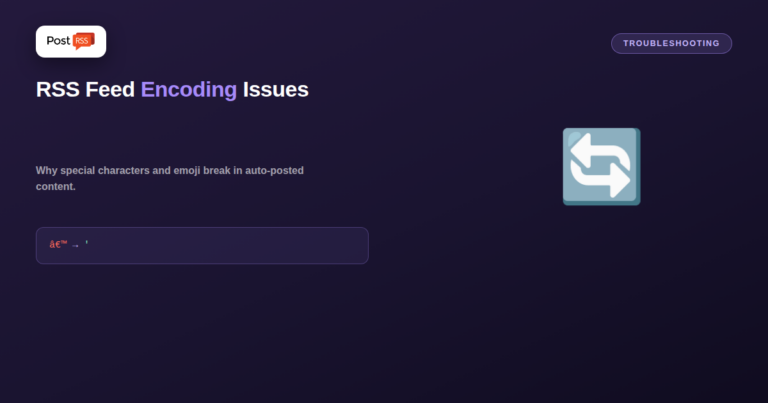
RSS Feed Encoding Issues: Why Special Characters and Emoji Break Auto-Posted Content
Aktualisiert: 2026-08-30

Garbled characters in auto-posted content — curly quotes turning into "’", emoji showing as boxes, accented letters replaced ...

Mehr lesen »

Can You Auto-Post Your RSS Feed to a YouTube Community Post?
Aktualisiert: 2026-08-30

No — there's no public API that lets a third-party tool auto-post a Community post to a YouTube channel from an RSS feed. YouTu...

Mehr lesen »
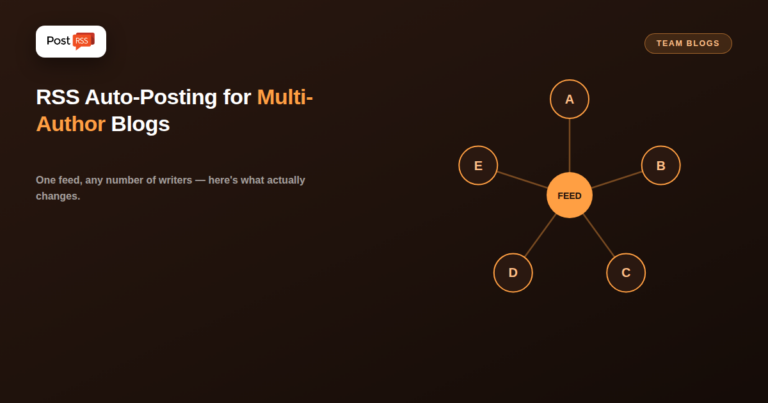
RSS Auto-Posting for Multi-Author Blogs: What Changes With Multiple Writers
Aktualisiert: 2026-08-30

RSS auto-posting doesn't care how many people write for your blog — a feed is a feed regardless of author count, and any auto-p...

Mehr lesen »
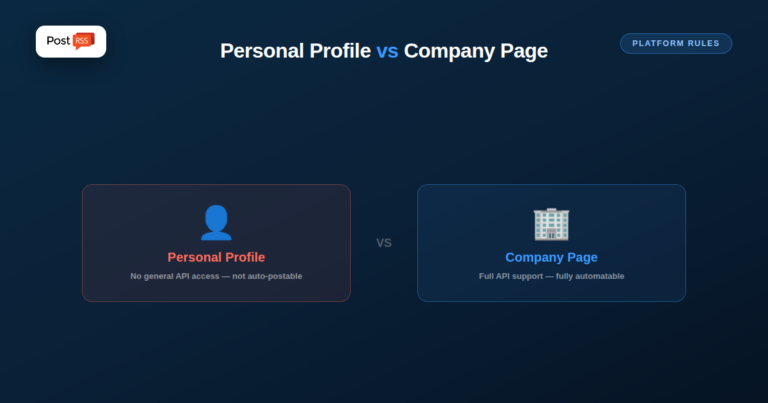
LinkedIn Personal Profile vs Company Page: Why Auto-Posting Only Works for One
Aktualisiert: 2026-08-30

LinkedIn's API allows reliable third-party auto-posting to Company Pages. Personal profiles are a different story — general pub...

Mehr lesen »
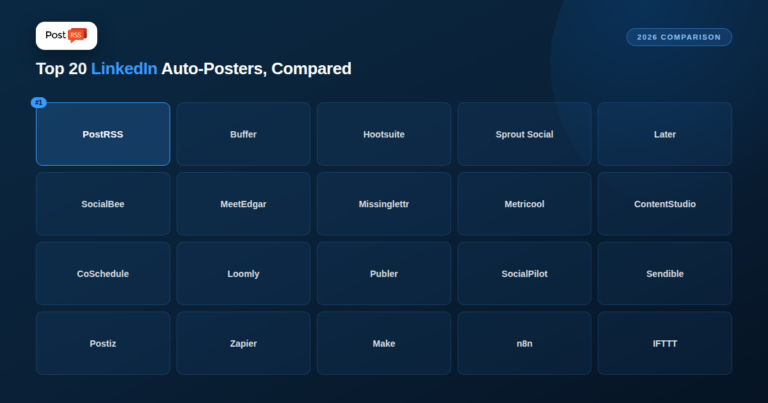
Top 20 LinkedIn Auto-Posters in 2026, Compared to PostRSS
Updated: 2026-08-28

LinkedIn auto-posting carries one restriction that shapes every tool on this list: third-party apps can reliably auto-post to L...

Mehr lesen »
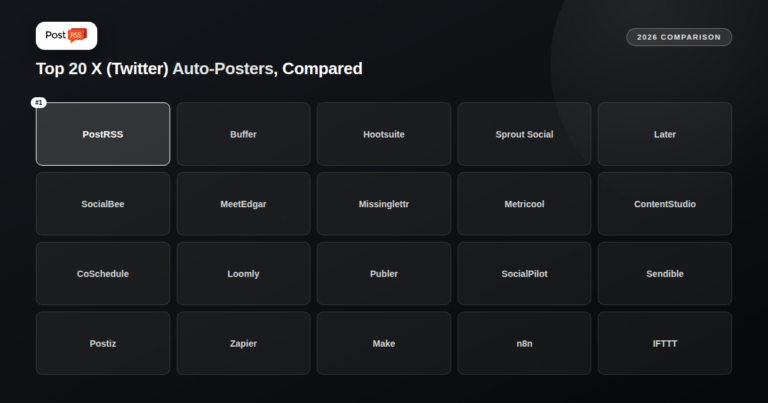
Top 20 X (Twitter) Auto-Posters in 2026, Compared to PostRSS
Aktualisiert: 2026-08-30

Auto-posting to X works differently than most other networks in one important way: X's own API pricing tiers sit underneath eve...

Mehr lesen »

Weitere Artikel werden geladen…
Menü
x
PostRSS - RSS-Feed-Automatisierungsplattform & Auto-Posting-Tool
Datenschutz-Übersicht

Diese Website verwendet Cookies, um Ihnen die bestmögliche Benutzererfahrung zu bieten. Cookie-Informationen werden in Ihrem Browser gespeichert und erfüllen Funktionen wie das Wiedererkennen bei Ihrer Rückkehr auf unsere Website sowie die Unterstützung unseres Teams dabei, zu verstehen, welche Bereiche der Website Sie am interessantesten und nützlichsten finden.