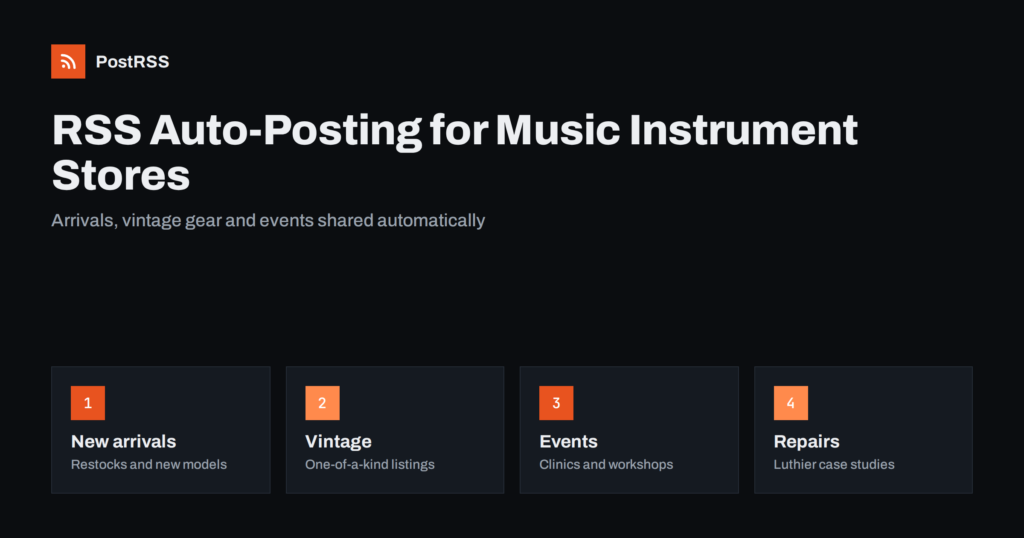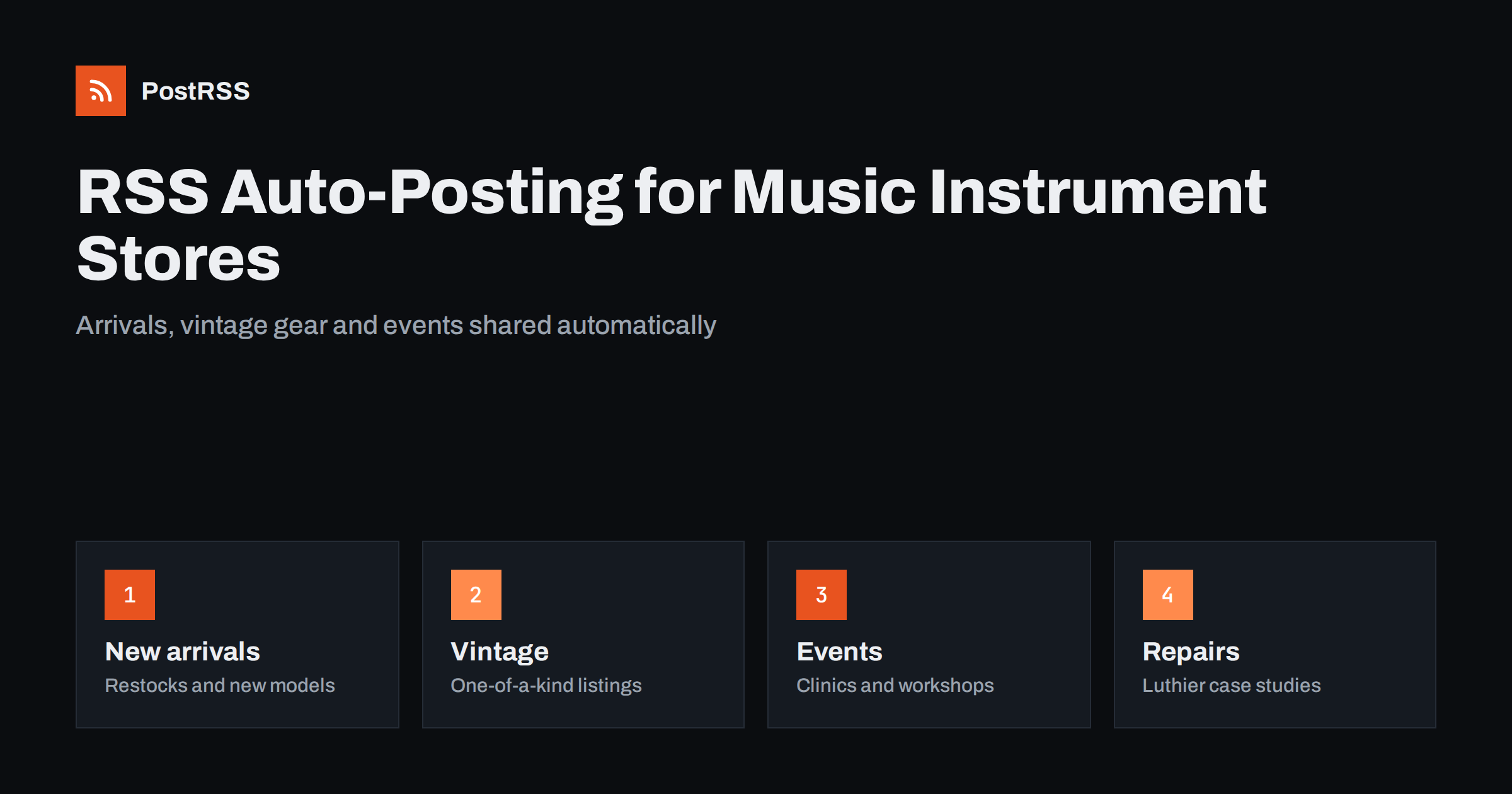
Short answer: RSS auto-posting lets music instrument stores, guitar shops and luthiers share every new arrival, used instrument, workshop, repair tip and in-store event on social media automatically. Publish the item once on your website or online shop, let an auto-poster read its RSS feed, and it appears on your Facebook Page and other channels with its photo and link. Staff keep the personal side, such as demo videos, customer conversations and stories from the workshop, while routine updates reach every channel on time.
Musicians buy with their eyes and ears, and they follow the shops that show them interesting gear. A vintage guitar that arrives on Tuesday may be sold by Thursday, and the store that posted it first usually wins the sale. At the same time, instrument stores are busy places: staff set up instruments, run repairs, teach lessons and serve customers who want to try five amplifiers before choosing one. Posting every arrival on several networks by hand rarely happens. This guide explains how to keep your channels active automatically, which content suits automation, which channels musicians use, and how luthiers and repair shops can show their craft.
A music store produces a steady flow of content, most of it already on the website or easy to publish there:
Used and vintage items are the most time-sensitive. Each one is unique, so the first people to see it are the likely buyers. Automation makes sure every listing reaches your followers within minutes of being published, without anyone stopping to copy links.
Most store websites already publish RSS feeds, even if nobody has used them:
/category/events/feed/. See how to find the WooCommerce product feed.Separate categories help: new arrivals, used and vintage, offers, events and guides. Each has its own feed, which can go to the channels where it works best. More product ideas are in how e-commerce stores automate new product announcements.
| Content | Automate? | Notes |
|---|---|---|
| New arrivals and restocks | Yes, from a product feed | Model, key specs and a clear photo |
| Used and vintage instruments | Yes, from a dedicated category | Honest condition notes; first come, first served |
| Events, clinics and workshops | Yes, from an events category | Date, time and how to register up front |
| Buying guides and care tips | Yes | Evergreen; useful for parents and beginners |
| Demo clips and staff picks | By hand | Personality sells instruments |
| Price questions and trade-in offers | By hand | Personal answers close deals |
A simple rule: if it is a finished page on your website, automate it. If it is a moment in the shop, a sound, or a conversation, post it yourself.
One-of-a-kind instruments are where automation pays off most. A good listing page becomes a good social post automatically, so give each one the details collectors and players look for:
When an instrument sells, mark the page as sold or remove it, so followers do not call about gear that has gone. If networks show the wrong image, check the page’s Open Graph tags; see why auto-posted links show the wrong image.
Luthiers, guitar techs and repair benches have a different kind of content: craft. Building a guitar, restoring a violin or re-fretting a bass takes weeks, and players love to follow the process. Publish build diaries and repair case studies on your website, one stage per post, and let the feed share each stage. Followers come back to see progress, and the finished instrument has an audience before it is even sold.
Repair case studies also teach customers what you can fix. A short page on a cracked headstock repair or a setup that cured fret buzz explains your service better than a price list. Always ask the owner before showing their instrument, and avoid showing serial numbers of customers’ instruments, which can matter for insurance and theft protection.
Most stores do best with a Facebook Page plus one or two other channels kept active.
In-store events bring people through the door: artist clinics, pedal demos, drum days, ukulele workshops and open mic nights. Publish each event as a page in an events category, with the date, time, who is playing and how to register at the top. The category feed shares it, and posting windows make sure announcements go out in the evening, when musicians plan their week. Publish a second page as a reminder a few days before, and a short recap with photos afterwards.
If you also offer lessons, publish new lesson programmes and teacher profiles in a lessons category. Parents searching for guitar or piano lessons for their children are a valuable audience, and the same family often buys the first instrument from the store that teaches it. Ideas for teaching businesses are in RSS auto-posting for music schools and teachers.
Many customers are beginners or parents who do not know where to start. Helpful articles answer their questions and lead them to your store. Each guide becomes a social post automatically and keeps working in search results for years:
Industry groups such as NAMM publish research and resources about music making that can support these articles, and general marketing guidance for small shops is available from the U.S. Small Business Administration.
Music stores have their own seasons, and planning content around them keeps the feed useful all year:
Publish seasonal pages early, then add reminders as separate items. Use posting windows so offers go out when customers are browsing, and update or remove expired offers so old posts never lead to outdated prices. More planning ideas are in seasonal campaign planning with RSS automation.
PostRSS has been automating RSS posting since 2014. It checks your website and product feeds as often as every minute and publishes each new arrival, vintage listing, event or guide, with its real image and link, to the channels you connect, from Facebook Pages to Pinterest, Telegram, Discord, Bluesky and many more among its 66 supported networks. You can choose the post format, filter items by keywords, add UTM parameters and post only within chosen hours or at exact times in your time zone. Official plugins for WordPress, PrestaShop and OpenCart can set up feeds for online stores. See the PostRSS features page for everything it does and the pricing page for plan limits. More ideas for shops are under the Local Business tag.
Music instrument stores and luthiers already publish what musicians want to see: new arrivals, unique used and vintage instruments, events, repairs and practical guides. RSS auto-posting shares each page automatically on Facebook and your other channels, on time and with the right photo, while staff keep the demos and conversations that make a music store special. Describe instruments honestly, mark sold items quickly and let the feed bring players back to your shop.
Yes. A product or category feed from your website or online shop can be connected to an auto-poster that shares each new instrument on Facebook, Pinterest and other channels with its photo and link.
Publish each one as its own page in a used and vintage category, with a precise title, honest condition notes and real photos. Send that feed to your channels without a posting delay, because unique items sell fast.
Yes. Build diaries and repair case studies published on the website become social posts automatically, one stage at a time, which keeps followers engaged while an instrument is being made.
Put routine restocks in a separate category or use keyword filters, so only interesting arrivals, offers and events reach your social channels.
Facebook reaches local musicians and parents, Pinterest suits beautiful instruments and guides, and a Telegram channel or Discord server works for regular customers. Demo videos are best made by hand for Instagram and TikTok.
What changed in the networks, what broke, and how to fix it before it costs you reach.
Entwickelt von Internet Solutions, dem Team hinter PostRSS. Jedes Produkt spart Ihnen auf seine Weise Zeit.
 English
 Lietuviškai
 Deutsch
 Français
 Русский
 Español
 Polski
 Italiano
 Українська
 Čeština
 Português
 日本語
日本語 Latviešu valoda
 Eesti
Eesti Magyar
 Bahasa Indonesia
 Türkçe
 हिन्दी
 Ελληνικά
 العربية
 ไทย
ไทย Tiếng Việt
 Română
 Bahasa Melayu
 বাংলা
বাংলা