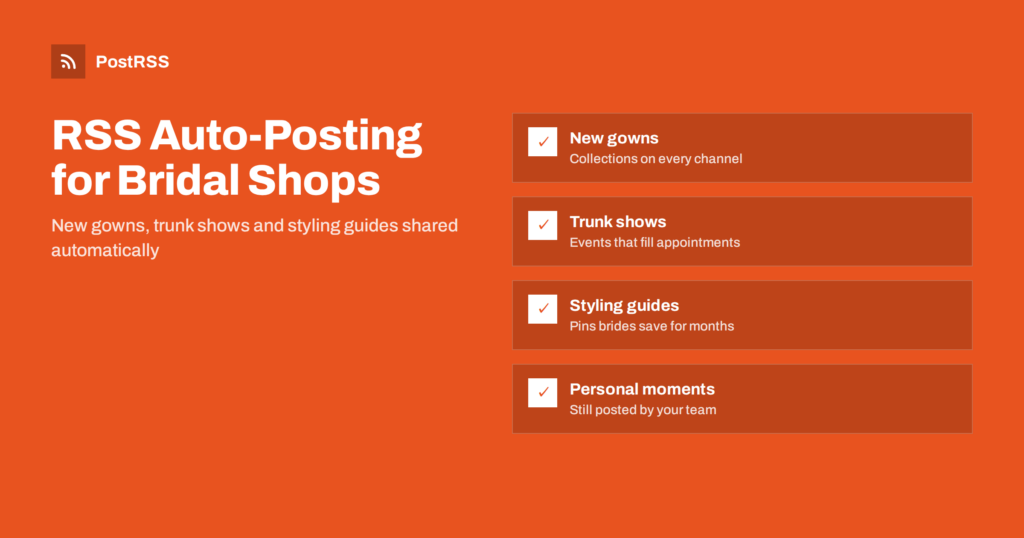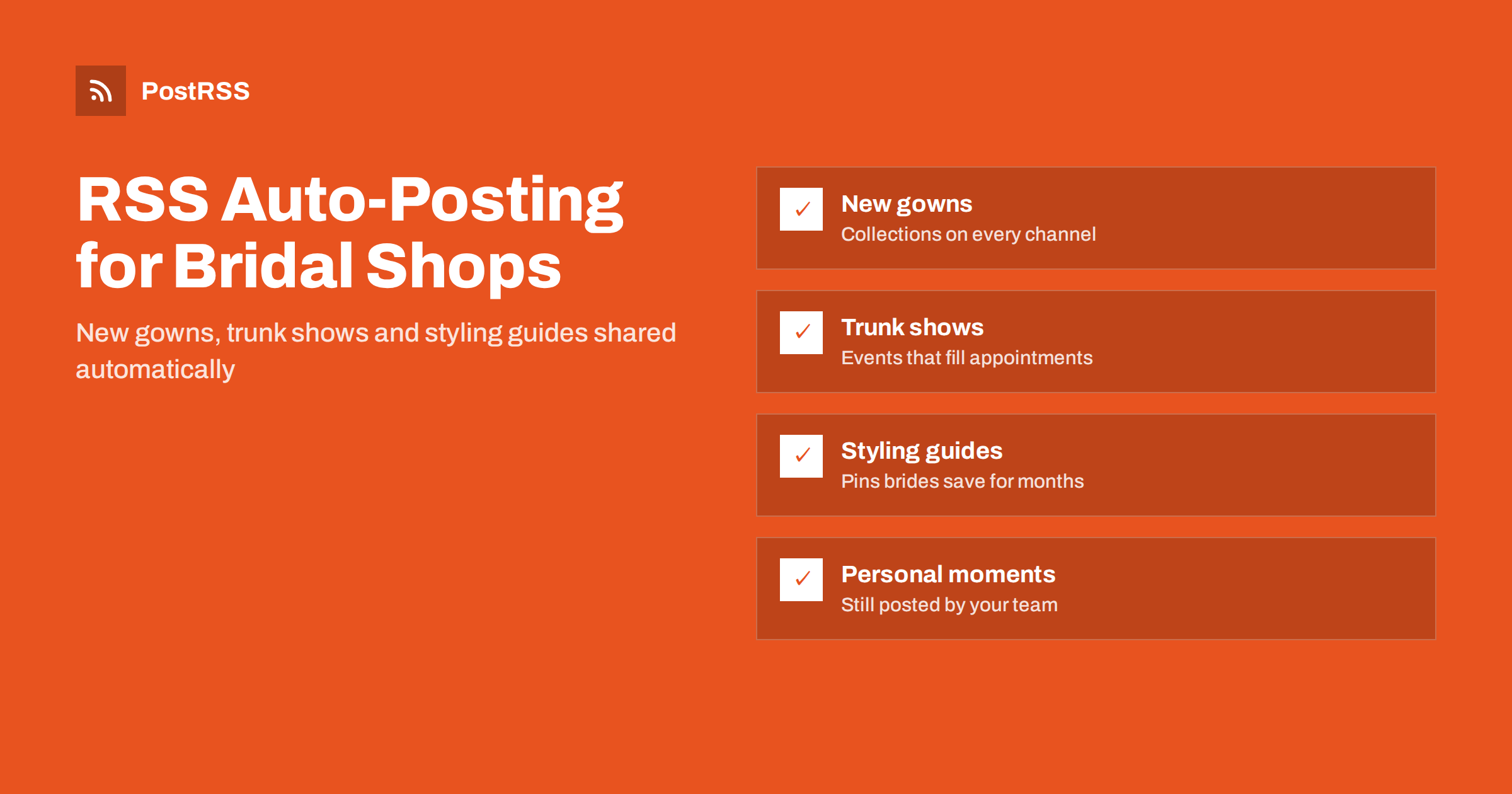
Short answer: RSS auto-posting lets bridal shops and formalwear stores share every new gown, collection, trunk show, sample sale and styling article on social media automatically. Publish once on your website, let an auto-poster read the site’s RSS feed, and each update appears on Pinterest, your Facebook Page and other channels with its photo and link. Your team keeps the personal moments, such as real bride stories and appointment-day photos, while the steady flow of collection updates looks after itself.
Choosing a wedding dress or a formal outfit is a long, emotional process. Brides often start browsing a year or more before the wedding, saving ideas, comparing designers and following shops whose style feels right. Prom, graduation and gala shoppers move faster but are just as visual. For a bridal boutique, that means social media is not an extra: it is where many customers first meet you. The difficulty is time. Consultants spend their days in appointments, and new arrivals, designer collections and events pile up faster than anyone can post them. This guide shows how to automate the routine posting, what to keep personal, and how to set it up without losing the feel of a boutique.
A bridal or formalwear shop typically publishes more than it shares:
Sharing each item by hand on several networks takes time, and the posts that get skipped are often the ones that would have booked appointments. Automation shares every new page with the same photo, title and link, at times you choose, while staff concentrate on customers.
Consistency also signals reliability. A bride planning a year ahead wants to know the shop will still be there, well organised, when her dress arrives. An active, regularly updated page quietly communicates exactly that.
Most boutique websites already publish feeds:
/feed/ and category feeds, for example for “new arrivals” or “events”.Use categories to keep different content separate. A feed for new gowns, one for events and one for styling articles let you send each to the channels where it works best.
| Content | Automate? | Notes |
|---|---|---|
| New gowns and collections | Yes | Strong photos, designer and style name in the title |
| Trunk shows and sample sales | Yes, from an events category | Dates, booking link and deadlines up front |
| Styling and planning articles | Yes | Evergreen, perfect for Pinterest |
| Appointment and alteration info | Yes, when it changes | Reduces repeated questions |
| Real brides and “say yes” moments | By hand, with permission | Personal, emotional, needs consent |
| Replies and enquiries | By hand | Warm, personal answers book appointments |
Real bride stories deserve special care. Always ask permission before sharing photos of customers, and respect anyone who wants to keep her dress a surprise until the wedding day.
Two or three channels that look beautiful and active are better than many half-finished ones.
In bridal, the photo is the product. Automated posts take their image and text from your website, so the website must be right:
If a network shows the wrong image, the page’s Open Graph tags are usually the cause; see why auto-posted links show the wrong image.
Bridal retail has its own calendar: new collections arrive at set times of year, engagement season around the winter holidays brings a wave of first appointments, and prom season concentrates formalwear demand into a few weeks. Events are the moments that fill appointment books:
Event planners use the same approach; see how event organisers automate announcements.
Helpful articles bring people to your site long before they book, and each one becomes a post automatically:
Keep advice accurate and practical. If ordering times depend on designers, say so and give typical ranges rather than promises.
A formalwear shop rarely serves just one kind of customer. Brides plan far ahead and care about designers and silhouettes. Mothers of the bride and wedding guests look for elegant, comfortable outfits and often shop with less time. Prom and graduation shoppers are younger, move quickly with the season and are influenced by friends. Each group responds to different content and different channels.
Separate feeds make this easy. Put bridal gowns, occasion wear and prom dresses in their own categories, and connect each category feed to the channels where that audience spends time: bridal collections to Pinterest, occasion wear and events to Facebook, prom arrivals to the channels younger shoppers use. One website, several feeds, and every audience sees what is relevant to it instead of a mixed stream.
/feed/ and in category or collection addresses, and check they show recent items.Add UTM parameters to automated links and track which channels lead to appointment bookings, not just visits. Many bridal shops find that Pinterest brings early-stage browsers and Facebook brings people ready to book. Use what you learn to decide where to invest your personal posting time. See tracking RSS automation with UTM parameters for the set-up.
PostRSS has been automating RSS posting since 2014. It checks your website feeds as often as every minute and publishes each new gown, event or article, with its real image and link, to the channels you connect, from Pinterest boards and Facebook Pages to Telegram, Threads and many more among its 66 supported networks. You can choose the post format, filter by keywords, add UTM parameters, turn categories into hashtags and post only within chosen hours or at exact times in your time zone. See the PostRSS features page for everything it does and the pricing page for which networks each plan includes. More ideas for local shops are under the Local Business tag.
Bridal shops and formalwear stores already create the content their audience loves: new gowns, collections, events and practical advice. RSS auto-posting shares each item automatically on Pinterest, Facebook and other channels with the right photo and link, while consultants keep the personal moments and conversations. Invest in beautiful photos and clear style names on the website, plan events early, and let the feed do the rest.
Yes. If the shop website has a blog, events page or gown catalogue, its RSS feed can be connected to an auto-poster that shares each new item. Real bride stories and replies should still be posted personally.
Pinterest is especially valuable because brides save ideas for months. Facebook works well for events and families, and Instagram and TikTok are important for personal, visual content that your team reviews.
Publish each trunk show as a page in an events category with dates and booking details at the top. The category feed then shares it on your chosen channels, and posting windows control when it appears.
Only with permission, and it is better to post them by hand. Some brides want their dress kept secret until the wedding, so always ask before sharing anything.
Not if the website content is beautiful. Automated posts use your photos and descriptions, so the boutique feel comes through. Keep the emotional, behind-the-scenes content as personal posts.
What changed in the networks, what broke, and how to fix it before it costs you reach.
Vytvořilo je Internet Solutions, tým za PostRSS. Každý produkt vám ušetří čas po svém.
 English
 Lietuviškai
 Deutsch
 Français
 Русский
 Español
 Polski
 Italiano
 Українська
 Čeština
 Português
 日本語
日本語 Latviešu valoda
 Eesti
Eesti Magyar
 Bahasa Indonesia
 Türkçe
 हिन्दी
 Ελληνικά
 العربية
 ไทย
ไทย Tiếng Việt
 Română
 Bahasa Melayu
 বাংলা
বাংলা