RSS'den 66 sosyal ağa: Facebook, Instagram, X, LinkedIn, Telegram ve daha fazlası Blog Satış Ortaklığı İletişim
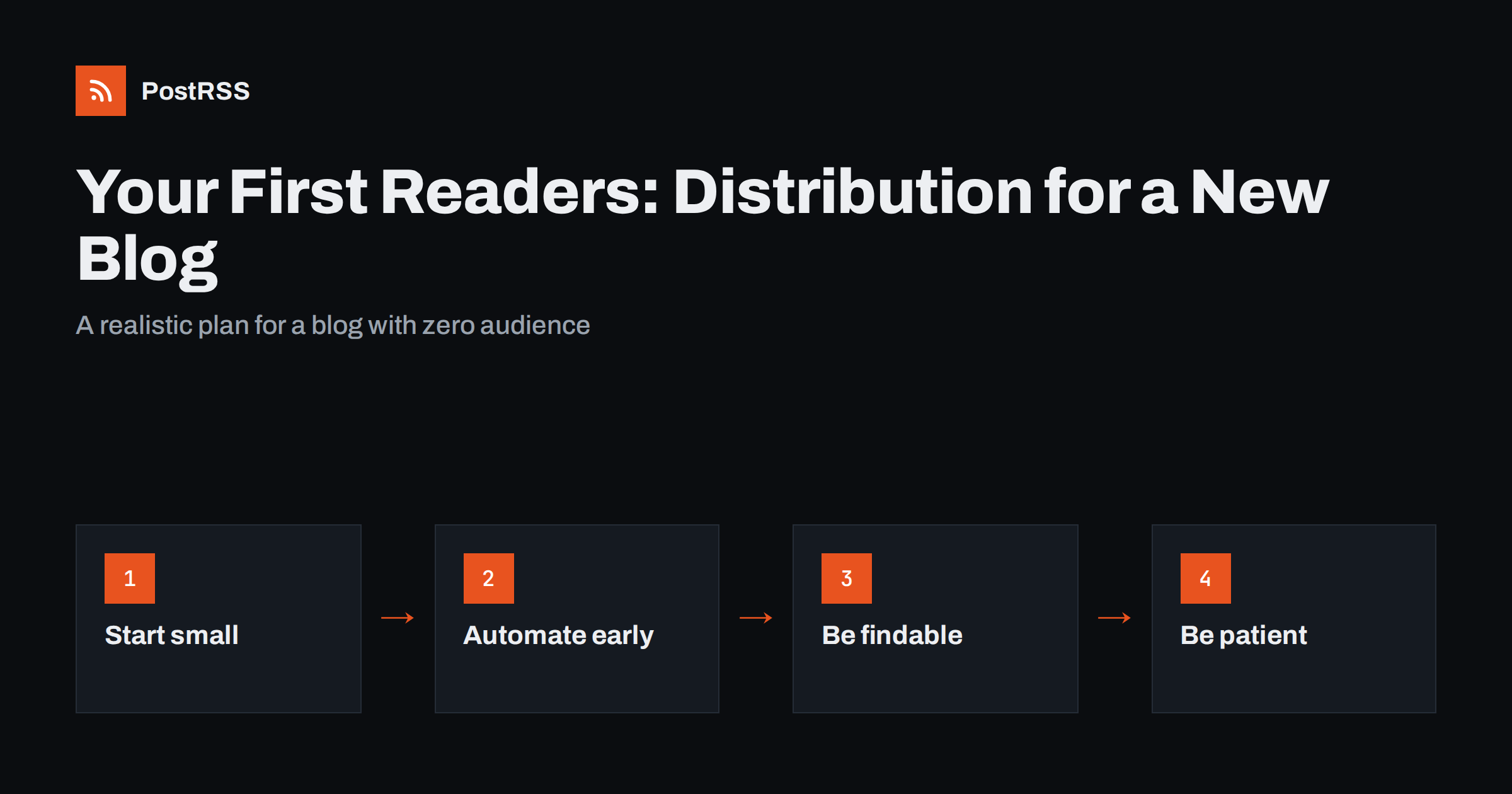
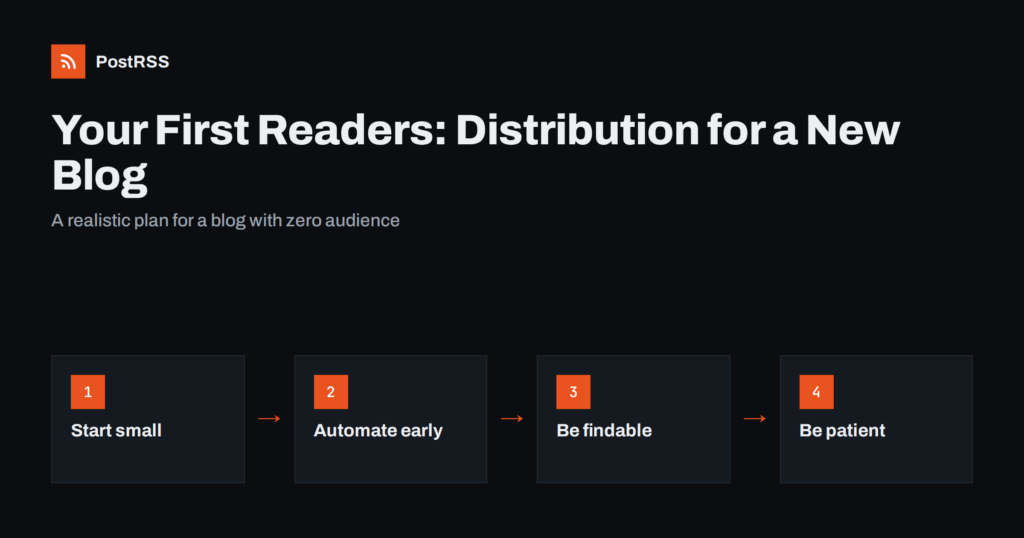
Short answer: A new blog’s first readers usually come from people you already know, communities where you genuinely take part, and, after a few months, search engines. Publish useful posts on a steady schedule, make the blog easy to find and subscribe to (RSS feed, newsletter, sitemap), automate sharing to your social channels from day one so every post is announced consistently, and spend your manual effort on real conversations rather than link-dropping. Expect growth over months, not days.
When you publish your first posts, almost nobody sees them. That is normal, and it is not a sign that the writing is bad. A new blog has no search history, no followers, no links from other sites and no subscribers. Search engines need time to discover, crawl and trust the site. Social networks show your posts mainly to people who already follow you. The early weeks can feel like writing into a void.
The good news is that the first readers are also the most valuable. They are the people who comment, share, give feedback and return. A blog with fifty engaged readers who care about its topic is in a far better position than one with a thousand random visits from a viral moment. The goal of early distribution is not a traffic spike; it is to find the first few dozen people who genuinely want what you write, and to build the habits and infrastructure that let the audience grow from there.
This plan is written for personal bloggers, small businesses starting a company blog, freelancers and niche publishers. It assumes limited time and no advertising budget.
Before promoting anything, make sure that people and machines who find one post can easily find the rest and come back later:
link rel="alternate" tag in your page head lets browsers and tools find the feed automatically. Most themes add it by default.Google’s own SEO Starter Guide is a solid, vendor-neutral primer on making a new site discoverable.
People follow a blog when they expect more of what they just read. A single post rarely earns a subscriber; a small body of related, useful posts does. Before you push hard on promotion, aim for a foundation:
Quality beats volume here. One genuinely helpful guide, with specific examples and honest detail, will attract more readers over a year than ten thin posts.
Every new post should be announced on your social channels, but manual sharing is exactly the kind of task that gets skipped when you are busy. Set up automation before you have an audience, so the habit is built in:
In the early months, these profiles will have few followers, and automated posts will get little engagement. That is fine. The point is that every visitor who checks your profile sees an active, consistent account, and every follower you win from now on sees every post.
Your first readers are usually closer than you think:
Do not ask everyone to share. Ask a few people for honest feedback instead. Early feedback improves the writing, and people who helped shape a blog tend to become its first advocates.
Forums, subreddits, Discord servers, Facebook and LinkedIn groups, Slack communities and Q&A sites are where many first readers come from. They are also where new bloggers most often get it wrong. Communities dislike accounts that appear only to drop links. The approach that works:
Never automate posting into communities. Automated link posts in groups and forums are the fastest way to get banned, and they damage your reputation in exactly the places where your future readers are. Our article on community rules for sharing links explains why.
For most blogs, search engines eventually become the largest source of readers, but it takes time. New sites commonly need several months before search traffic becomes meaningful. You can help the process:
Avoid shortcuts such as buying links or publishing large amounts of thin content. They tend to harm a new site more than they help.
Most new blogs that stall do so for a handful of predictable reasons. Knowing them in advance saves months:
None of these require money to fix, only patience and a little discipline. That is also why a small blog run consistently for a year often overtakes bigger sites that publish sporadically.
Traffic numbers for a new blog are small and noisy, so focus on signals that show you are on the right path:
Review these monthly, not daily. Double down on the channels that bring engaged readers and quietly drop the ones that do not.
Keep a simple log alongside your analytics: the date of each post, where you shared it by hand, and any notable replies or feedback. After a few months, patterns appear that raw numbers hide, such as one community that always sends thoughtful readers or one topic that consistently brings new subscribers.
PostRSS handles step 3 of this plan. It checks your blog’s RSS or Atom feed every 5 minutes and publishes each new post, with its image and link, to the networks you connect: 66 in total, including Facebook Pages, LinkedIn, X, Pinterest, Mastodon, Bluesky, Threads, Telegram and Discord. It can add UTM parameters to links and, if you want your archive to keep working, republish evergreen posts on a schedule you choose. A free plan is available for getting started. See the features page and the pricing page for details.
A new blog finds its first readers through people you know, communities you genuinely take part in and, over time, search engines. Make the blog easy to find and follow, publish a small body of useful posts on a steady schedule, automate announcements from the first day, participate before you promote, and measure engagement rather than raw traffic. Growth is slow at first, but it compounds.
It varies widely, but meaningful search traffic typically takes several months to appear. Readers from personal networks and communities can arrive sooner, which is why early distribution focuses on people and places you already know.
No. Choose the two or three networks where your potential readers spend time and keep them active. Automated posting makes consistency easy, but spreading thin across many networks rarely helps a new blog.
Yes. Setting it up early builds the habit and means every future follower sees every post. It also shows visitors who check your profile that the blog is active.
Only where the rules allow it, and only after you have participated genuinely. Share a post when it answers a specific question, include a short summary in your reply, and never automate posting into groups or forums.
Quality and consistency matter more than frequency. A steady schedule of genuinely useful posts builds trust with readers and search engines, while many thin posts rarely attract loyal readers.
What changed in the networks, what broke, and how to fix it before it costs you reach.
PostRSS'in arkasındaki ekip Internet Solutions tarafından geliştirildi. Her biri size farklı bir şekilde zaman kazandırır.
 English
 Lietuviškai
 Deutsch
 Français
 Русский
 Español
 Polski
 Italiano
 Українська
 Čeština
 Português
 日本語
日本語 Latviešu valoda
 Eesti
Eesti Magyar
 Bahasa Indonesia
 Türkçe
 हिन्दी
 Ελληνικά
 العربية
 ไทย
ไทย Tiếng Việt
 Română
 Bahasa Melayu
 বাংলা
বাংলা