RSS uz 66 sociālajiem tīkliem: Facebook, Instagram, X, LinkedIn, Telegram un citiem Blogs Partner programma Kontakti
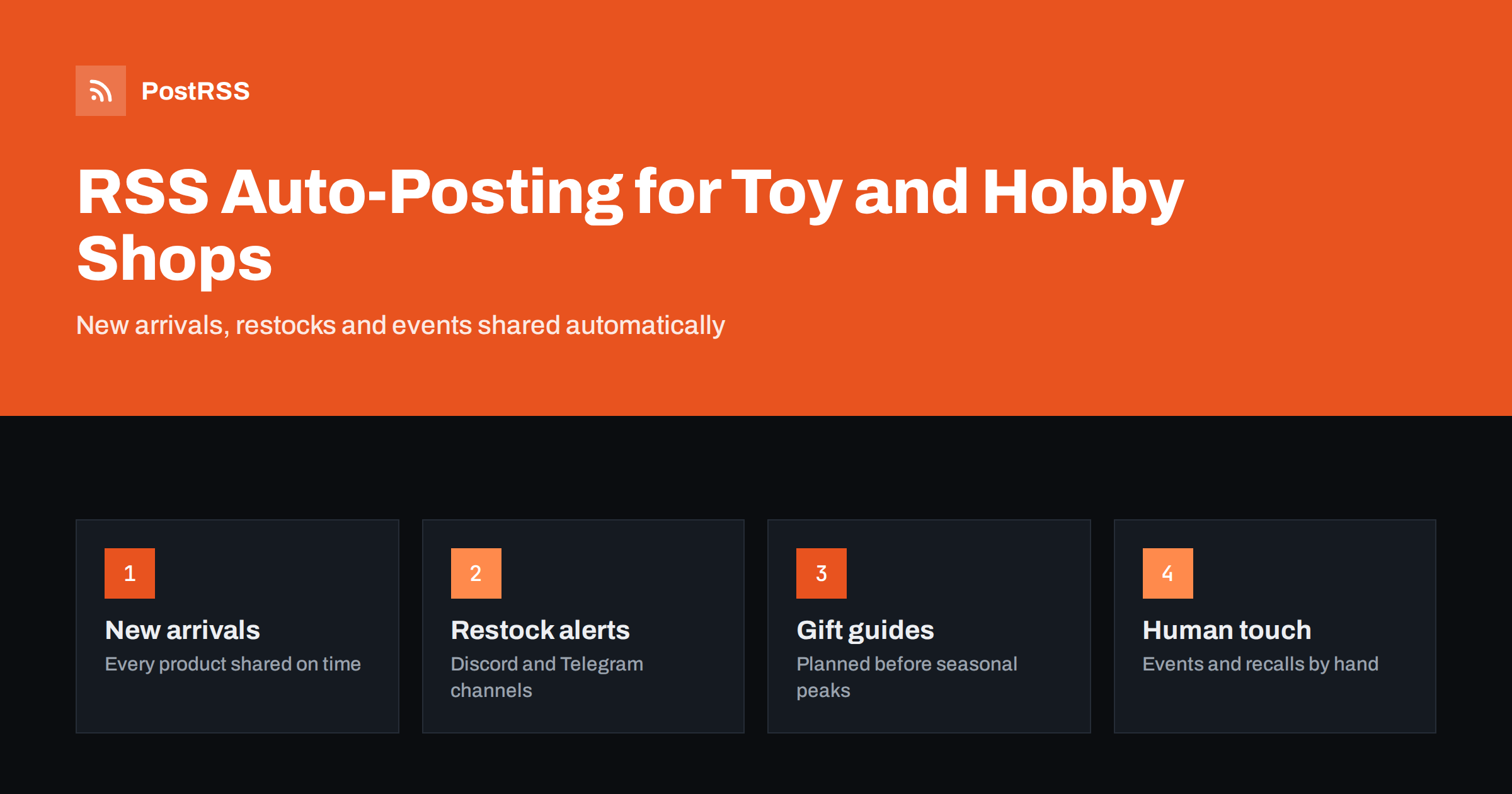
Short answer: Toy stores and hobby shops can use RSS auto-posting to share new arrivals, restocks, events and buying guides on social media without posting each one by hand. The usual set-up is a product or blog feed from the shop website, connected to a Facebook Page, Pinterest boards and community channels such as Discord or Telegram. It works best when each feed has a clear purpose, every item has a good photo and seasonal peaks are planned in advance.
Independent toy stores, model shops, game and puzzle retailers and craft-hobby stores share a common challenge: their customers love seeing what is new, but staff are busy unpacking stock, running events and helping people choose gifts. Social media rarely gets the attention it deserves, especially in November and December when it matters most. Automatic posting from an RSS feed closes that gap. This guide explains what to automate, which feeds to use and how to keep posts personal enough for a community-driven business.
A toy or hobby shop sells products that people want to look at. New model kits, board games, LEGO-compatible sets, collectibles, craft supplies and seasonal toys are naturally visual and naturally shareable. Customers often follow a local shop precisely to hear about new arrivals, limited releases and restocks before they sell out.
The problem is volume and timing. A hobby store may add dozens of products a week. Posting each one manually is unrealistic, so most shops post occasionally and miss the items their followers would have bought. Automation changes the maths:
Automation is not a replacement for personality. It covers the routine sharing so that the shop’s people have time for the posts that need a human voice: event photos, staff picks and community moments.
Most shops already publish one or more RSS feeds without knowing it. Before setting anything up, check what your website offers.
If your shop has no website feed at all, many auto-posting tools also accept other sources, such as a spreadsheet of planned posts. Start with what you have; a single good feed is enough to begin.
A clear split keeps social channels useful and personal. Here is a practical starting point for toy and hobby retailers:
| Content | Automate? | Why |
|---|---|---|
| New product arrivals | Yes | High volume, time-sensitive, naturally visual |
| Restocks of popular items | Yes, via a dedicated feed | Followers want to know fast |
| Buying guides and tutorials | Yes | Evergreen value, drives website visits |
| Event announcements | Yes, plus a manual reminder | Automation for reach, a personal post for excitement |
| Event photos and recaps | By hand | Needs captions, tags and permission from people shown |
| Product recalls and safety notices | By hand | Requires care, clear wording and a human contact |
| Staff picks and opinions | By hand | The shop’s personality lives here |
Treat this as a template rather than a rule. A shop with a strong blog may automate more; a shop that lives on local community spirit may keep more posts manual.
Toy and hobby customers are spread across several platforms, and each one suits a different kind of post.
You do not need every network. Two or three channels that your customers actually use are better than ten that nobody reads. If Pinterest is new to you, our RSS to Pinterest section explains how boards and pins work with automation.
Because toy and hobby products sell on looks, the quality of the image in each automated post matters more than in most industries.
Price is often the first thing people ask about. Showing the price in the product title or description can reduce repetitive questions, but only do it if the feed always shows the current price; an outdated price in an old post creates awkward conversations at the counter.
Toy and hobby retail is seasonal. The weeks before the winter holidays, back-to-school periods, birthdays of big franchises and release dates for popular games or kits all create spikes in interest. Automation helps most when it is prepared before these moments.
Our article on seasonal and holiday campaign planning with RSS automation covers calendar planning in more depth.
Hobby shops in particular are community hubs. People come for painting nights, game tournaments and advice as much as for products. Automated posts should support that, not drown it out.
More ideas for small retailers are collected under local business, including routines that fit around opening hours.
Automation makes it easy to post a lot, which makes it even more important to know which posts bring people to the website or into the shop. A few simple measurements are enough for a small retailer.
utm_source=facebook vai utm_source=pinterest to automated links lets your analytics show which network sends visitors who browse and buy. Our guide on tracking RSS automation with UTM parameters explains a naming scheme that stays readable.Review these signals once a month. If a channel brings neither visits nor conversations after a few months, it is fine to drop it and focus on the ones that work. Fewer, better channels usually beat a long list that nobody has time to check.
PostRSS checks your RSS or Atom feed every 5 minutes and posts each new item, with its image and link, to the networks you connect, including Facebook Pages, Pinterest, Discord, Telegram and many more. It can turn item categories into hashtags, filter items by keywords, add UTM parameters to links, and on paid plans post only within chosen hours. Official plugins for WordPress, PrestaShop and OpenCart can build the feed for you. The features page lists every supported network, and the pricing page shows which networks each plan includes.
For toy stores and hobby shops, RSS auto-posting turns every new arrival, restock and guide into a timely social post without extra staff time. Start with a clean product or blog feed, pick the channels your customers use, make sure images look good, and plan for seasonal peaks. Keep events, safety notices and personal stories manual, and the automation will support your community instead of replacing it.
Yes. If the shop website publishes a feed of new products or blog posts, an RSS auto-posting service can share each new item automatically to the shop’s social channels.
Facebook Pages reach local families, Pinterest suits gift ideas and craft projects, and Discord or Telegram work well for collectors and gaming groups who want fast restock news. Start with two or three that your customers use.
Not if you plan for it. Limit the number of posts per update, spread posts over set hours and use separate feeds for restocks or pre-orders.
No. Safety notices need careful wording and a clear contact, so post them by hand and keep them out of automated feeds.
Usually not. Most shop platforms already produce feeds, and connecting a feed to social accounts is done by pasting the feed address and choosing the channels.
What changed in the networks, what broke, and how to fix it before it costs you reach.
Izstrādājusi Internet Solutions — PostRSS komanda. Katrs produkts ietaupa laiku savā veidā.
 English
 Lietuviškai
 Deutsch
 Français
 Русский
 Español
 Polski
 Italiano
 Українська
 Čeština
 Português
 日本語
日本語 Latviešu valoda
 Eesti
Eesti Magyar
 Bahasa Indonesia
 Türkçe
 हिन्दी
 Ελληνικά
 العربية
 ไทย
ไทย Tiếng Việt
 Română
 Bahasa Melayu
 বাংলা
বাংলা