RSS uz 66 sociālajiem tīkliem: Facebook, Instagram, X, LinkedIn, Telegram un citiem Blogs Partner programma Kontakti
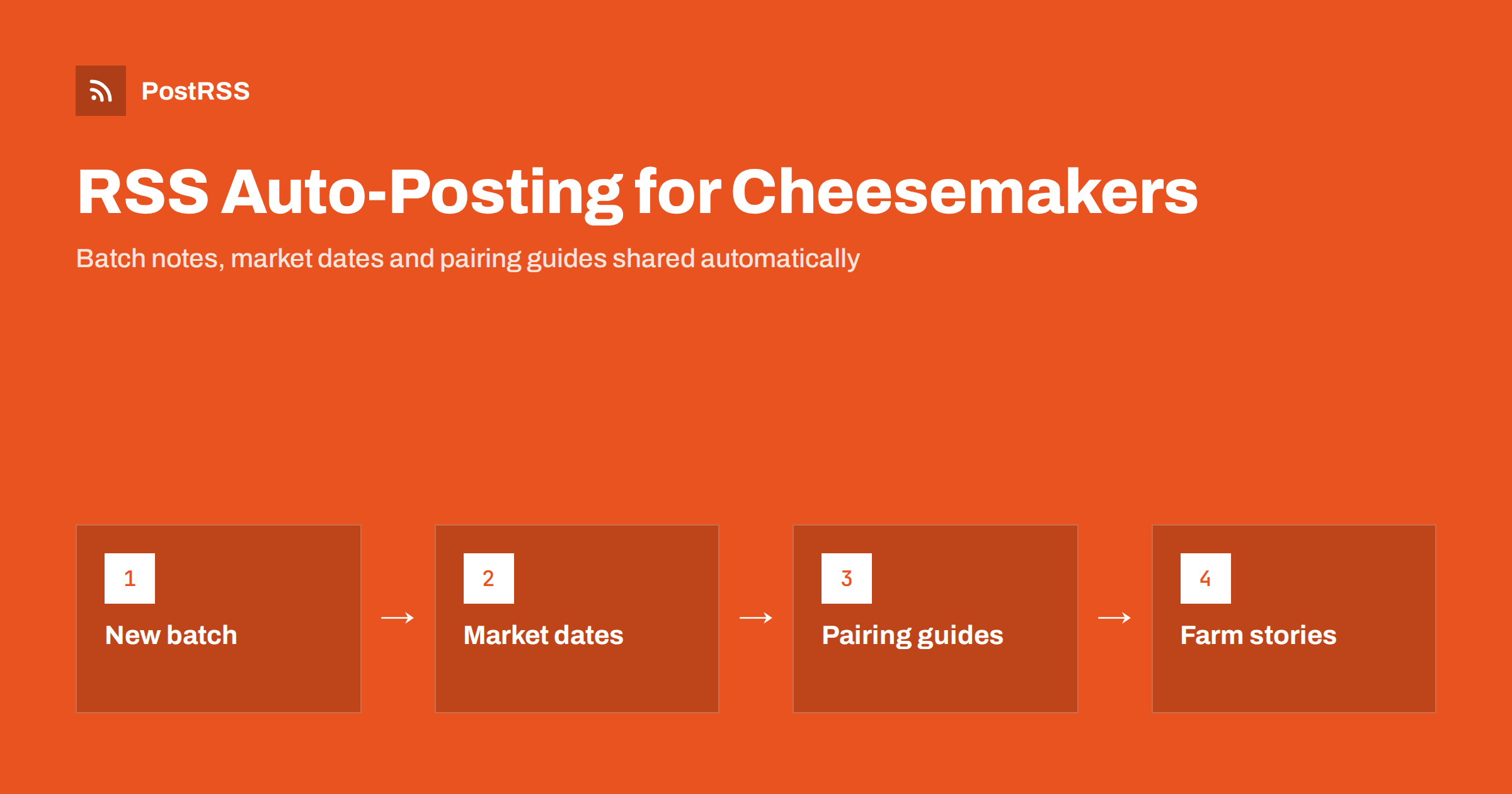
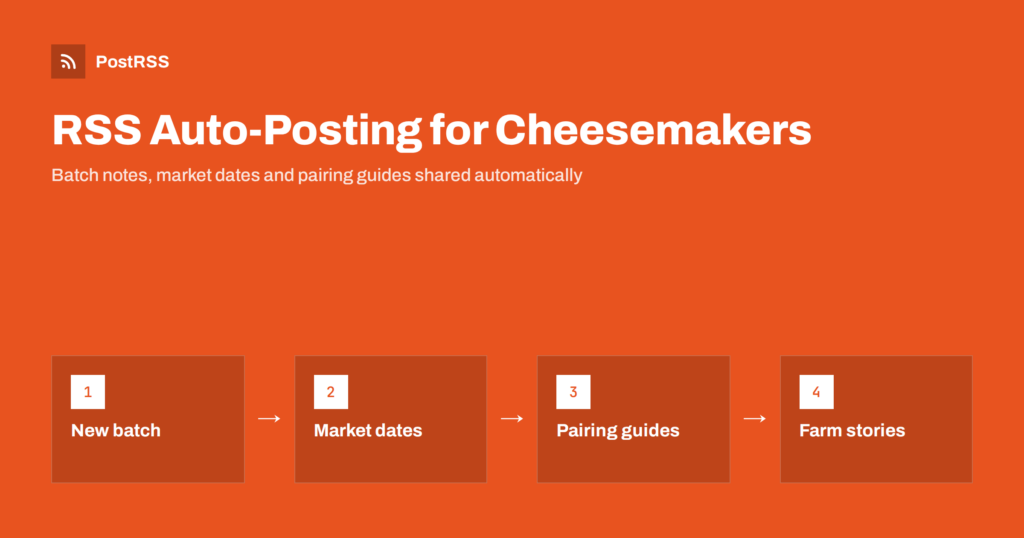
Short answer: RSS auto-posting lets cheesemakers, creameries and cheese shops share new batches, seasonal releases, pairing guides, market dates and farm news on social media automatically. Publish each batch note or guide as a page on your website, let an auto-poster read the RSS feed, and it appears on your Facebook Page, Pinterest boards, Instagram and other channels with its link and image. Customers hear about the new wheel the day it is ready, while you stay in the make room and the cave.
Cheese is made on a calendar that the maker does not fully control. Milk changes with the season and the pasture, a wheel needs weeks or months in the cave, and a batch is ready when it is ready. Customers love that story, and they want to know when a favourite cheese returns, which market stall you will be at on Saturday and what to drink with the washed-rind wheel they just bought. Yet the people who could tell them are busy with milk at dawn, turning wheels in the afternoon and packing orders in between. Because a website can hold a short page for every batch and every guide, automation can carry those pages to the networks without adding another daily task. This guide explains how to set it up and where accuracy, food safety and honest claims must stay in human hands.
A creamery, a farmhouse dairy or a cheese shop has more to say than most businesses, and nearly all of it is welcome:
Each of these can be a short page on your own website. When the page is published, the feed announces it. You write it once, in a place that you own, and the automation spreads it to the networks where customers spend time. Pages on your site also appear in search results when someone looks for a cheesemaker nearby or for a style you make, which social posts alone do not achieve.
Most small food businesses run on platforms that publish feeds without extra work:
/feed/ and a feed for every category, such as /category/new-batches/feed/. If you are unsure of the address, see how to find your WordPress feed link.Use categories to separate the audiences: new batches, markets and events, guides and recipes, farm news. Each category has its own feed, and each feed can go to the channel where it works best. Routing by category is explained in category filtering for auto-posting.
| Content | Automate? | Notes |
|---|---|---|
| New batch and release notes | Yes | Publish when the cheese is actually on sale |
| Market and tasting dates | Yes | Schedule pages a few days ahead; update if a date changes |
| Pairing guides and recipes | Yes | Evergreen pages that earn searches all year |
| Farm and cave stories | Yes | Photographs with people only with their agreement |
| Allergen and food safety questions | By hand | Answer the person directly and refer to the label |
| Wholesale enquiries and complaints | By hand | A reply from a person, not a scheduled post |
A simple rule: if it is general information on a finished page of your website, automate it. If it concerns one customer, one order or one health question, handle it personally.
The most valuable page a cheesemaker can publish is a short note about a batch that is ready now. Give it a clear title with the cheese name and the season, say when the milk was collected and how long the wheel has aged, describe the taste in plain words and tell readers where to buy it: the farm shop, the stall, the online shop or named stockists. Add one good photograph of the cut wheel. Publish the page on the day the cheese goes on sale, not before, so that the automated post does not send people to a shop that cannot sell it yet. If a batch is small, say so honestly, and when it sells out, add a line to the page rather than deleting it; readers who arrive later still learn what you make and when it returns.
Many creameries sell most of their cheese at markets and events. Write a short page for each market season or each special event: the location, the days, the hours and what you will bring. Schedule the page to publish a few days ahead, so the feed shares it while people are planning their weekend. Avoid promising a specific cheese at a specific stall unless you are certain, and avoid prices in scheduled posts, because a price that changed last week is a complaint waiting to happen. For a recurring market, one page per season is better than a post every week; the social post sends people to the page, and the page holds the current details. If the weather or a breakdown cancels a market day, update the page and post the change by hand.
Customers ask the same questions every week: what wine goes with this, how long can it stay out, how should I store a cut piece, can I freeze it, what is the white mould on the rind. Write one page for each question in plain language. A guide to serving cheese at room temperature, a page on storing cheese at home, a short explanation of raw-milk and pasteurised styles and a recipe for each of your cheeses are evergreen pages that attract visitors from search engines for years, and the feed shares each one once when it appears. Mention neighbours when it is true: the baker whose bread you serve, the cider maker down the road, the honey from a nearby apiary. Local producers share each other’s pages, which reaches more people than any paid post.
Cheese is food, and a few rules protect both the customer and the business. Keep allergen information on the product label and on the product page, and never answer an individual allergen question with a scheduled post. Describe raw-milk cheeses as the rules of your country require, and link the official guidance rather than paraphrasing it. State certifications, organic status, protected names and awards exactly as they were granted, with the year, and remove them when they lapse. Do not make health claims about cheese, probiotics or raw milk; describe the cheese and let readers decide. Avoid claiming that a cheese is award-winning if the award was for a different batch or a different year. Accurate, modest statements are what careful customers, retailers and inspectors hope to find.
Keep file sizes reasonable so pages load quickly; see image optimization for RSS auto-posting. If a network shows the wrong picture, check the Open Graph tags of the page as described in why auto-posted links show the wrong image.
Most cheesemakers do best with a Facebook Page and Instagram, with Pinterest for guides and recipes. Add others only if you can keep them active.
/feed/, and check that it lists recent items.PostRSS has been automating RSS posting since 2014. It checks your website and shop feeds as often as every minute and publishes each batch note, market date and guide, with its real image and link, to the channels you connect, from Facebook Pages, Instagram and Pinterest to Telegram, LinkedIn, Bluesky and many more among its 66 supported networks. You can choose how each post is built, filter items by keywords, add UTM parameters and post only within chosen hours or at exact times in your time zone. See the PostRSS features page for everything it does and the pricing page for plan limits. More ideas for small businesses are under the Local Business tag.
Cheesemakers and creameries have a story in every wheel, and customers want to hear it the day the cheese is ready. RSS auto-posting shares each batch note, market date, pairing guide and farm story automatically on Facebook, Instagram, Pinterest and your other channels, on time and with the right image, while you stay in the make room. Give every batch and every guide its own page, publish when the cheese is on sale, keep allergen and safety information on the label and the product page, state awards and certifications exactly, route content by category and handle individual questions and complaints personally.
Yes. If your website or online shop has a news or blog section, its RSS feed can be connected to an auto-poster that shares each new page on your Facebook Page, Instagram and other channels. Questions from individual customers should still be answered personally.
New batches and releases, market and tasting dates, pairing guides, storage advice, recipes and stories from the farm and the cave. Each item should have its own page on your website so the feed can share it.
Often, yes. Many shop platforms publish a product feed, so a new product appears in the feed as soon as it goes on sale, and an auto-poster can share it with its photograph and link.
A Facebook Page reaches local customers and market visitors, Instagram suits the visual side of cheese, and Pinterest keeps sending readers to pairing guides and recipes for months.
One page for each batch, market season or guide is enough for most businesses. Prepare guides in advance and schedule them on your website so the feed keeps posting during the busy season.
What changed in the networks, what broke, and how to fix it before it costs you reach.
Izstrādājusi Internet Solutions — PostRSS komanda. Katrs produkts ietaupa laiku savā veidā.
 English
 Lietuviškai
 Deutsch
 Français
 Русский
 Español
 Polski
 Italiano
 Українська
 Čeština
 Português
 日本語
 Latviešu valoda
 Eesti
 Magyar
 Bahasa Indonesia
 Türkçe
 हिन्दी
 Ελληνικά
 العربية
 ไทย
 Tiếng Việt
 Română
 Bahasa Melayu
 বাংলা