Technical SEO

This tag covers the technical website factors that affect how well automated social distribution performs, including SSL/HTTPS configuration, Open Graph meta tags, and feed structure — topics that sit at the intersection of site infrastructure and social media automation. It explains how PostRSS reads a site's existing metadata (Open Graph tags, featured images, titles) to build social post previews, meaning technical SEO fundamentals directly affect how professional automated posts look once published. Articles here cover practical checks readers can run on their own site, such as verifying Open Graph tags are present and SSL certificates are valid, before troubleshooting why automated posts look broken or incomplete. This tag bridges general technical SEO practice with PostRSS-specific automation concerns. Pair it with ssl-certificates and domain-verification for related technical setup topics.
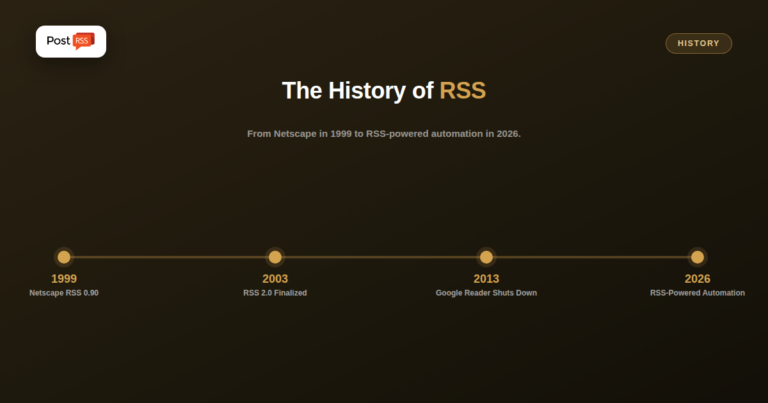
The History of RSS: From 1999 to RSS Auto-Posting in 2026
Atnaujinta: 2026-08-30

RSS is one of the few web technologies from the late 1990s still doing real, everyday work today — not as a legacy format kept ...

Skaityti daugiau »
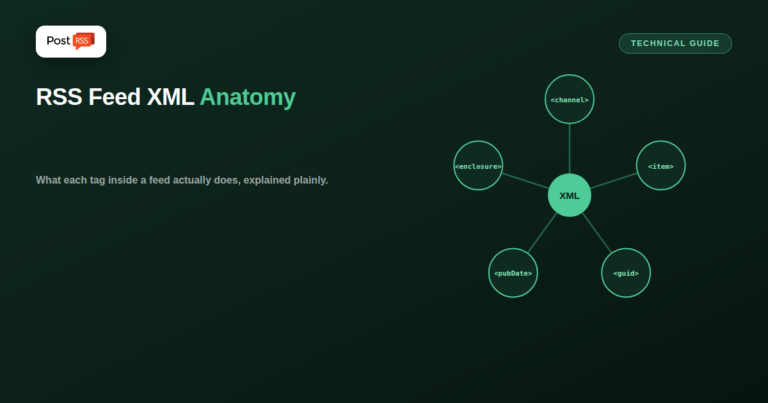
RSS Feed XML Anatomy Explained: What <channel>, <item>, GUID, and pubDate Actually Do
Atnaujinta: 2026-08-30

An RSS feed looks intimidating as raw XML, but it's built from a small handful of tags that each do one specific job. Once you ...

Skaityti daugiau »
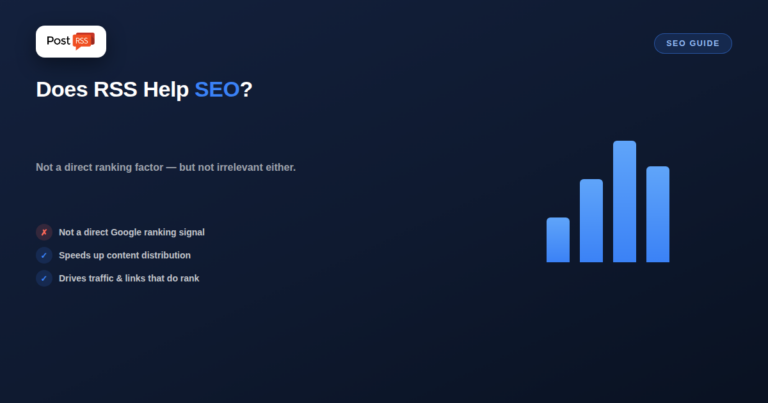
Does Having an RSS Feed Help SEO? What Google Actually Says
Atnaujinta: 2026-08-30

An RSS feed is not a Google ranking factor. There's no algorithm boost for having one, and no penalty for skipping it. That sai...

Skaityti daugiau »
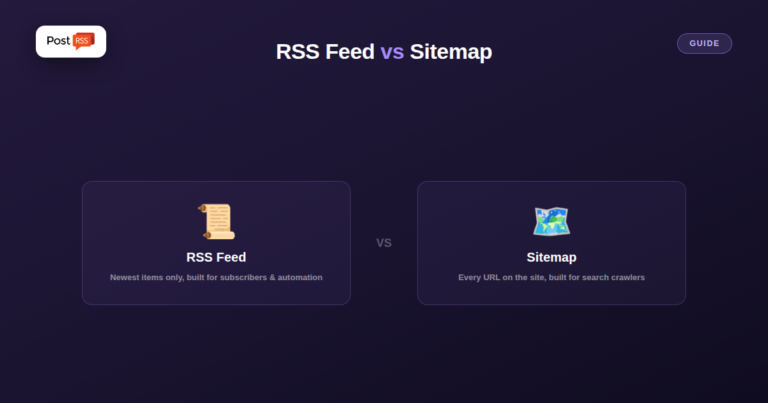
RSS Feed vs Sitemap: What’s the Difference and Do You Need Both?
Atnaujinta: 2026-08-30

An RSS feed and an XML sitemap are both XML files that list URLs from your site, which is exactly why they get confused. Past t...

Skaityti daugiau »
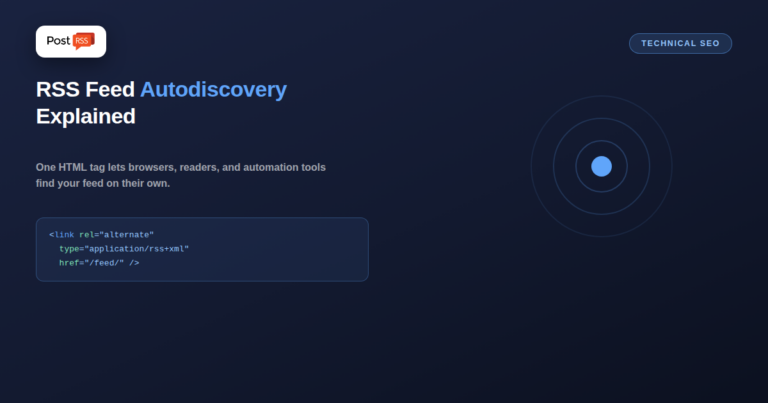
RSS Feed Autodiscovery: How to Make Sure Browsers, Readers, and Tools Can Find Your Feed
Atnaujinta: 2026-08-30

Autodiscovery is the reason you can paste a website's homepage URL into a podcast app or feed reader and have it find the actua...

Skaityti daugiau »
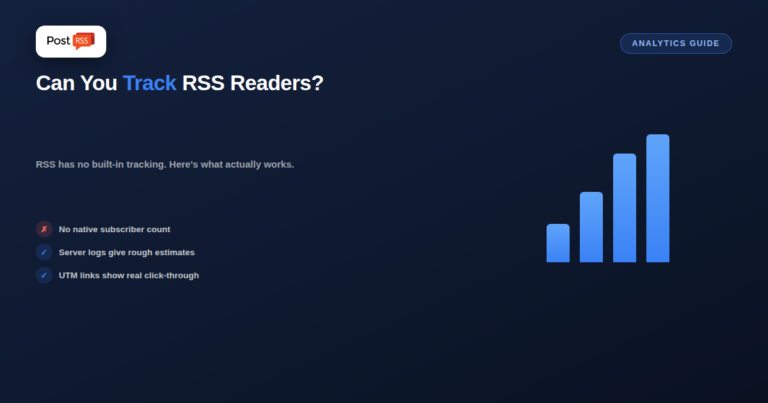
RSS Feed Analytics: Can You Actually Track Who’s Reading Your Feed?
Atnaujinta: 2026-08-30

No — RSS itself has no built-in tracking. There's no signal in the feed format that tells you who subscribed, who's reading, or...

Skaityti daugiau »
JSON Feed vs RSS: Does the Format Matter for Auto-Posting?
Atnaujinta: 2026-08-30

If you've come across "JSON Feed" while researching RSS and wondered whether you need it, whether it's replacing RSS, or whethe...

Skaityti daugiau »
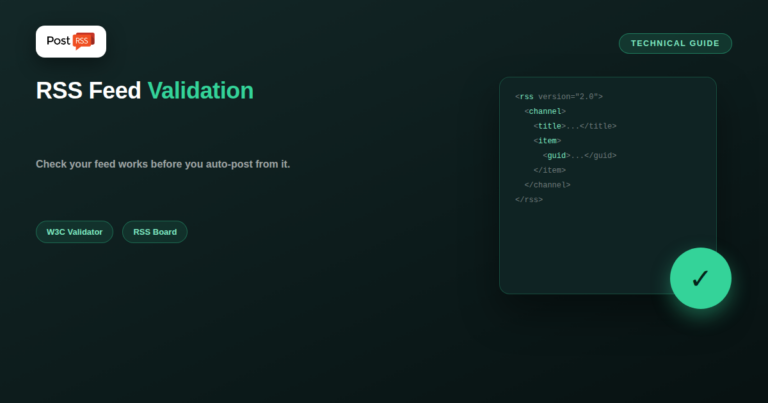
RSS Feed Validation: How to Make Sure Your Feed Works Before You Auto-Post From It
Atnaujinta: 2026-08-30

Before connecting any feed to an automation tool, it's worth confirming the feed itself is actually valid. A malformed RSS feed...

Skaityti daugiau »
Auto-Posting and Copyright: What You Can (and Can’t) Automatically Republish from an RSS Feed
Atnaujinta: 2026-08-30

RSS automation is built around republishing — taking a title, link, and image from your own feed and pushing it to social platf...

Skaityti daugiau »
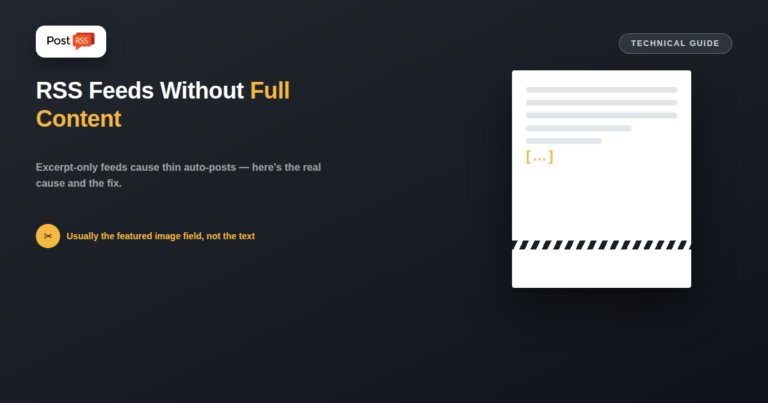
RSS Feeds Without Full Content: How to Auto-Post When Your Feed Only Has Excerpts
Atnaujinta: 2026-08-30

Not every RSS feed contains the same amount of content. Some publish the full article text with every item; others deliberately...

Skaityti daugiau »
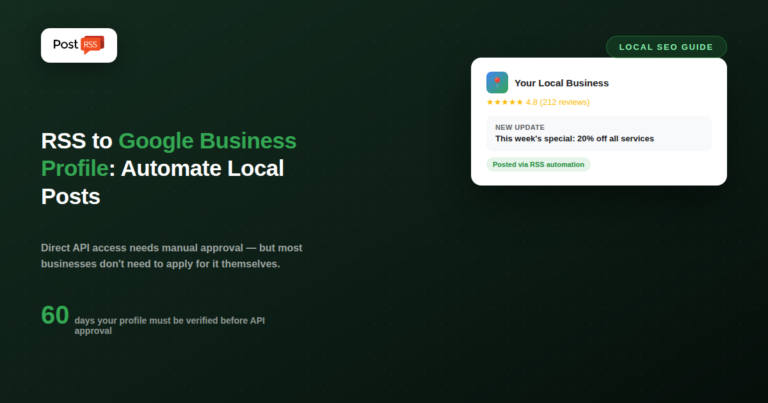
RSS to Google Business Profile: Can You Automate Local Posts?
Atnaujinta: 2026-08-30

For local businesses, Google Business Profile (formerly Google My Business) is arguably more important than any single social n...

Skaityti daugiau »
Why SSL & HTTPS Matter for Secure Social Automation
Atnaujinta: 2026-08-30

Updated: 2026-08-20 In the modern digital landscape, web security is no longer an optional luxury — it is an absolute necess...

Skaityti daugiau »

Meniu
x
PostRSS – RSS naujienų srautų automatizavimo platforma ir automatinio paskelbimo įrankis
Privatumo apžvalga

Ši svetainė naudoja slapukus, kad galėtume užtikrinti geriausią įmanomą vartotojo patirtį. Slapukų informacija yra saugoma jūsų naršyklėje ir atlieka tokias funkcijas, kaip jūsų atpažinimas grįžus į mūsų svetainę bei mūsų komandai padeda suprasti, kurios svetainės skiltys jums yra įdomiausios ir naudingiausios.