Technical SEO

This tag covers the technical website factors that affect how well automated social distribution performs, including SSL/HTTPS configuration, Open Graph meta tags, and feed structure — topics that sit at the intersection of site infrastructure and social media automation. It explains how PostRSS reads a site's existing metadata (Open Graph tags, featured images, titles) to build social post previews, meaning technical SEO fundamentals directly affect how professional automated posts look once published. Articles here cover practical checks readers can run on their own site, such as verifying Open Graph tags are present and SSL certificates are valid, before troubleshooting why automated posts look broken or incomplete. This tag bridges general technical SEO practice with PostRSS-specific automation concerns. Pair it with ssl-certificates and domain-verification for related technical setup topics.
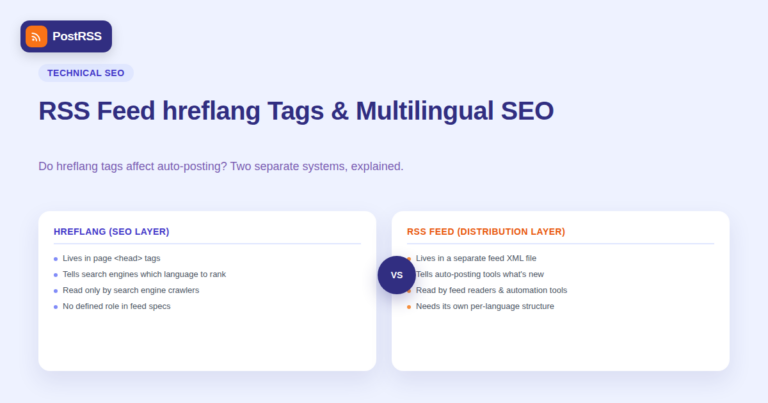
RSS Feed hreflang Tags and Multilingual SEO: Do They Affect Auto-Posting?
Updated: 2026-09-16

Sites running content in multiple languages often ask the same technical SEO question once they start automating distribution: ...

Διαβάστε περισσότερα »

Alt Text on Auto-Posted Images: What Actually Reaches Each Network
Updated: 2026-09-15

Write alt text on your website and you have done something useful for the people who need it. Share that article automatically ...

Διαβάστε περισσότερα »

Time Zones and Daylight Saving in RSS Auto-Posting
Updated: 2026-09-15

Twice a year, a predictable wave of confusion arrives. Automated posts that had been landing at eight in the morning start land...

Διαβάστε περισσότερα »
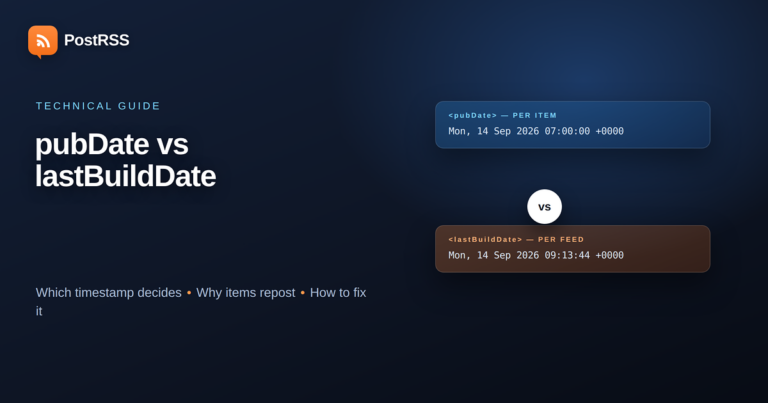
pubDate vs lastBuildDate: Which RSS Timestamp Decides When You Get Posted
Updated: 2026-09-15

Two problems account for most of the confusion people have with automated posting. Either an article that was published weeks a...

Διαβάστε περισσότερα »
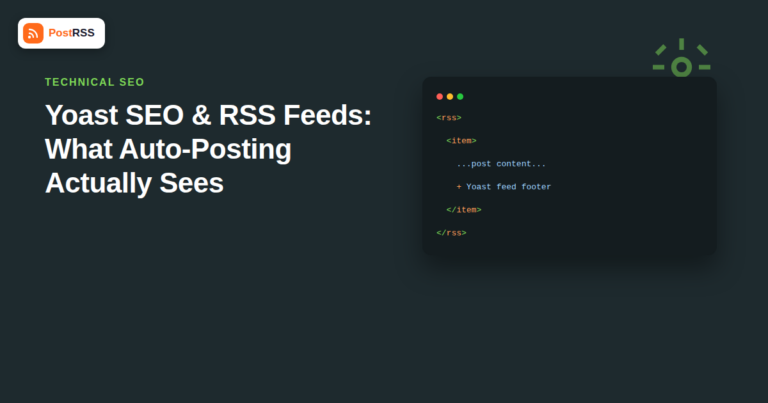
Yoast SEO and RSS Feeds: How Your Feed Settings Affect Auto-Posting
Updated: 2026-09-05

If your site runs on WordPress, there's a good chance Yoast SEO is installed — it's the most-used WordPress SEO plugin by a wid...

Διαβάστε περισσότερα »
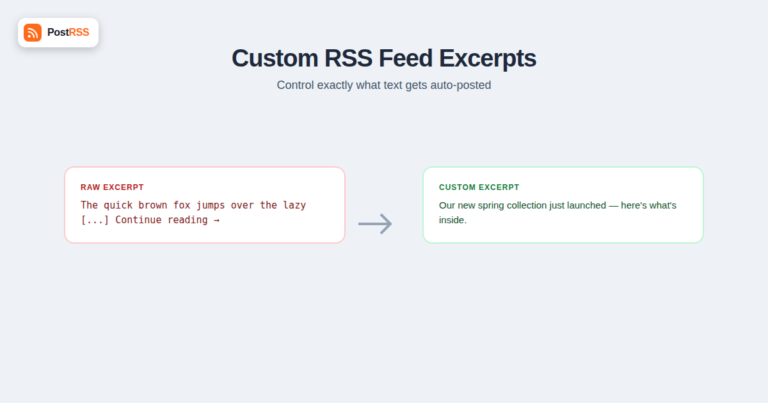
Custom RSS Feed Excerpts: How to Control What Text Gets Auto-Posted to Social Media
Updated: 2026-09-04

"The quick brown fox jumps over [...]" is not a caption anyone meant to publish. Neither is a post that stops mid-sentence, or ...

Διαβάστε περισσότερα »
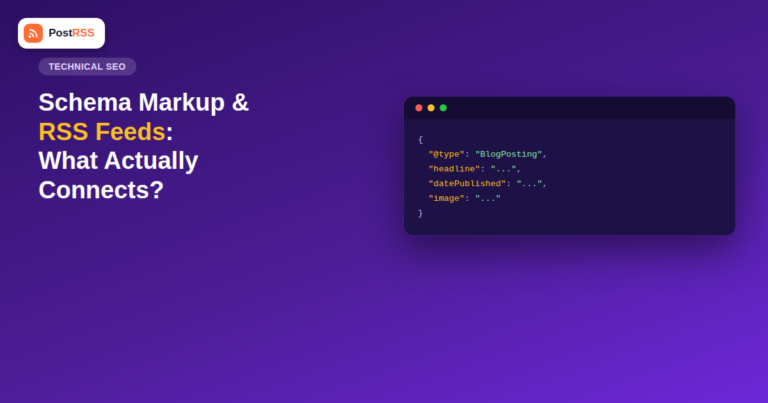
Schema Markup and RSS Feeds: Does Structured Data Affect Auto-Posting?
Updated: 2026-09-03

Anyone who's spent time on technical SEO eventually runs into schema markup, and it's a reasonable question to ask whether addi...

Διαβάστε περισσότερα »

GA4 Guide: How to Track Traffic from Your RSS Auto-Posted Links
Updated: 2026-09-03

Auto-posting a blog feed to five different social platforms solves the distribution problem, but it creates a new one: once tra...

Διαβάστε περισσότερα »

RSS Auto-Posting for Landscaping and Lawn Care Companies
Updated: 2026-09-03

A landscaping or lawn care crew rarely has a marketing department, but the work itself produces a steady stream of postable con...

Διαβάστε περισσότερα »

Does robots.txt Block Your RSS Feed From Auto-Posting? How to Check and Fix It
Updated: 2026-09-01

An auto-posting setup that used to work fine and suddenly stops picking up new content has a short list of usual suspects: an e...

Διαβάστε περισσότερα »
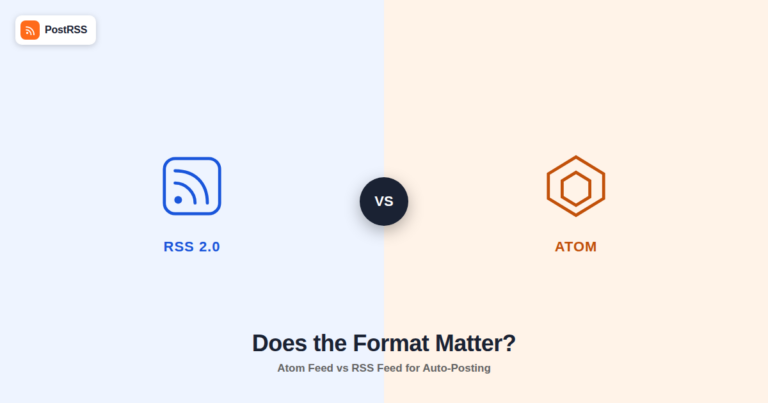
Atom Feed vs RSS Feed: Does It Matter for Auto-Posting?
Updated: 2026-08-31

Most guides about auto-posting assume every feed is "RSS," but a meaningful share of the feeds a social automation tool encount...

Διαβάστε περισσότερα »

WebSub (PubSubHubbub) Explained: RSS Push vs Polling for Auto-Posting
Ενημερώθηκε: 2026-08-30

Almost every RSS-to-social automation tool works the same fundamental way: it checks your feed on a schedule — every 5, 15, or ...

Διαβάστε περισσότερα »

Φόρτωση περισσότερων άρθρων…
Μενού
x
PostRSS - Πλατφόρμα αυτοματισμού RSS Feed & Εργαλείο αυτόματης δημοσίευσης
Επισκόπηση Απορρήτου

Αυτός ο ιστότοπος χρησιμοποιεί cookies ώστε να μπορούμε να σας παρέχουμε την καλύτερη δυνατή εμπειρία χρήστη. Οι πληροφορίες των cookies αποθηκεύονται στον περιηγητή σας και εκτελούν λειτουργίες όπως η αναγνώρισή σας όταν επιστρέφετε στον ιστότοπό μας και η βοήθεια της ομάδας μας να κατανοήσει ποια τμήματα του ιστότοπου βρίσκετε πιο ενδιαφέροντα και χρήσιμα.