RSS σε 66 κοινωνικά δίκτυα: Facebook, Instagram, X, LinkedIn, Telegram και άλλα Blog Συνεργατικό Πρόγραμμα Επικοινωνία
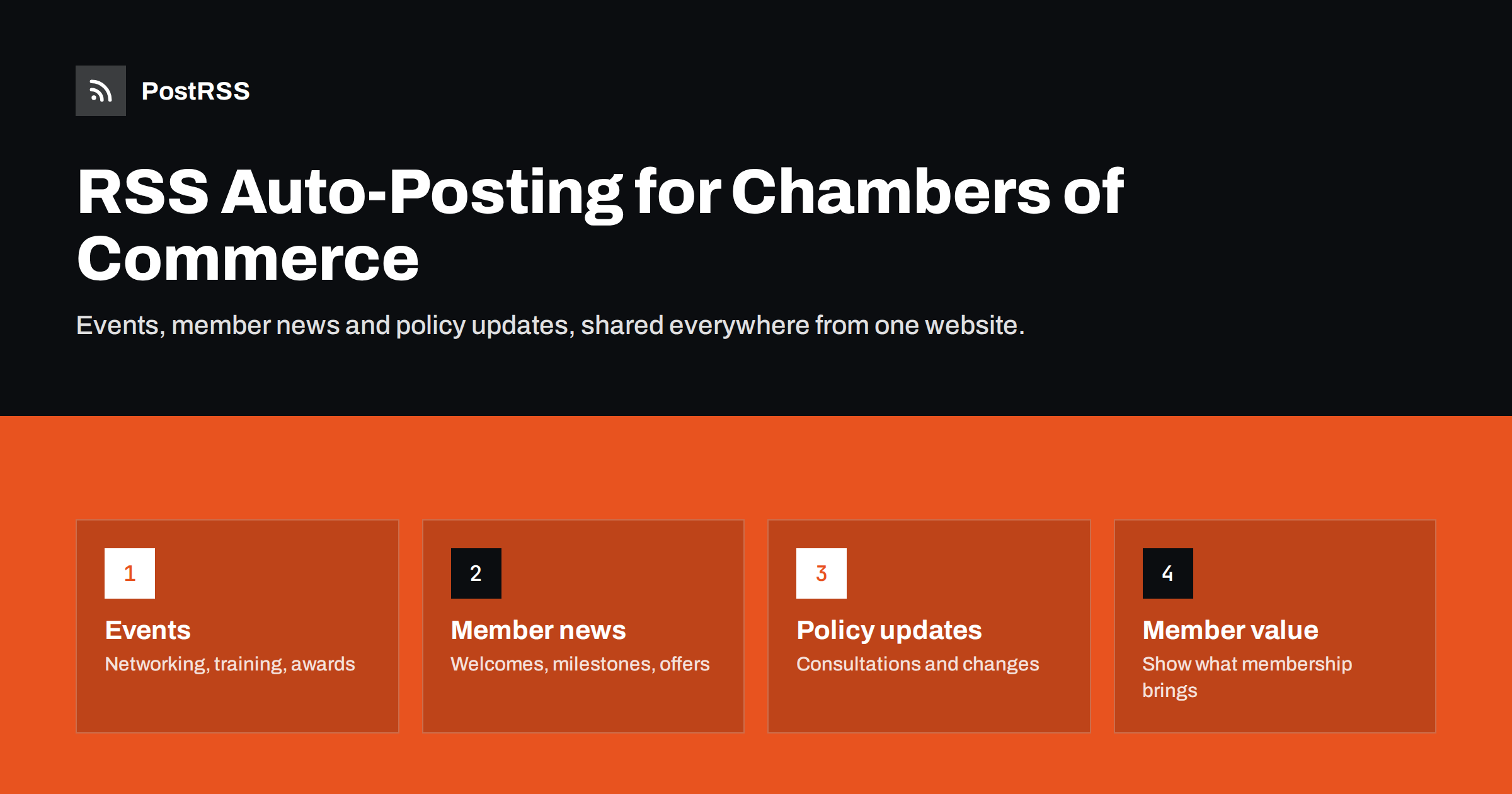
Short answer: A chamber of commerce, business association or networking club can publish its events, new member welcomes, member news, policy updates and training opportunities on its own website, and let an RSS auto-posting tool share each item to LinkedIn, Facebook, X, Telegram, team chats and other channels automatically. Members see a busy, useful organisation, prospective members see what membership brings, and a small staff team stops copying the same announcement into five apps. Separate feeds for events, member news and policy help each audience get what it cares about.
A chamber of commerce sells something intangible: connection, representation, information and opportunity. Businesses join because they believe the chamber will introduce them to customers and partners, keep them informed about changes that affect them, and speak for them with local and national decision-makers. They renew because they see that value happening.
Much of that value is invisible unless it is communicated. A well-attended networking breakfast, a successful consultation response, a new partnership with the local council, a member’s award: each is evidence that membership is worth it. When those stories appear regularly on the channels members use, the chamber looks active and relevant. When they do not, members start to wonder what they are paying for.
At the same time, most chambers and business clubs have small teams. A handful of staff, sometimes supported by volunteers from member businesses, handle events, membership, advocacy, training and communications. Posting every update to LinkedIn, Facebook, X, a newsletter and a members’ chat by hand takes hours that could be spent with members.
Consistent communication also supports renewals directly. When a membership renewal notice arrives, the member thinks back over the year. If they remember regular useful updates, events they attended or could have attended, and perhaps their own business being featured, renewing feels natural. If the year felt quiet, the renewal becomes a question. Visible, steady activity is one of the simplest retention tools a chamber has.
A chamber’s communications reach several audiences, each with different interests:
LinkedIn is often the primary professional channel for this audience, but many owners of small local businesses are more active on Facebook, and some chambers run messaging channels or member chat groups for quick updates. One website, with the right feeds, can serve all of them.
Survey results deserve a special mention. Many chambers run regular business confidence or member surveys. Publishing a short summary with two or three key findings, a chart and a link to the full report gives local media a reason to quote the chamber and gives members something useful to share. It also positions the chamber as the voice of local business, which matters when speaking to decision-makers.
Each of these works as a short website post. The website holds the details, booking forms and archive; the social posts carry the headline and link.
Write titles that tell the reader what is in it for them. “Free workshop: preparing your business for new e-invoicing rules” works better than “Workshop announcement”, and “Welcome to our newest member, a family bakery in the old town” is warmer than “New member”. Because automated posts are built from titles and opening lines, this habit improves every channel at once.
Publishing everything first on the chamber’s website has several benefits beyond automation:
Most website platforms produce an RSS feed for the news section automatically, and many produce one per category as well. If your events live in a separate calendar system, check whether it offers a feed of upcoming events, or publish a short news post for each event so it enters the main feed.
Think about the member directory as well. Many chambers maintain a directory of member businesses on their website. Linking new member welcome posts to the member’s directory entry, and the directory entry back to the welcome post, strengthens both pages and gives members a reason to keep their entry up to date.
Not every update belongs everywhere. A detailed consultation response is important for a few members and the local council, but may not interest every Facebook follower. New member welcomes are perfect for LinkedIn, where business owners connect. Event reminders suit a members’ messaging channel.
Categories make this easy. A typical setup might be:
| Category feed | Where it goes |
|---|---|
| Events | LinkedIn, Facebook Page, members’ Telegram or chat channel |
| Member news and welcomes | LinkedIn, Facebook Page, X |
| Policy and advocacy | LinkedIn, X, Bluesky |
| Member offers | Members’ channel only |
Keyword filters can refine this further, for example excluding items marked “members only” from public channels, or sending only posts mentioning “export” to a channel for an exporters’ group.
/feed/, or a feed link on the page.Give every post a good featured image: event photos, member logos on a branded background, or speakers. Posts about member businesses that carry their logo are often reshared by the members themselves, which extends your reach for free.
If the chamber has several people publishing, agree on simple rules: which category each type of post belongs to, what a good title looks like, and who checks member news before publication. Because distribution is automatic, the website becomes the one place where quality control happens, which is much easier than checking posts on five different networks.
Business audiences are usually most active on weekdays during working hours. Posting windows let staff publish on the website whenever convenient, while announcements go out at times when members are at their desks. For events, a rhythm of announcement, reminder a week before and reminder the day before works well; publish the reminders as short website posts or schedule them in advance.
Seasonal patterns help planning too. Many chambers have a predictable year: an annual dinner or awards, a summer networking event, a busy autumn training programme, and policy updates around budgets and new regulations. Sketching that calendar at the start of the year and preparing posts in advance makes quiet weeks easier to fill and busy weeks less stressful.
After each event, publish a report within a day or two while photos are fresh and attendees are still talking about it. Tag speakers and sponsors by hand on the networks where that matters.
It is also worth measuring what works. With UTM parameters on automated links, your website analytics can show which channel brings visitors to event booking pages and which brings readers to policy updates. Over a few months, that tells you whether LinkedIn, Facebook or the members’ channel deserves more attention, and helps you report the reach of sponsored events to sponsors with real numbers.
PostRSS is an RSS auto-posting service running since 2014. It checks your website feeds every 5 minutes (every minute on Enterprise plans) and posts each new item with its image and link to the networks you connect; the features page lists 66, including LinkedIn, Facebook Pages, X, Bluesky, Telegram and team chats such as Google Chat and Microsoft Viva Engage, plus webhooks for Slack and Microsoft Teams.
For chambers, the useful features are several feeds routed to different targets, keyword filters to include or exclude items, posting windows and exact times on paid plans, and UTM parameters on every link so you can see which channel drives event bookings. Enterprise plans can add team members to the same account. Compare plans on the PostRSS pricing page.
A chamber of commerce proves its value through what it communicates. Publish events, member welcomes, member news, policy updates and practical guides on the chamber website, organise them into category feeds, and let RSS auto-posting distribute each item to the channels your members and partners use. The small team spends less time copying posts and more time building the network that members pay for.
LinkedIn is usually the main professional channel, but many small business owners are more active on Facebook. A members’ messaging channel works well for quick event reminders. Using your website as the source lets you reach all of them.
Publish a welcome post for each new member and occasional member news on the website, with their logo or photo and a link. Automated sharing puts those posts on all your channels, and members often reshare them.
Yes. Put member-only items in their own category feed connected only to the members’ channel, or use keyword filters to exclude them from public targets. Truly confidential information should not be published on a public website at all.
Two to four posts a week is a realistic rhythm for many chambers, mixing events, member news and updates. Consistency matters more than volume.
Yes. Once the feeds and channels are connected, volunteers only need to publish posts on the website in the right category. Distribution then happens automatically.
What changed in the networks, what broke, and how to fix it before it costs you reach.
 English
 Lietuviškai
 Deutsch
 Français
 Русский
 Español
 Polski
 Italiano
 Українська
 Čeština
 Português
 日本語
日本語 Latviešu valoda
 Eesti
Eesti Magyar
 Bahasa Indonesia
 Türkçe
 हिन्दी
 Ελληνικά
 العربية
 ไทย
ไทย Tiếng Việt
 Română
 Bahasa Melayu
 বাংলা
বাংলা